

Women Account for 2/3 of Alzheimers Cases
She was 44 when she started noticing it. Not forgetting where she left her keys — that happens to everyone. She was losing words mid-sentence. Walking into a room and having absolutely no idea why. Forgetting names of people she'd known for years, then feeling the gap where the name should have been like a door that wouldn't open.
Her doctor told her it was stress and perimenopause. Which, to be fair, it probably partly was. But she wanted to know: was this the beginning of something worse?
It was the right question to be asking. And it was the right decade to be asking it.
The Number Nobody Talks About
Almost 7 million Americans are living with Alzheimer's disease. Two-thirds of them are women.
This is not a small statistical difference. It is not explained entirely by the fact that women live longer. The research increasingly points to biology — and specifically to the hormonal transition of menopause — as a key driver of the disparity.
Despite this, cognitive decline prevention is almost never part of the conversation women have with their doctors in their 40s. Mammograms, yes. Bone density, eventually. Cognitive health: almost never, until there's a symptom worth worrying about. By that point, the window when intervention is most effective has already partially closed.
The science of dementia prevention has changed fundamentally in the last decade. We now know that the pathological changes of Alzheimer's — amyloid plaques, tau tangles, neuroinflammation, synaptic loss — begin 15 to 25 years before the first clinical symptom. That means the cognitive changes that surface at 65 or 70 were set in motion in the late 40s and early 50s.
The perimenopausal decade is not just a hormonal transition. For many women, it is the most consequential window for brain health they will ever have.
What the Research Shows About Estrogen and the Brain
Estrogen is not a reproductive hormone that happens to have some brain effects. It is a neurosteroid with primary roles in brain structure, function, and protection that happen to also regulate reproduction.
Estrogen receptors are distributed throughout the brain, including in the hippocampus — the memory-formation region that Alzheimer's disease specifically targets — and in the prefrontal cortex, which governs executive function, decision-making, and working memory. Estrogen supports:
- BDNF (brain-derived neurotrophic factor) production — the protein that drives synaptic growth and neural plasticity - Cerebral glucose metabolism — the brain's fuel efficiency; Alzheimer's is increasingly characterized as a condition of impaired brain glucose metabolism - Mitochondrial function in neurons - Clearance of amyloid-beta — one of the primary toxic proteins that accumulates in Alzheimer's disease - Suppression of neuroinflammation
When estrogen declines at menopause, all of these processes are affected. Research from the Women's Health Initiative Memory Study (WHIMS) and subsequent longitudinal studies have documented measurable changes in cognitive performance, brain volume, and metabolic activity in the years immediately following menopause.
The ApoE4 genetic variant is the strongest known genetic risk factor for late-onset Alzheimer's, increasing lifetime risk by 3-4x in those with one copy and 8-12x in those with two. Critically, ApoE4 carriers who are women experience a significantly greater risk amplification than ApoE4 carriers who are men. The interaction between ApoE4 and estrogen loss is an active area of research — but what's already clear is that ApoE4-positive women who go through menopause are a very high-risk group that deserves specific, proactive clinical attention.
The Lancet Commission on Dementia Prevention, Intervention, and Care identified 14 modifiable risk factors that together account for approximately 45% of dementia cases. Twelve of them are addressable with lifestyle and medical interventions starting in midlife. For women specifically, menopause hormone therapy is increasingly understood as a potentially protective intervention — particularly when initiated early in the menopause transition, not years afterward.
What I See in Practice
The cognitive symptoms I hear about most often in perimenopausal patients — word retrieval difficulty, working memory lapses, decision fatigue, processing speed slowdowns — are real neurological changes. They're not just subjective impressions or anxiety. Brain imaging studies have documented measurable changes in brain activity patterns during perimenopause that partially reverse when hormone levels stabilize.
The question I ask myself, and that I think every physician should be asking, is: what are we doing to protect this patient's brain in the next decade?
That question has concrete answers. VO2 max — cardiovascular fitness measured by oxygen utilization — is one of the strongest predictors of cognitive longevity in the research. A large-scale study published in JAMA Internal Medicine found that high aerobic fitness in midlife was associated with a significantly reduced risk of dementia decades later. VO2 max is trainable, measurable, and actionable in a way that genetic risk is not.
Sleep, as I often discuss with patients, is not optional for brain health. During deep sleep, the brain's glymphatic system — the clearance system that removes toxic proteins including amyloid-beta — is most active. Chronically poor sleep is an independent risk factor for Alzheimer's. This gives the sleep disruption of perimenopause a second layer of urgency.
Cardiovascular health, metabolic health, blood sugar stability, inflammation management, and social engagement are all documented risk factors for cognitive decline — all modifiable — and all addressable in a proactive primary care relationship.
What the Cognitive Window Strategy Looks Like at KHG
I use the term "Cognitive Window" to describe the period roughly between ages 40 and 60 when interventions have the greatest capacity to alter long-term brain health trajectory. This is the window when:
- Hormonal transitions are occurring and can be managed - Cardiovascular and metabolic risk is accumulating and can be addressed - Sleep architecture is disrupted and can be treated - Physical fitness can be meaningfully improved - Baseline cognitive assessment can be established while cognition is intact
The Cognitive Window strategy at Kind Health Group includes:
Baseline cognitive assessment: Establishing a documented cognitive baseline while cognition is normal, so that future changes have a reference point.
Hormone evaluation: Assessing estrogen and progesterone status with brain health in mind — not just menopausal symptoms. Discussing hormone therapy timing and appropriateness, including the emerging evidence on early initiation as a potential neuroprotective strategy.
ApoE4 genetic testing (optional, with counseling): For patients who want to understand their genetic risk profile. This is a decision that requires informed discussion — knowing your ApoE4 status changes your risk picture and your clinical approach, but it also carries psychological weight.
Advanced cardiovascular markers: ApoB, hsCRP, blood sugar regulation — because vascular dementia and mixed dementia have substantial overlap with Alzheimer's, and cardiovascular health is one of the most modifiable aspects of brain disease risk.
VO2 max assessment and prescription: Aerobic fitness with specific, measurable targets.
Sleep evaluation and treatment: Addressing the hormone-mediated sleep disruption that compromises the brain's nightly clearance process.
What You Can Do Right Now
First: recognize that your 40s are the decade that matters for brain health. Not your 60s, when symptoms appear. Now.
Second: ask your physician about cognitive baseline testing. Not because something is wrong — because establishing a baseline while you're intact is exactly the right time to do it.
Third: take sleep seriously as a brain health issue, not just a quality-of-life issue. If you are chronically waking at night, your brain's cleaning system is being compromised. This has a solution. Find it.
Fourth: get your cardiovascular markers measured comprehensively — including ApoB and hsCRP. The same vascular health that protects your heart protects your brain.
Fifth: if you are approaching or in the perimenopausal transition, have a specific conversation with your physician about hormone therapy — not just for hot flashes, but for the documented role of estrogen in brain metabolism and neuroprotection. The timing matters. Early initiation, for appropriate candidates, has a meaningfully different risk-benefit profile than initiation years post-menopause.
We practice the Cognitive Window strategy at Kind Health Group in Encinitas. If this is a conversation you've never had with a doctor, it's available to you. kindhealthgroup.com.
Frequently Asked Questions
Why are women at higher risk for Alzheimer's than men?
Women represent approximately two-thirds of Alzheimer's cases, and the disparity is not explained entirely by longer lifespan. Research increasingly points to the neurological effects of estrogen loss at menopause as a significant contributor. Estrogen has direct roles in supporting brain metabolism, BDNF production, amyloid-beta clearance, and neuroinflammation suppression — all processes relevant to Alzheimer's pathology. The ApoE4 genetic risk factor also confers greater risk amplification in women than in men.
Can you prevent Alzheimer's disease?
Alzheimer's cannot be guaranteed preventable, but the Lancet Commission on Dementia Prevention identified 14 modifiable risk factors — including cardiovascular health, sleep quality, metabolic health, aerobic fitness, and social engagement — that together account for approximately 45% of dementia cases. Proactive management of these factors in midlife, during the period when Alzheimer's pathology is beginning to accumulate but before symptoms appear, offers the greatest opportunity to alter long-term trajectory.
What is the connection between menopause and memory problems?
Estrogen supports hippocampal function, prefrontal cortex activity, and cerebral glucose metabolism. When estrogen declines at menopause, measurable changes in brain function occur — including word retrieval difficulty, working memory lapses, and processing speed changes. These are real neurological events, not just symptoms of stress or aging. Research is ongoing regarding whether hormone therapy initiated early in the menopausal transition can offer neuroprotective benefits.
What is VO2 max and why does it matter for brain health?
VO2 max is a measure of cardiovascular fitness — specifically, the maximum oxygen your body can use during exercise. It is one of the most powerful predictors of longevity and cognitive health in the research literature. A study published in JAMA Internal Medicine found that high midlife aerobic fitness was significantly associated with reduced risk of dementia decades later. VO2 max is measurable and trainable — it can be improved with targeted exercise prescription.
Should I get tested for the APOE4 gene?
ApoE4 is the strongest known genetic risk factor for late-onset Alzheimer's. Knowing your status can inform clinical decisions — about hormone therapy timing, cardiovascular management, and monitoring protocols. However, this is a decision that deserves informed counseling, because a positive result can carry significant psychological impact and does not guarantee disease. This should be done in the context of a proactive medical relationship, not through direct-to-consumer testing alone.
What kind of doctor helps with cognitive health and Alzheimer's prevention?
A proactive primary care physician with training in preventive medicine, women's health, and cognitive longevity — not a neurologist, who becomes relevant after a diagnosis. You need a physician who establishes baselines, manages cardiovascular and metabolic risk, evaluates hormone status with brain health in mind, and assesses sleep and fitness as medical priorities. Kind Health Group in Encinitas provides this kind of integrated cognitive health evaluation for women in North County San Diego. kindhealthgroup.com.
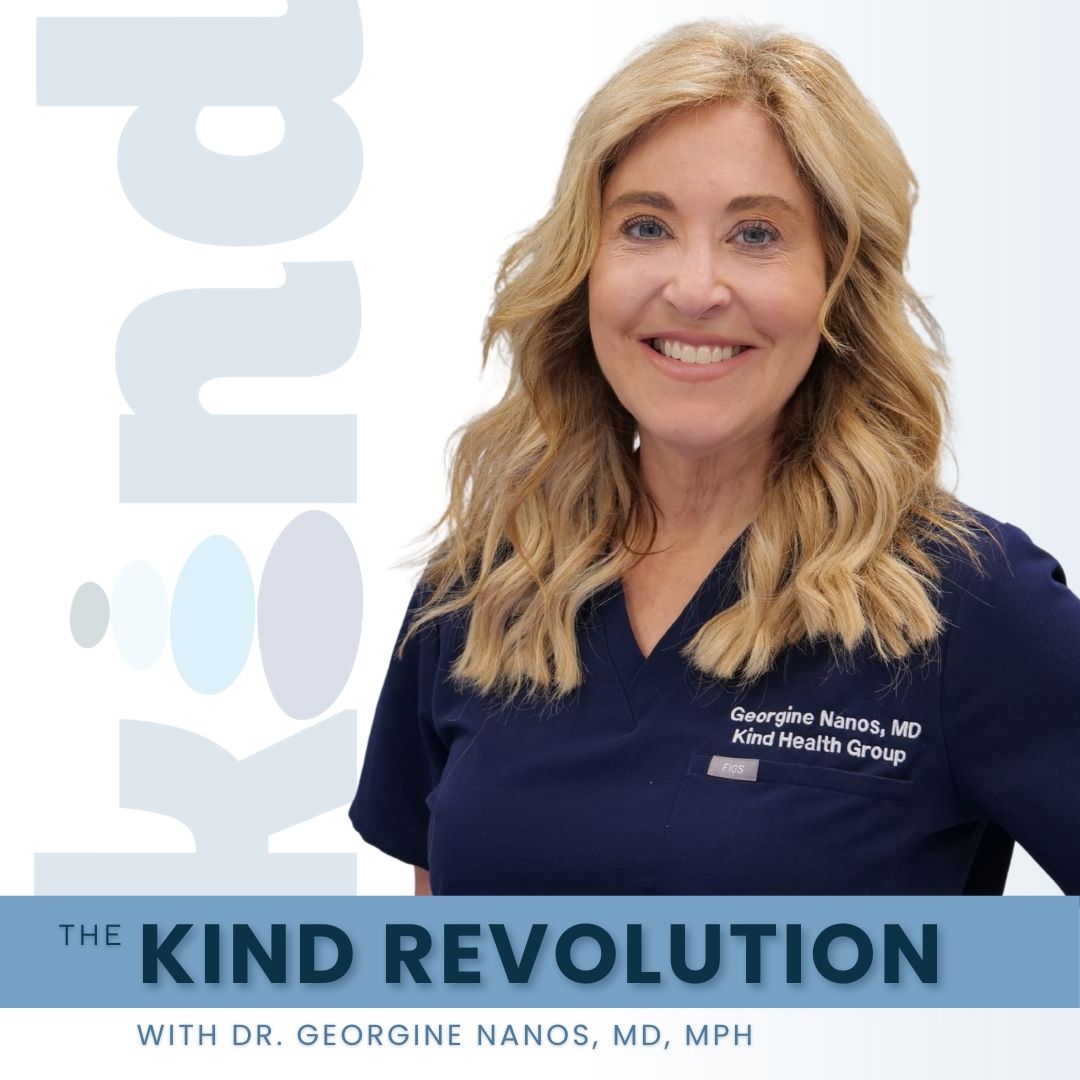
Listen to The Kind Revolution Podcast — on the connection between hormones, longevity, and long-term brain protection:
Hormones, Longevity, and the Future of Integrative Medicine — Dr. Nanos on why hormonal management in the perimenopausal decade is a brain health strategy, not just a symptom management strategy.
Wellness Theater vs. Real Medicine: A Doctor's Honest Take on Longevity Trends — What the longevity research actually supports versus what's being sold — including the real levers on cognitive health and dementia risk.
Also available on Apple Podcasts, Amazon Music, and YouTube. Search "The Kind Revolution."

Meet the Author

You might also enjoy: