How to Spot a Fake Doctor Online, From a Real One Who Fights Them
By Dr. Georgine Nanos, MD, MPH, Founder & CEO, Kind Health Group, Encinitas, CA
I had Dr. Zachary Meade on the podcast recently. You might know him as Dr. Zach MD, he has hundreds of thousands of followers, and he spends his spare time doing something most of us are too tired or too scared to do, which is going directly at the medical misinformation that shows up in your feed every single day.
His background is not normal, and I mean that as the highest compliment. He grew up in and out of foster care. He joined the military at seventeen and became an explosive ordnance disposal technician, he defused bombs. Then he trained as an electrical engineer, and then he went to medical school, and now he's an anesthesiologist. So when he tells you how to stay calm and think clearly in a high-stakes moment, he's not speaking metaphorically. He has literally done it with his hands on a live device.
What I wanted from him was the practical stuff. Not the outrage, we all have the outrage. I wanted the actual rules. How does someone who does this for a living tell the difference between a real doctor and a very confident person in scrubs? Because my patients ask me some version of this constantly, and "just trust your doctor" is not a satisfying answer in 2026, and honestly it shouldn't be.
So here's what he gave me. It's simpler than you'd think.
Rule one: the sixty-second credential check
Here's Zach's rule, almost word for word. If someone introduces themselves as "Doctor So-and-So," and within about sixty seconds you cannot readily figure out what their actual credentials are, that's your red flag. Write them off.
And here's the part that landed for me. He said he has never once watched one of those videos, gotten suspicious, dug around for four minutes, and discovered that oh, actually, this person is a legitimate board-certified physician who just happened to bury it. It doesn't happen. Real doctors tell you what they are, fast, because they have nothing to hide and every reason to say it.
The word "doctor" is doing a lot of quiet work online. A chiropractor is a doctor. A person with a PhD in an unrelated field is a doctor. Someone with a naturopathic certificate is calling themselves a doctor. None of that is inherently sinister, but none of it means what most people hear when a "doctor" tells them to stop a treatment. So you do the check. Go to their page, their bio, their about section. If it doesn't immediately and specifically tell you their training, not "wellness expert," not "health optimizer," but their actual medical qualification, you have your answer.
Rule two: watch what they're selling at the end
This one is even faster, and I think it's the single most useful filter I can give you.
Watch the call to action. What does the person want you to do when the video ends.
Zach's own sign-off, he told me, is some version of "stay informed, do whatever you want just do it informed." That's it. He's not steering you anywhere. Now compare that to the pattern you've seen a thousand times: a scary claim about your medication or your doctor, followed by "…but the good news is, I have a supplement that fixes exactly this." Link in bio.
That structure, frighten you, then sell you the cure, is the tell. When the information and the product come from the same mouth, the information is not information anymore. It's marketing wearing a lab coat. And it's worth saying plainly: I don't have a supplement to sell you at the end of this article. Neither does your actual doctor. That's not a coincidence.
The thing almost nobody understands about how this spreads
The part of our conversation I keep thinking about is how misinformation actually gets made. Because it's not what people assume.
Zach's whole method for debunking something starts with finding what he calls the nugget of truth. Because misinformation almost never begins as a pure lie. It begins as a real, small, true thing and then it gets stretched into something enormous and false.
Understanding that changes how you read your feed. When something sounds shocking, the question isn't "is there any truth to this," there usually is a speck. The question is how far past that speck the person is asking you to leap.
He includes himself in the warning, and that's the whole point
Here's the moment that told me Zach is the real thing.
He told me about a post of his that went sideways. He'd put up something quick about a pain medication, that the evidence shows you don't get more pain relief above a certain dose, which is true. But he didn't specify the details, and some people watching started saying, oh, I'm going to cut my dose then. And the situations weren't actually the same: different routes of the drug, different contexts. So a true statement, stripped of its context, started nudging people toward changing their own medical care off a short video.
His takeaway wasn't to get defensive. It was this: "Don't take medical advice from TikTok. Not even from me."
I cannot tell you how much I trust that instinct. The people you should believe are the ones actively telling you not to over-trust any single voice, including their own. Certainty is the product being sold by the people you should worry about. A good doctor is comfortable saying "it depends," "talk to someone who knows your history," "here's what I don't know." The internet rewards the opposite, which is exactly why the internet is such a dangerous place to get your medicine.
What this has to do with the exam room
You might be wondering why a family doctor in Encinitas is spending a whole article on how to read TikTok. Here's why.
The reason this stuff works, the reason big wellness is now, in Zach's words, arguably bigger than big pharma, is that a lot of people genuinely feel dismissed by real medicine. They got seven rushed minutes and a shrug, and then someone online gave them forty-five minutes of eye contact and a story that made them feel seen. I understand completely why that wins. If your choice is between a doctor who didn't listen and a stranger who did, the stranger is going to feel more trustworthy even when they're wrong.
So the answer isn't only "spot the fakes." The answer is also that real medicine has to earn back the trust by slowing down. Zach and I talked about this. The whole fix, the boring unglamorous fix, is communication and time. When he does a thorough informed-consent conversation before anesthesia, patients tell him they've had surgery seven times and no one ever explained it like that. That's the gap. Not knowledge. Time.
That's the entire reason I built my practice the way I did. Not as a luxury, as a correction. You cannot fight a forty-five-minute wellness video with a seven-minute appointment. You fight it by being the doctor who actually has time to answer the question, so you're not left googling it at midnight and landing somewhere frightening.
The short version to keep
If you take nothing else from this, take the two checks, because they'll carry you through almost anything you see online:
Can I identify this person's real medical credentials in about a minute. If not, close it.
What are they selling me at the end. If the scary claim and the product come from the same person, it's not advice. It's an ad.
And then the third thing, which isn't a rule so much as permission: bring it to your actual doctor. Every strange thing you saw, every supplement your sister swears by, every claim that scared you at 1 a.m., bring it in. We would so much rather talk it through with you than have you quietly acting on something dangerous because you didn't want to seem gullible. You're not gullible. The stuff is engineered by very smart people to be believed. Asking is the opposite of foolish.
It's all figure-out-able, together. That part hasn't changed, no matter how loud the feed gets.
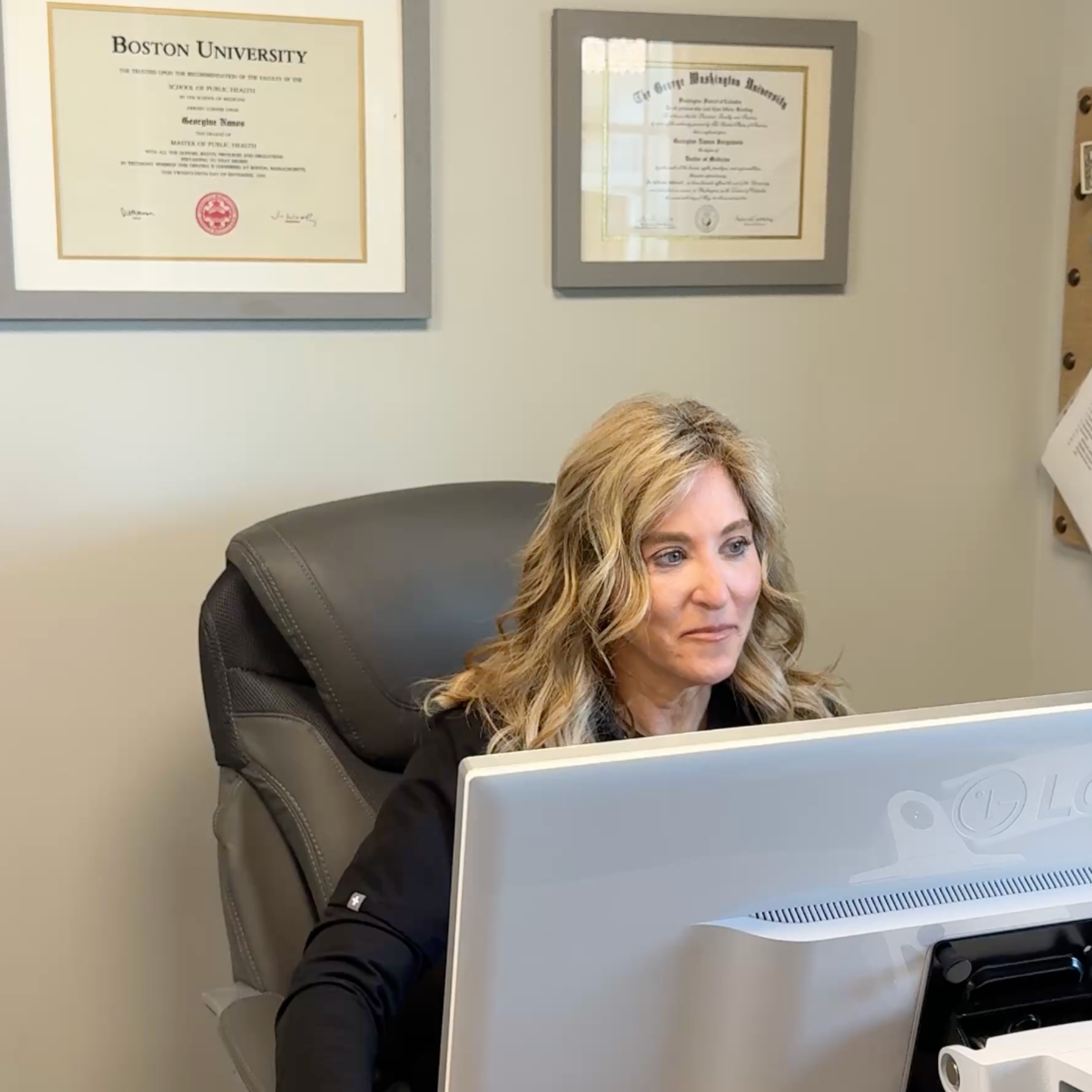
Dr. Georgine Nanos is a board-certified family physician and the founder of Kind Health Group in Encinitas, California, where she practices comprehensive concierge and preventive medicine for women in midlife.
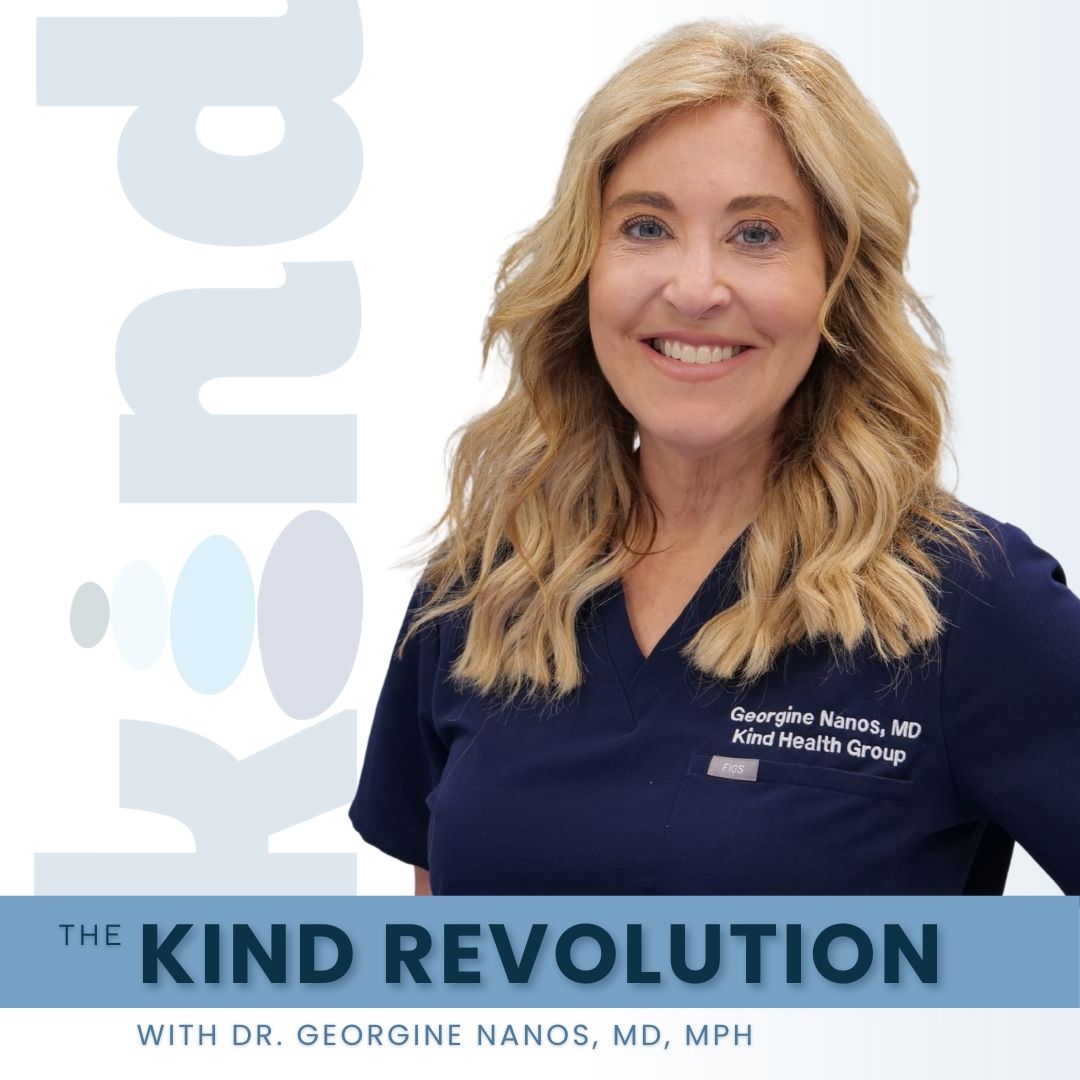
This conversation is from The Kind Revolution podcast with guest Dr. Zachary Meade, MD (Dr. Zach MD). Also available on Apple Podcasts, Spotify, Amazon Music, and YouTube. Search "The Kind Revolution."
Frequently Asked Questions
How can I tell if a doctor giving advice online is legitimate?
Use a quick credential check. If someone introduces themselves as a doctor but you can't identify their actual medical qualifications within about a minute, whether from their bio, their about page, or the video itself, treat that as a red flag. Real physicians state their training clearly and quickly because they have no reason to hide it. Be aware that "doctor" online can mean many things, including credentials unrelated to medical practice, so look for the specific qualification rather than a vague title like "wellness expert."
What's the biggest warning sign of health misinformation?
The call to action. Watch what the person wants you to do when the video ends. If a frightening claim about your medication or your doctor is immediately followed by a product they're selling, whether a supplement, a protocol, or a program, the information and the sales pitch are coming from the same source, which means it functions as marketing rather than advice. Trustworthy health information doesn't end in a checkout link.
Why does so much health misinformation sound believable?
Because most of it is built on a small kernel of truth that gets stretched into a false conclusion. A real but preliminary finding, often from early lab research rather than human studies, gets exaggerated into a sweeping claim. The accurate first step is what makes the inaccurate conclusion feel credible. When something sounds shocking, the useful question isn't whether there's any truth to it, but how far beyond that small truth the claim is asking you to leap.
Should I stop taking a medication because of something I saw online?
No. Never change or stop a prescribed medication based on a social media video, even one from a credentialed physician who doesn't know your medical history. Advice that's accurate in general can be wrong for your specific situation. The dose, the form of the drug, and your other conditions all matter. Bring what you saw to the doctor who actually manages your care and decide together.
Why do people trust wellness influencers over their own doctors?
Often because they've felt dismissed in real medical settings, short, rushed appointments that left them feeling unheard. An influencer who offers a long, empathetic explanation can feel more trustworthy than a hurried clinician, even when the influencer is wrong. The underlying issue is usually time and communication, not knowledge, which is why finding a doctor who has the time to genuinely answer your questions matters so much.
What should I do when I see health information I'm not sure about?
Run two quick checks, whether you can identify the person's real medical credentials in about a minute, and what they're selling at the end, and then bring the claim to your own physician. Doctors would much rather talk through something you saw online than have you act on it quietly. Asking is not a sign of gullibility; a lot of misinformation is deliberately engineered to be convincing.
This is a subtitle for your new post
Meet the Author

You might also enjoy: