
The Pelvic Health Problems Women Don't Talk About (And the Solutions That Actually Work)
By Dr. Georgine Nanos, MD, MPH | Board-Certified Family Physician, Kind Health Group, Encinitas, CA
I want to tell you about the thing women say right as they are standing up to leave.
The visit is over. We have covered the labs, the sleep, the blood pressure. She has her coat on. And then she says, with her hand on the door, some version of: this is probably nothing, but.
And then out comes the thing she actually came in for. She leaks when she sneezes. Sex hurts now. She stopped going to her workout class and told her friends she was busy.
She waited until she had one foot out of the room to say it, because she is embarrassed, and because somewhere along the way somebody told her this is just what happens. I have watched it hundreds of times and it still gets me every time.
Nobody Talks About This, and the Silence Is the Actual Problem
Let me say the plain version. Leaking urine when you laugh is common. Sex hurting after menopause is common. Neither one is normal, and neither one is something you are supposed to accept.
Common and normal are not the same word, and the medical system has been sloppy about the difference for about fifty years.
Most women with urinary incontinence never tell a doctor. Not because they do not care, but because they have already decided nothing can be done, and because bringing it up means saying it out loud to somebody in a white coat who has one hand on the doorknob. So it goes unmentioned, and then unmentioned turns into untreated, and untreated turns into a woman who quietly stops running, stops jumping, stops traveling, stops having sex, and calls it aging.
The same thing happens with genitourinary syndrome of menopause, which is the clinical name for what estrogen loss does to vaginal and urinary tissue. Dryness, pain with sex, urgency, infections that keep coming back. Extremely common after menopause, and only a fraction of women are ever treated for it.
And here is one almost nobody connects. The pelvic floor is part of your core. Your diaphragm on top, your deep abdominals in front, your back muscles behind, your pelvic floor on the bottom. When one of those four is not doing its job, the other three compensate, and the place it usually shows up is your low back. I have met women who spent years in physical therapy for back pain and nobody ever evaluated the floor of their core.
What Actually Helps, and How Honest I Am Going to Be About Each One
I am going to walk through what we use, and I am going to tell you where the evidence is strong and where it is not, because you are going to read a lot of marketing about this category and very little honesty.
Pelvic floor physical therapy
This is first, and I will say that even though it is the least profitable thing on this list. Supervised pelvic floor physical therapy with someone who actually specializes in it has the best evidence of anything here for stress incontinence, and it should be tried before anything else in most women.
And not Kegels. Kegels done wrong make some women worse, because a pelvic floor can be too tight as easily as too weak, and squeezing a muscle that is already clenched is the opposite of the treatment. You cannot know which one you are without somebody examining you.
Emsella
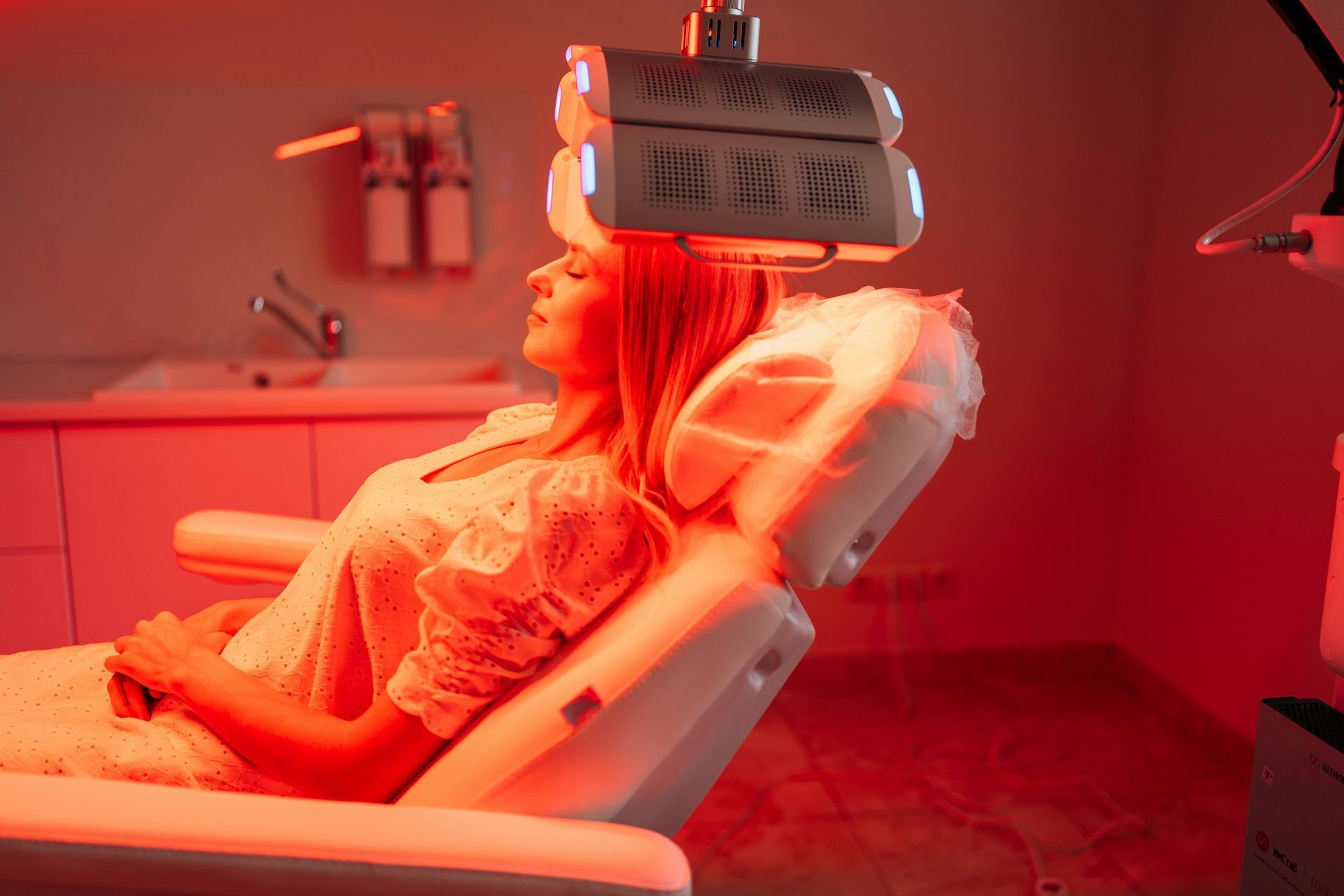
Emsella is a chair. You sit on it fully dressed for about twenty-eight minutes while electromagnetic energy causes your pelvic floor to contract thousands of times, far harder than you could contract it yourself. It is FDA-cleared for urinary incontinence. It is not painful, you do not undress, and most women read or answer email through it.
The honest version: the strongest published numbers on it come from studies the manufacturer sponsored, and that does not make them false, it means you should hold them a little more loosely than you would an independent trial. What I can tell you is what I see, which is that it works well for the right patient, especially a woman whose floor is genuinely weak, and it does very little for a woman whose problem is a floor that will not relax. Which one you are is a clinical question, not a marketing one.
MonaLisa Touch, and the part you should know
This is a fractional CO2 laser used inside the vagina to trigger the body's own collagen and blood flow response, with the goal of restoring tissue that estrogen loss has thinned.
Now the thing I am not going to skip. In 2018 the FDA issued a safety communication warning against the use of energy-based devices for vaginal procedures aimed at menopause symptoms, urinary incontinence, or sexual function, and it named adverse events including burns, scarring, and lasting pain. These lasers are cleared by the FDA for general gynecologic and surgical use. They are not FDA-approved specifically for treating genitourinary syndrome of menopause. Any practice telling you this device is FDA-approved for your menopause symptoms is telling you something that is not true.
So why do I still use it. Because for a specific group of women, particularly breast cancer survivors who cannot take estrogen and have run out of options, it is one of the few things left to try, and in my hands over many years it has helped a lot of those women considerably. I use it as a treatment with real evidence gaps, in patients I have examined, after we have talked about vaginal estrogen and moisturizers and everything else first, and after I have said the words "the FDA has raised concerns about this category" out loud in the room.
That is a different conversation than the one most women get. You deserve the real one.
Vaginal estrogen, which deserves more attention than any laser
I am putting this here on purpose, because low-dose vaginal estrogen is the best-studied treatment for genitourinary syndrome of menopause, it is inexpensive, and a staggering number of women have never been offered it because somebody scared them off estrogen decades ago on the back of a flawed study.
Local vaginal estrogen is not systemic hormone therapy. The dose is tiny and it largely stays where you put it. For most women, including many who were told they could never touch estrogen, it is appropriate and it works. Ask about it before you spend a dollar on a laser.
Emsculpt NEO for the core
We use it for deep core and hip stabilization in women whose pelvic floor problem travels with back pain and a core that has gone quiet. It is a strengthening tool, not a pelvic floor treatment, and I use it alongside the actual pelvic floor work rather than instead of it.
How We Handle This at the Practice
The first appointment is a conversation and an exam, not a treatment pitch. I need to know how long, how often, what makes it worse, what you have already tried, what you have stopped doing because of it, and what you actually want back. A woman who wants to run a half marathon and a woman who wants to sleep through the night without getting up four times need different plans.
Then we start with the least invasive thing that has the best evidence for your specific problem, and we escalate only if we need to. Sometimes that is physical therapy and vaginal estrogen and nothing else. Sometimes it is the chair. Sometimes it is the laser, with the full conversation attached.
What does not happen here is you standing in the doorway with your coat on, working up the nerve.
What You Can Do This Week
Say it out loud to somebody. That is the whole first step and it is the one that takes the most courage. Use the clinical words if they help you get it out: stress incontinence, painful intercourse, pelvic floor dysfunction.
Ask for a pelvic floor evaluation, especially if you have low back pain nobody has solved. Ask whether your floor is weak or tight, because the treatments are opposite and guessing wrong wastes months.
Ask about vaginal estrogen before you ask about a laser.
And if somebody offers you an energy device for menopause symptoms, ask them directly what the FDA has said about that category. A good clinician will answer you without getting defensive.
This is your comfort, your sleep, your intimacy, and whether you keep doing the things you love. It is not a footnote at the end of the appointment, and you do not have to live like this.
Frequently Asked Questions
Is it normal to leak urine when I sneeze or exercise?
It is common, and common is not the same as normal. Stress urinary incontinence happens when the pelvic floor cannot handle a sudden increase in abdominal pressure, and it is treatable in most women. Pads manage the symptom. They do not treat the cause.
What is Emsella and who is it for?
Emsella is an FDA-cleared chair-based device that uses electromagnetic energy to produce strong pelvic floor contractions while you sit fully clothed, typically twenty-eight minutes per session over a course of treatments. It is most useful for women whose pelvic floor is genuinely weak. It is less useful, and sometimes counterproductive, for women whose pelvic floor is too tight. An examination determines which you are. Much of the published data is manufacturer-sponsored, which is worth knowing when you read the numbers.
Is MonaLisa Touch FDA-approved for menopause symptoms?
No. Fractional CO2 lasers of this type are FDA-cleared for general gynecologic and surgical use, not approved for treating genitourinary syndrome of menopause. In 2018 the FDA issued a safety communication warning against the use of energy-based devices for vaginal procedures targeting menopause symptoms, urinary incontinence, or sexual function, citing reports of burns, scarring, and persistent pain. It can still be an appropriate option for selected patients, particularly women who cannot use estrogen, but that decision belongs in a conversation with a physician who tells you all of this first.
Why does sex hurt after menopause?
Estrogen maintains the thickness, elasticity, and moisture of vaginal tissue. When it declines, that tissue thins and loses elasticity, which is what makes intercourse painful. This is genitourinary syndrome of menopause, and it is treatable. Low-dose vaginal estrogen has the strongest evidence base, and non-hormonal moisturizers, pelvic floor therapy, and in selected cases laser treatment are also options.
Can pelvic floor problems cause back pain?
They can. The pelvic floor is the base of the deep core, working with the diaphragm, deep abdominals, and back muscles. When it is not functioning, load transfer through the spine and hips changes and back pain is a frequent result. If you have chronic low back pain and nobody has examined your pelvic floor, that is a gap worth closing.
Do Kegels work?
Sometimes, and sometimes they make things worse. A pelvic floor that is too tight needs to learn to relax, and squeezing it harder is the wrong direction. Supervised pelvic floor physical therapy with a specialist is the right starting point for most women, because the therapist can tell which problem you actually have.
Written by Dr. Georgine Nanos, MD, MPH, founder of Kind Health Group in Encinitas, CA. More on The Kind Revolution podcast.

Meet the Author


You might also enjoy: