
Treatment Resistant Doesn't Mean Hopeless. It Means Undertreated.
A psychiatrist missed her own perimenopause. She thought her antidepressant was causing the night sweats.
Dr. Carlene MacMillan is a child and adolescent psychiatrist, the Chief Medical Officer at Radial, and spent years chairing the Clinical TMS Society's insurance committee — which means she is one of the few people in the country doing the tedious, unglamorous work of getting brain treatments actually covered. She is also a woman in midlife who walked into a routine OB-GYN appointment, got asked whether she still gets her periods, said yes, and watched the conversation end there.
"It's not a bad doctor," she tells Dr. Nanos. "The standard is just so low."
What follows is a conversation about where women's symptoms go to get misfiled. Dr. MacMillan describes patients whose depression she successfully treated — who then said I'm not depressed anymore, but I still feel awful — and who turned out to have PCOS, endometriosis, or autoimmune disease that had been dismissed for years as being in their heads.
They also get into high-THC cannabis and the adolescent brain, why TMS is covered after roughly two failed medications rather than four, what accelerated protocols mean for access, and why she'd like the field to stop calling itself psychiatry and start calling itself brain medicine.
This is The Kind Revolution — where science meets courage and medicine meets humanity.
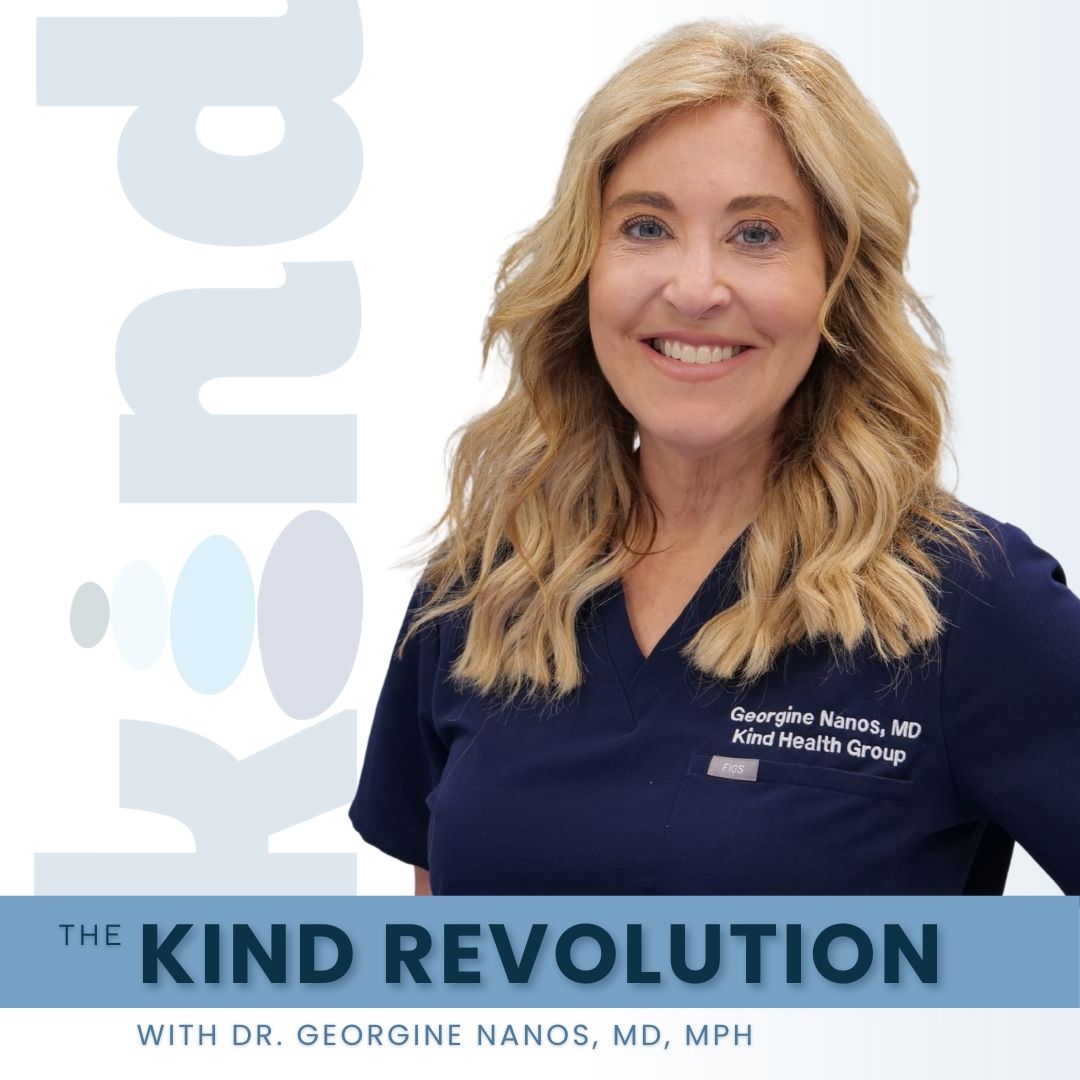
🎙 Hosted by Dr. Georgine Nanos, MD, MPH | Kind Health Group, Encinitas, CA
👤 Guest: Dr. Carlene MacMillan, MD | Chief Medical Officer, Radial | @CarleneMacMillanMD
Meet the Author

You might also enjoy: