
Your annual physical isn't built for early detection.
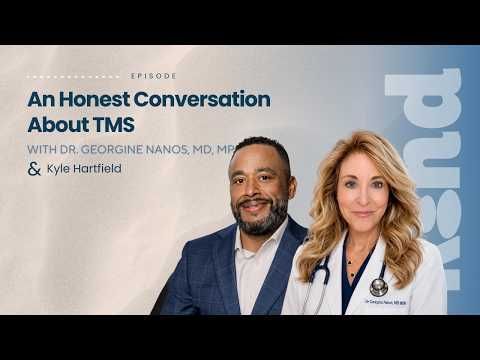
By Dr. Georgine Nanos, MD, MPH | Board-Certified Family Physician, Kind Health Group, Encinitas, CA
My own cholesterol panel was beautiful. Sky-high HDL, the number everybody congratulates you for, and I was proud of it, and then I got actual imaging and found plaque I had no business having. Nobody would have caught that on a standard panel. Nobody was looking.
That is the day I stopped treating a normal lab as proof that anything is fine.
The Annual Physical Was Built to Confirm You Are Not Actively Dying
I want to be careful here, because this is not me telling you your doctor is bad at their job. Your doctor is working inside a system that was designed around a completely different question. The annual physical checks your blood pressure, your weight, a basic metabolic panel, and whatever screening your insurance will pay for at your age. Mammogram. Colonoscopy every ten years. Pap smear. That is the list.
Notice what is not on the list. Pancreas. Ovaries. Lungs, if you never smoked. Those are the cancers that kill women quietly, and there is no routine screening test for any of them.
And the reason people find them late is not bad luck. It is that symptoms are a late-stage event. By the time pancreatic cancer hurts, it has usually spread. By the time ovarian cancer announces itself, it is rarely still in the ovary. Waiting for your body to tell you is waiting for the worst possible moment to find out.
Here is the part I actually want you to hear. When you are told "that test is not standard of care" or "we don't screen until 50," that sentence is about populations, not about you. Screening guidelines get set by cost-benefit math across millions of people. That math says nothing about whether a test would help you, specifically, with your family history and your body.
Stage Is Almost Everything
I am going to give you numbers, and I want you to sit with them for a second, because this is the entire argument.
Pancreatic cancer caught while it is still localized: about 46% of people are alive at five years. Once it has spread to distant sites: 3%. Ovarian cancer, localized: 92%. Distant: 27%. Non-small cell lung cancer, localized: 67%. Distant: 12%. Those are SEER figures compiled by the American Cancer Society, and they are not subtle.
Same disease. Same person. The only variable that moved is when somebody looked.
What the Galleri Test Actually Does, and What It Does Not
Galleri is a blood test from a company called Grail. It looks for cell-free DNA that tumors shed into your bloodstream, screening for signals across more than 50 cancer types in one draw, and when it finds a signal it also predicts which tissue it came from so we know where to go looking.
The validation study was published in Annals of Oncology in 2021, 5,309 participants, and it found specificity of 99.5% with tissue-of-origin accuracy of 88.7%. Those are genuinely good numbers.
Now here is the part almost nobody tells you, and I am going to tell you, because you deserve to walk into this with your eyes open.
In the PATHFINDER study, published in The Lancet in 2023, 6,621 people got the test. A cancer signal came back in 92 of them, which is 1.4%. But the positive predictive value was 38%. Read that again. Of the people who got a "signal detected" result, fewer than four in ten actually had cancer. The rest went through scans and specialist visits and some genuinely terrible weeks, and then found out they were fine.
That is a real cost and I am not going to pretend it away. A test with 99.5% specificity still generates a lot of false alarms when you are screening for something rare, and that is not a flaw in the test, it is just how screening math works on rare diseases. I bring it up because a patient who understands that number going in handles a positive result completely differently than one who was told the test is 99% accurate and now thinks she is dying.
So: worth doing for the right person, with a physician who has a plan for a positive result before the blood is drawn. Not a magic wand. Not a replacement for your mammogram or your colonoscopy. Additive.
Whole-Body MRI, Honestly
Prenuvo is a whole-body MRI, roughly an hour, no radiation and no contrast dye, read by board-certified radiologists, looking across your brain, spine, chest, abdomen, and pelvis for things that should not be there.
I will say the honest thing about it: there are no outcome trials showing that whole-body MRI screening makes average-risk people live longer. The major radiology societies do not recommend it routinely for people without symptoms, and their reason is the same false-positive problem, incidental findings that send you down a path of more scans and more biopsies for something that was never going to hurt you.
I still think it has a place, and I will tell you exactly why. For a specific person with a specific worry and a physician who will interpret the findings in the context of her actual life, it answers a question nothing else answers. For somebody who just wants to buy peace of mind off a website, it frequently sells the opposite.
The scan is not the medicine. The person reading it with you is.
The Heart Test Nobody Orders
Back to my own plaque for a second, since that is the one I know intimately.
A standard lipid panel gives you total cholesterol, LDL, HDL, triglycerides. It does not give you Lp(a), which is inherited, which you cannot exercise or diet your way out of, and which is one of the strongest independent predictors of early heart attack and stroke we have. It is a single blood test. It is not on the panel. You have to ask for it by name.
Same story with ApoB, which tracks your actual number of atherogenic particles and predicts risk better than LDL does, and with hs-CRP for inflammation, and with a coronary artery calcium score, which is the one that found my plaque.
Ask for Lp(a). Ask once, get the number, and you have it for life. Most women reading this have never been offered it.
How We Do This at the Practice
Proactive screening is not a package we sell you, it is how the annual visit is structured. We go through your family history, your risk profile, and what you are actually worried about, and then we decide together which advanced testing earns its place for you. For some women that is Galleri. For some it is a calcium score and a real lipid workup. For some it is nothing beyond what she is already doing, and I will tell her that too.
When we order Galleri, we talk through what a positive signal means and what happens next before the draw, not after. We coordinate the follow-up imaging and the referrals ourselves. We do the same with Prenuvo referrals and with advanced cardiac and metabolic panels.
None of that fits in a seven-minute appointment. That is not a criticism of seven-minute appointments, that is just arithmetic, and it is why the practice is built the way it is.
What You Can Do This Month
Ask for an Lp(a) level. By name. It is cheap, it is once, and it changes how aggressively you and your doctor treat everything else.
Ask about Galleri if you are over 50, or younger with a family history that keeps you up at night. It is cash-pay and not covered by most insurance. Check galleri.com for current pricing. Ask your physician what their plan is if it comes back positive, and if they do not have one, that tells you something useful.
Consider a coronary artery calcium score if you are over 40. It is inexpensive, it takes minutes, and it tells you whether there is already something in your arteries. Mine did.
Think about whole-body MRI if you want structural answers and you have a physician who will sit with the results alongside you. Not otherwise.
And if you are local, come talk to us. We will go through what you have had, what you have not, and what is actually worth doing for you.
I am not trying to frighten anybody. Fear is a terrible reason to get screened and a worse reason to keep living. What I want for you is time, and enough of it, found early enough that you still have every option in front of you.
Frequently Asked Questions
What is the Galleri cancer test?
Galleri is a multi-cancer early detection blood test developed by Grail. It screens a single blood draw for cell-free DNA signals associated with more than 50 cancer types, and when a signal is found it predicts the tissue of origin with 88.7% accuracy (Klein et al., Annals of Oncology, 2021). It is additive to existing screening, not a replacement for mammograms, colonoscopy, or Pap smears. It is a laboratory-developed test and is not FDA-approved.
How accurate is the Galleri test?
Specificity is 99.5%, meaning very few people without cancer get a false signal. But in the PATHFINDER study (The Lancet, 2023) the positive predictive value was 38%, which means fewer than four in ten people with a "signal detected" result turned out to have cancer. Both numbers are true and they answer different questions. Anyone considering the test should understand the second one before the blood is drawn.
What cancers can a blood test find early?
Galleri has shown signal detection across more than 50 cancer types, including pancreatic, ovarian, esophageal, liver, lung, and lymphoid cancers. Those are precisely the cancers with no routine screening available, which is where an additional test has the most to offer.
Is a whole-body MRI worth it?
It depends on who you are and who is reading it. There are no outcome trials showing whole-body MRI helps average-risk adults live longer, and major radiology organizations do not recommend it routinely for people without symptoms, largely because of incidental findings that lead to more testing. For a specific patient with a specific concern, working with a physician who will interpret findings in context, it can answer questions nothing else answers.
What is Lp(a) and why is it not on my lab work?
Lp(a) is an inherited lipoprotein and one of the strongest independent predictors of early heart attack and stroke. It is not included in a standard lipid panel, it does not respond meaningfully to diet or exercise, and it only needs to be measured once in your life. You have to request it specifically.
How do I know whether advanced screening is right for me?
It comes down to your family history, your own risk factors, and whether you have a physician who will help you act on the results. The testing is the easy part. Having somebody who knows your history well enough to interpret a borderline finding, and who has a plan ready before a result comes back, is what makes any of it useful.
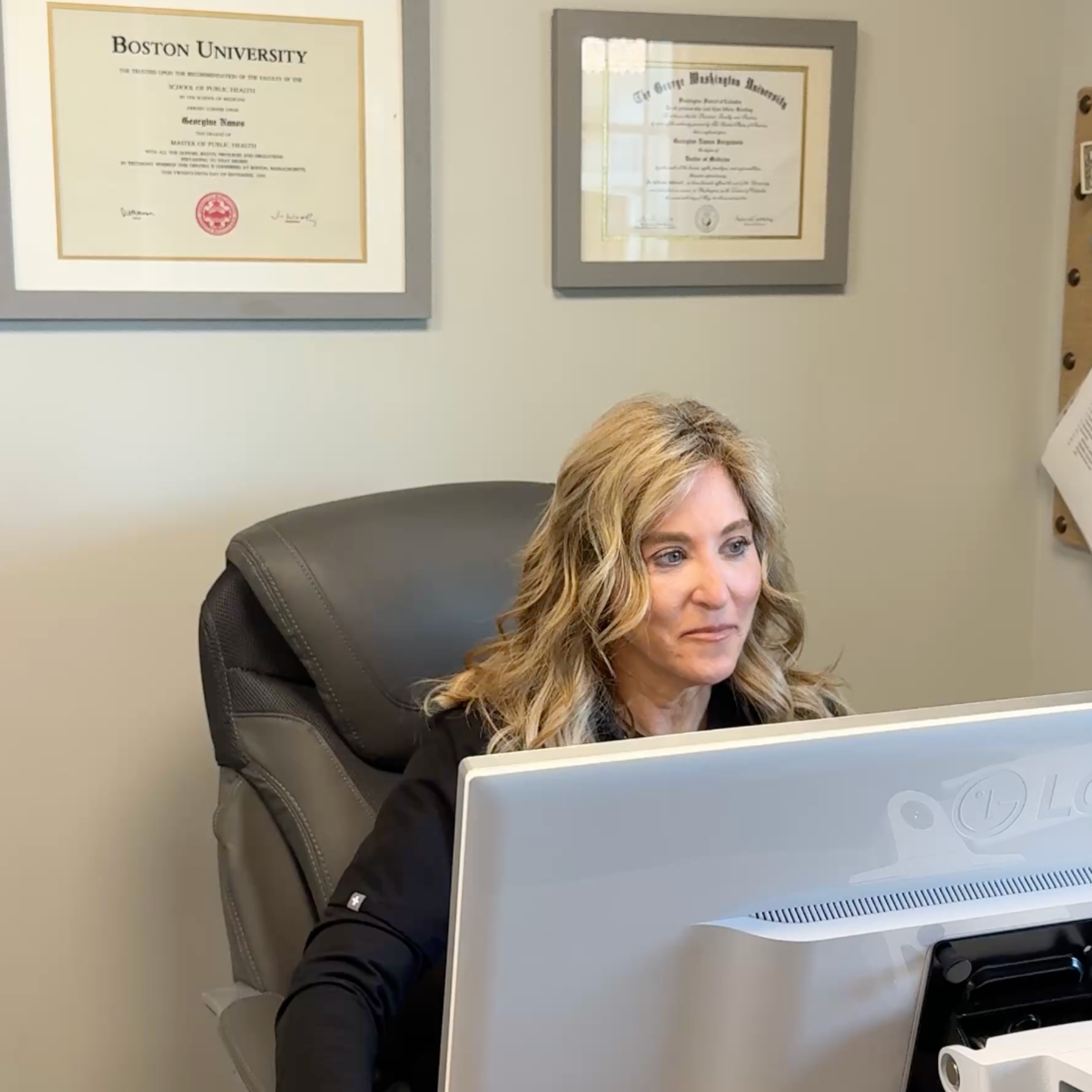
Written by Dr. Georgine Nanos, MD, MPH, founder of Kind Health Group in Encinitas, CA. More on The Kind Revolution podcast.
This is a subtitle for your new post
Meet the Author


You might also enjoy: