
Real Longevity Is Not Sexy. Peptides, GLPs, and the Boring Stuff That Actually Works
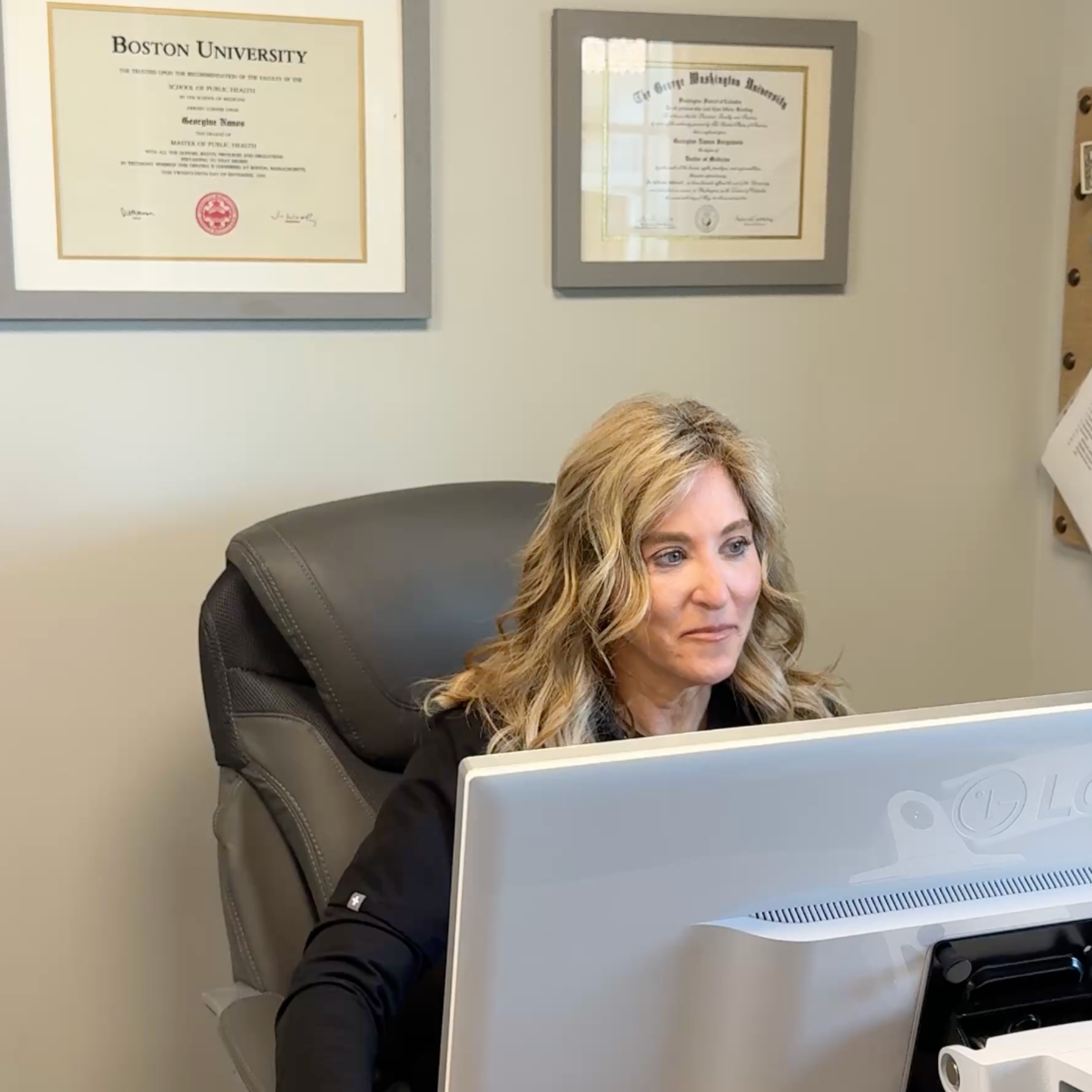
By Dr. Georgine Nanos, MD, MPH | Board-Certified Family Physician, Kind Health Group — Encinitas, CA
She's in her early 60s. Walks six to eight miles a day. Has never been on a single medication. One of the healthiest people I know, and she's been my patient for over twenty years.
She came in two weeks ago with hip pain. She'd already done physical therapy and wasn't improving. We got an X-ray, and the X-ray was completely normal.
But the way she described the pain wasn't orthopedic. And I've known her for two decades, so I know her patterns.
The Ten Days That Changed Everything
We ordered a 3 Tesla MRI. Most MRIs in this country are 1.5 Tesla — there are only a handful of 3 Tesla machines in California, and they see things at a completely different level of detail.
What it showed was a lytic lesion in her hip. A punched-out hole in the bone. That's very suggestive of cancer.
Here's how the next ten days went. Wednesday, the MRI. Thursday, a PET scan of her whole body to look for metastasis. Friday, an extensive lab panel. Monday, an appointment with one of the leading multiple myeloma specialists in the country. Thursday, a bone marrow biopsy. The following Monday, she started treatment.
Ten days from a vague hip pain to treatment for an aggressive cancer. My suspicion had been multiple myeloma, and that's exactly what it was.
When she'd called that oncologist's office on her own, they scheduled her for July.
In the traditional system, that entire sequence takes about two months on a good trajectory. Ten days just to get the PET scan approved. Then weeks, sometimes months, to see the oncologist. That's not because anyone is bad at their job. It's structural. But every second matters in that situation, and our whole team spent those days calling, calling, calling to advocate for her.
That's what the time actually buys.
Longevity Is Not a Sexy Peptide
I want to talk about longevity, because everyone is obsessed with it right now, and that's genuinely great. But a lot of people are obsessed with it without understanding the basics first.
Real longevity is not biohacking. It's not looking younger on Instagram. It's: can you think clearly. Can you hike. Can you do the things that actually make you happy. Can you keep your muscle, avoid frailty, regulate stress, stay independent as long as possible. Can you preserve your emotional resilience and your cognition.
That's the whole game.
And the things that get you there are so unsexy I almost hate saying them out loud. Blood pressure control. Cardiac risk mitigation — your lipids, the ones that cause heart attacks and strokes. Glucose control. Muscle mass preservation. Exercise. Sleep. An anti-inflammatory diet. Not smoking.
That's it. If you're doing those things, you are so far ahead of the game.
No peptide is going to replace any of that. It's not a sexy peptide, it's not a red light chamber — those things can be great, and I'm no stranger to them either, but you have to start with the foundation.
What I Actually Worry About With Peptides
People ask me constantly about the peptide boom. The copper peptides, the mitochondrial ones, the NAD, the stacks with the very sensational names.
Here's the thing nobody mentions. When you get the bottles, a lot of them literally say not for human use, research only. There are no extensive human trials. So you are essentially running a biologic experiment on yourself.
I'm not saying they don't work. In many cases they're very effective — for recovery, for building muscle, for fatigue. They help.
But a lot of that help comes through a process called angiogenesis, which means creating new vascular blood supply in your body. That's the benefit. And that same mechanism can also promote tumor growth. Anywhere, because you're injecting it systemically.
I'm not saying that's happening. I'm saying we don't know that it isn't, because nobody has studied it. Same with muscle — great, but is it also building muscle in your heart? We don't know.
So if you're a peptide person and that's what you want to do, that's your call, genuinely. But then I'd want you screening every six months, because that makes me nervous without the evidence.
The Medications Everyone Is Asking About
The other question I get constantly: is a microdose of a weight-loss medication safe long term.
Yes — with real oversight. These medications have been studied for more than a decade. They've changed metabolic health dramatically, and the positive impact is significant: better cardiac outcomes, help with PCOS, improvements in mood. And with any medication, you want the lowest dose that treats your symptoms, so a microdose is completely reasonable if it's working.
But they're not for everyone. They're contraindicated with certain bowel disorders, pancreatitis, and certain thyroid cancers. And if you're getting them from someone who isn't a licensed medical provider — an MD, a DO, a nurse practitioner, or a PA — that's a big red flag and you should get care somewhere else.
The muscle question is real too. If you're on these long term and you're not eating enough protein and not doing resistance training, you will lose muscle, and that does put you at risk for osteoporosis and falls. It's not a silver bullet where you take it and you're done. It helps you accomplish what used to be really hard. But you still have to do the work — literally the heavy lifting.
It is not a passive experience.
What Real Oversight Looks Like
When I say oversight, I mean every single week. Myself and Kelly Sales, our PA, are asking every patient on these medications about their bowel habits, their fatigue, their sleep, their weight, their mood. Every week, without fail.
If something is a little off, we catch it. Maybe it's a dose adjustment, maybe a break, maybe up or down. The power in that is our patients know that if something goes sideways, we're there.
And it goes well beyond medications. Every Monday our whole team sits down and talks about every single concierge patient — what happened last week, what they need this week, what they'll need six months from now.
We make sure the standard screenings actually happen: colonoscopies, PAPs, mammograms, DEXA scans. Those get lost all the time. Then we go further, with advanced cardiac markers most primary care never orders — ApoB, lipoprotein(a), homocysteine, an advanced lipid NMR. If any of those look even slightly off, we do a coronary CT angiogram that looks inside the arteries feeding your heart.
That's how we caught a woman in her late 60s who just felt "a little off, a little fatigued." She had a significant obstruction. She got a couple of stents, and we prevented a heart attack. She has a lot more energy now.
This is also why women get missed. We don't present clutching our chests. It's vague and non-specific, and if you're only looking for the textbook picture, you'll walk right past it.
We add advanced screening on top — Galleri, which looks for DNA shed by some of the most lethal cancers, and Prenuvo whole-body MRI for a baseline. Neither one replaces standard screening, and no test catches everything. But used together, they find things earlier than waiting for symptoms ever will. Esophageal, ovarian, pancreatic — those are the silent ones we usually don't see until stage four.
We also do a one-time genetic panel, because of epigenetics. Even if you have a predisposition, your lifestyle can up-regulate or down-regulate those genes. Your genetics are not a verdict. Knowing is powerful.
The Wine Question, Honestly
Someone asked, anonymously: I drink a glass or two of wine every night, is that actually bad.
Well. It's not good. I'll say that.
People really underestimate what alcohol does to sleep, anxiety, recovery, inflammation, mood. It's deeply normalized in our culture, especially among high-functioning adults, but it isn't harmless. It disrupts sleep, it's associated with increased cancer risk across the board — it's a known carcinogen — it worsens anxiety and depression, and it affects your liver, your hormones, your cholesterol.
That old thinking about a glass a night being good for you has long since gone out the window.
This is not about shaming anyone. It's about being honest. When patients cut back, they sleep better, their mood and cognition and energy improve, and blood pressure is one of the fastest things to respond. Alcohol is tightly tied to hypertension, and cutting it is one of the easiest ways to bring it down.
If you're out socially and you have a drink, that's probably fine. Personally I drink far less than I ever have, and I was never much of a drinker to begin with. I know that's not what everyone wants to hear.
And a corollary, because here in California I've watched a big shift from alcohol to weed — "California sober." Which is also not that great for you. In adults it will worsen anxiety, mood, motivation, and sleep. Natural doesn't mean good; so is opium. And the way most people actually smoke it is rough on your lungs.
I know. I'm taking away all the good vices.
Ten Years on a Medication Is Not the Problem
Another one: I've been on SSRIs for ten years and birth control for over ten years, is that okay.
Yes. That's okay. SSRIs and hormonal contraception are two of the safest classes of drugs we have and they've helped an enormous number of people profoundly.
The medications aren't the issue. Being on autopilot for a decade without ever reassessing — that's the issue. People change. Your physiology changes, your lifestyle changes, your reproductive goals change.
And this is a time problem, not a doctor problem. It's not that physicians don't want to have that conversation. There isn't enough room in the visit to go through every medication and talk about whether there should be an off-ramp. So nobody ever asks: is this still serving this person.
My goal is always the lowest number of medications necessary. If I prescribe something, it's because you need it, and then we keep reevaluating whether you still do.
Why I Built It This Way
I'm going on my 25th year in practice, which, oh my God.
I got really tired of watching people fall through the cracks. Traditional medicine is structured around volume — I had 4,000 patients assigned to me, five to ten minute visits, fifteen if you were the sickest of the sick. Always reactive. Deeply fragmented, with no specialist ever talking to another specialist.
What actual healing requires is time, attention, long-term thinking, and trust. I'll talk to all of your specialists. I'll set up the meeting to get everyone in the same room.
So much of medicine is pattern recognition, and the more time you have, the better you see the pattern. That's the real luxury of practicing this way — not the amenities. The hour I block for every patient is what let me hear that a hip pain didn't sound orthopedic.
Life isn't binary. It's not all good or all bad. We're under a lot of stress and we live in a chaotic world, and sometimes you do what gets you through. That's okay. Just do it informed, know what you're taking on, and know how to mitigate it. If you have an off week, correct the next week.
There's no shame here. There's never any judgment from us. We get it.
And most of it is fixable.
Frequently Asked Questions
What does longevity medicine actually mean?
It means preserving function, not chasing youth. Can you think clearly, stay strong, keep your muscle, avoid frailty, regulate stress, and stay independent. The interventions that get you there are unglamorous: blood pressure control, lipid and cardiac risk management, glucose control, muscle mass, exercise, sleep, an anti-inflammatory diet, and not smoking. Those fundamentals outperform any trending supplement or device.
Are peptides safe?
Many popular peptides have not been studied extensively in humans, and quite a few are sold labeled "research only, not for human use." They can be effective for recovery, muscle, and fatigue, but a portion of that benefit works through angiogenesis — new blood vessel growth — and that same mechanism can theoretically promote tumor growth. The honest answer is that the long-term safety data does not exist yet. If you choose to use them, do it with a licensed physician and screen more frequently.
Is a microdose of a weight-loss medication safe long term?
For appropriate candidates under real medical supervision, yes — these medications have been studied for over a decade and have meaningfully improved metabolic and cardiac outcomes. The lowest effective dose is always the goal. They are contraindicated in certain bowel disorders, pancreatitis, and some thyroid cancers, and they require ongoing monitoring plus adequate protein and resistance training to protect muscle. Obtaining them from anyone other than a licensed medical provider is a serious red flag.
Is a glass or two of wine every night bad?
It isn't harmless. Alcohol disrupts sleep, worsens anxiety and depression, raises blood pressure, affects liver function, hormones, cholesterol, and inflammation, and is a known carcinogen. The older idea that a nightly glass is good for you is no longer supported. This isn't about shame — it's about knowing that less is genuinely better, and that cutting back often improves sleep, mood, energy, and blood pressure quickly.
Is it a problem to be on an SSRI or birth control for ten years?
The medications themselves are among the safest classes we have. The real issue is staying on autopilot without periodic reassessment, because your physiology, lifestyle, and goals change over a decade. Reviewing each medication with your physician — is this still serving you, is there an appropriate off-ramp — is the part the system rarely makes time for.
What cardiac tests are missing from standard primary care?
Advanced markers like ApoB, lipoprotein(a), homocysteine, and an advanced lipid NMR give a far more accurate picture of cardiac risk than a standard cholesterol panel, and most primary care settings don't order them routinely. When those are abnormal, a coronary CT angiogram can look directly inside the arteries feeding the heart. This matters especially for women, who often present with vague, non-specific symptoms rather than classic chest pain.
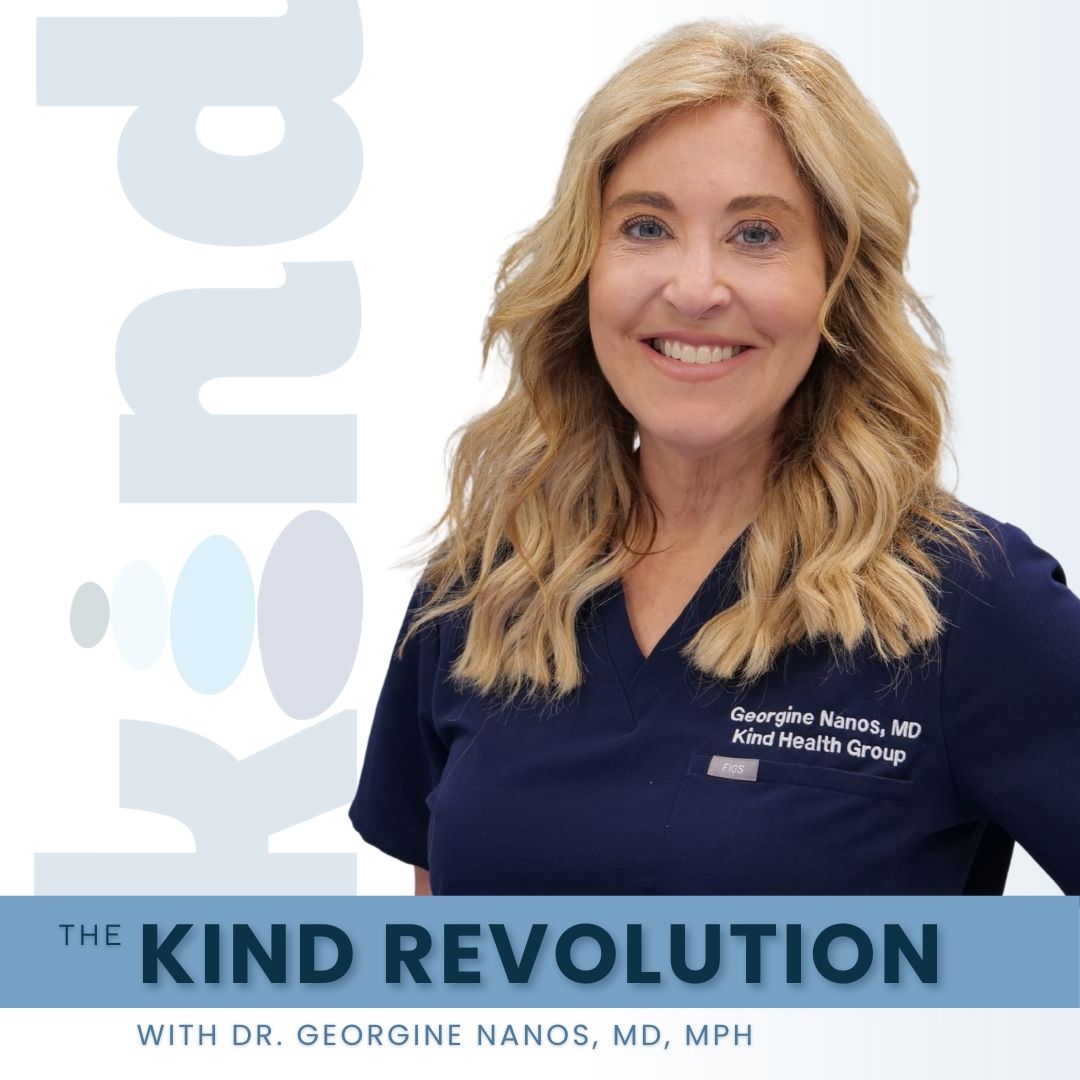
This post came out of an anonymous-questions episode of The Kind Revolution Podcast, where Dr. Nanos and KHG's Lauren Luscombe Holder answer the health questions people are too embarrassed to ask out loud:
The Kind Revolution Podcast — the questions people Google at 2 AM — peptides, GLPs, alcohol, SSRIs, and what real longevity actually means.
Also available on Apple Podcasts, Spotify, Amazon Music, and YouTube. Search "The Kind Revolution."
Meet the Author

You might also enjoy: