
Leaking when you laugh?
She'd been managing it for three years. She carried a change of clothes to her spin class. She stopped jumping on the trampoline with her kids. She said nothing to her doctor because she assumed this was just what happened after children, after 50, after a body that had done what bodies do. She thought this was her life now.
It isn't. And it never had to be.
The Real Problem: What Your Doctor Didn't Tell You — and Why
Let me say this plainly: stress urinary incontinence and pelvic floor dysfunction are among the most undertreated medical conditions in women's health, not because they're difficult to treat, but because most women never get told treatment exists.
The standard conversation — when it happens at all — goes something like this: "Have you tried Kegels?" And Kegels are fine. They address one dimension of a genuinely complex problem. But they cannot reverse tissue changes driven by estrogen loss, they cannot restore neuromuscular function in a pelvic floor that's been traumatized by childbirth, and they cannot treat the full-system dysfunction that underlies the most common pelvic floor presentations I see in women in their 40s and beyond.
Genitourinary Syndrome of Menopause — GSM — is a real, named diagnosis. It describes the cluster of changes that happen when estrogen loss affects the tissues of the vulva, vagina, urethra, and bladder. Painful intercourse. Vaginal dryness. Urinary urgency and frequency. Recurrent UTIs. The burning and pressure that make sitting through a long meeting uncomfortable. These are not character flaws. They are not things you simply endure. They are a clinical condition with documented pathophysiology and multiple effective treatments — most of which your regular doctor has never mentioned because they weren't trained to offer them.
What the Research Actually Shows
The prevalence numbers on this are staggering and almost never discussed: GSM affects up to 50% of postmenopausal women. Unlike hot flashes, which typically resolve within a few years of menopause, GSM tends to worsen over time without treatment. And the majority of women who have it — women who are experiencing pain, dysfunction, and significant quality-of-life impact — never receive treatment.
The two tools I use most frequently to address pelvic floor dysfunction and GSM are Emsella and MonaLisa Touch, and both have substantial peer-reviewed evidence behind them.
Emsella is FDA-cleared for urinary incontinence. In a single 28-minute session, it delivers 11,000-plus high-intensity focused electromagnetic (HIFEM) contractions to the pelvic floor — a level of neuromuscular activation that is impossible to replicate through voluntary exercise. Clinical trials have shown significant improvement in urinary incontinence symptoms after a standard course of six sessions. The mechanism isn't just strength — it's neuromuscular re-patterning. The pelvic floor is being retrained to respond correctly to sudden intra-abdominal pressure events, like laughing, sneezing, or jumping.
MonaLisa Touch is a CO2 fractional laser for vaginal tissue. It stimulates collagen production in the vaginal wall, improves tissue elasticity and moisture retention, and addresses the atrophic changes that make intercourse painful and increase urinary symptoms. Peer-reviewed clinical data shows significant improvements in GSM symptoms — dryness, dyspareunia, urinary urgency — after a standard three-treatment course. Outcomes are durable and the treatment takes less than five minutes per session.
What I See in Practice
When I run a pelvic health evaluation, I'm not looking at one problem. I'm looking at a system.
The pelvic floor is neuromuscular tissue dependent on hormone support. When estrogen drops, collagen in the pelvic ligaments and fascial support structures begins to degrade. Vaginal tissue thins. Urethral support weakens. The neuromuscular coordination that makes the pelvic floor respond to sudden pressure changes — sneezes, coughs, jumps — becomes less reliable. This isn't weakness from not doing enough Kegels. It's tissue-level change driven by hormone status.
In my practice in Encinitas, I see two common presentations. The first is younger women — often in their early-to-mid 40s — who are dealing with pelvic floor dysfunction primarily driven by childbirth history and early hormonal changes. The second is women in their late 40s, 50s, and beyond who have been told their symptoms are inevitable and have been managing around them for years.
Both groups are candidates for treatment. Neither group should be waiting.
What I find almost universally is that addressing pelvic health changes how women feel about their bodies. This is not a cosmetic issue. This is the difference between a woman who runs and a woman who stopped running because she can't. It's the difference between a couple with a healthy physical relationship and one that quietly withdrew from each other because sex became something to endure.
What Treatment Actually Looks Like at Kind Health Group
A pelvic health evaluation at KHG starts with an extended conversation — symptoms, timeline, obstetric history, current hormone status, what's been tried before. From there we look at whether the primary driver is neuromuscular dysfunction, tissue atrophy from estrogen loss, or both (it's frequently both).
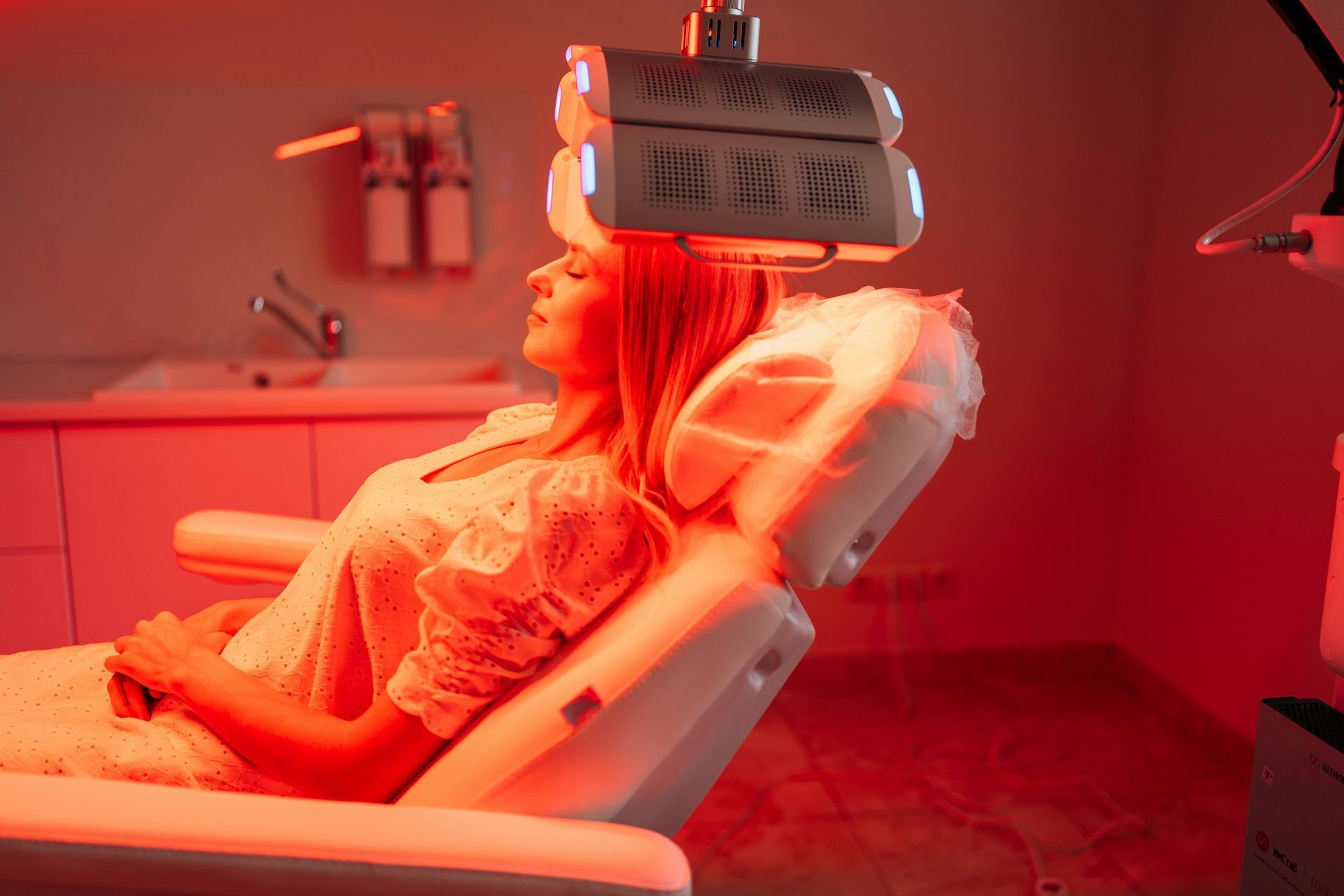
Emsella sessions are done in the office. Patients sit fully clothed in the chair for 28 minutes — it's genuinely that simple. There's no recovery, no discomfort beyond the sensation of the contractions, and most patients notice improvement within the first few sessions. A standard course is six sessions over three weeks.
MonaLisa Touch is similarly in-office, takes under five minutes per session, and involves minimal discomfort. Three sessions spaced over a few months are typically recommended, with annual maintenance.
For patients whose symptoms are primarily hormone-driven, local estrogen therapy — a low-dose vaginal estrogen cream or ring — is often the first and most effective intervention. Systemic estrogen absorption from local application is minimal, making this appropriate even for women who have concerns about systemic hormone therapy.
These options are not mutually exclusive. Many patients benefit from a combination approach, and that's exactly the kind of integrated picture that a concierge practice with physician oversight can provide — rather than a device center that offers one treatment regardless of what's actually driving the problem.
What You Can Do Right Now
First: give your symptoms a name. Not "I leak a little sometimes" — that gets dismissed. "I experience stress urinary incontinence with high-impact activity, I have pain with intercourse, and I have increased urinary urgency over the past two years" is a clinical presentation that should trigger an evaluation.
Second: ask specifically about GSM and pelvic floor treatment options. Ask whether Emsella, MonaLisa Touch, or local estrogen therapy is appropriate for your presentation. If your provider doesn't know what these are or says "that's just part of getting older," that's your cue to find a second opinion.
Third: understand that this is not a cosmetic issue and not a vanity concern. Pelvic floor dysfunction affects quality of life, physical activity, relationships, and long-term urological health. It deserves the same medical attention as any other chronic condition.
If you're in North County San Diego and want a physician-supervised evaluation, reach out at kindhealthgroup.com.
Frequently Asked Questions
Why do I leak urine when I sneeze, laugh, or exercise?
This is called stress urinary incontinence — "stress" refers to physical pressure on the bladder, not emotional stress. It happens when the pelvic floor can no longer support the urethra against sudden increases in intra-abdominal pressure. Causes include childbirth, hormonal changes with perimenopause and menopause, and age-related neuromuscular changes. It is not an inevitable part of aging, and multiple effective treatments exist — including FDA-cleared devices like Emsella and physician-supervised hormone therapy.
Why does sex hurt after menopause?
Painful intercourse after menopause is most commonly caused by genitourinary syndrome of menopause (GSM) — the collection of tissue changes that occur when estrogen loss causes vaginal and vulvar tissues to thin, lose elasticity, and reduce natural lubrication. GSM affects up to 50% of postmenopausal women and tends to worsen without treatment. It is entirely treatable with local estrogen therapy, CO2 laser (MonaLisa Touch), and other targeted interventions.
Do Kegels actually fix pelvic floor problems?
Kegel exercises strengthen the voluntary muscles of the pelvic floor and can help with mild stress urinary incontinence. But they do not address the tissue-level changes caused by estrogen loss, they cannot reverse the neuromuscular dysfunction in severely affected pelvic floors, and they do not treat the full spectrum of genitourinary syndrome of menopause. For many women, Kegels alone are insufficient — and for some presentations, particularly hypertonic pelvic floor dysfunction, they can make symptoms worse.
What is Emsella and does it work?
Emsella is an FDA-cleared treatment for urinary incontinence that uses high-intensity focused electromagnetic (HIFEM) technology to stimulate pelvic floor contractions. In one 28-minute session, it delivers over 11,000 supramaximal contractions — far more than voluntary exercise can achieve. Clinical data supports significant improvement in stress urinary incontinence after a standard six-session course. Patients sit fully clothed in a chair during the treatment with no downtime required.
What is genitourinary syndrome of menopause (GSM)?
GSM is the medical term for the range of changes that affect the vulva, vagina, urethra, and bladder when estrogen levels fall during and after menopause. Symptoms include vaginal dryness, burning and irritation, painful intercourse, urinary urgency and frequency, and increased susceptibility to urinary tract infections. It affects up to 50% of postmenopausal women, worsens over time without treatment, and is consistently undertreated — largely because most women are never told it has a name, a cause, and an effective treatment.
Is pelvic floor treatment available in Encinitas or San Diego?
Yes. Kind Health Group in Encinitas offers comprehensive pelvic health evaluation and treatment including Emsella, MonaLisa Touch CO2 laser for GSM, local and systemic hormone therapy, and physician-supervised care that treats the full hormonal and neuromuscular picture — not just a single device or a single symptom. Appointments are available at kindhealthgroup.com.
Listen to The Kind Revolution Podcast — Dr. Nanos goes deep on pelvic floor dysfunction, GSM, and the treatments most physicians never discuss:
Beyond Kegels: Pelvic Health & Hormone Balance
Also available on Apple Podcasts, Amazon Music, and YouTube. Search "The Kind Revolution."
This is a subtitle for your new post

Meet the Author


You might also enjoy: