
Do You Even Need a Primary Care Doctor? Family Medicine Physician Explains Why

January 23, 2026

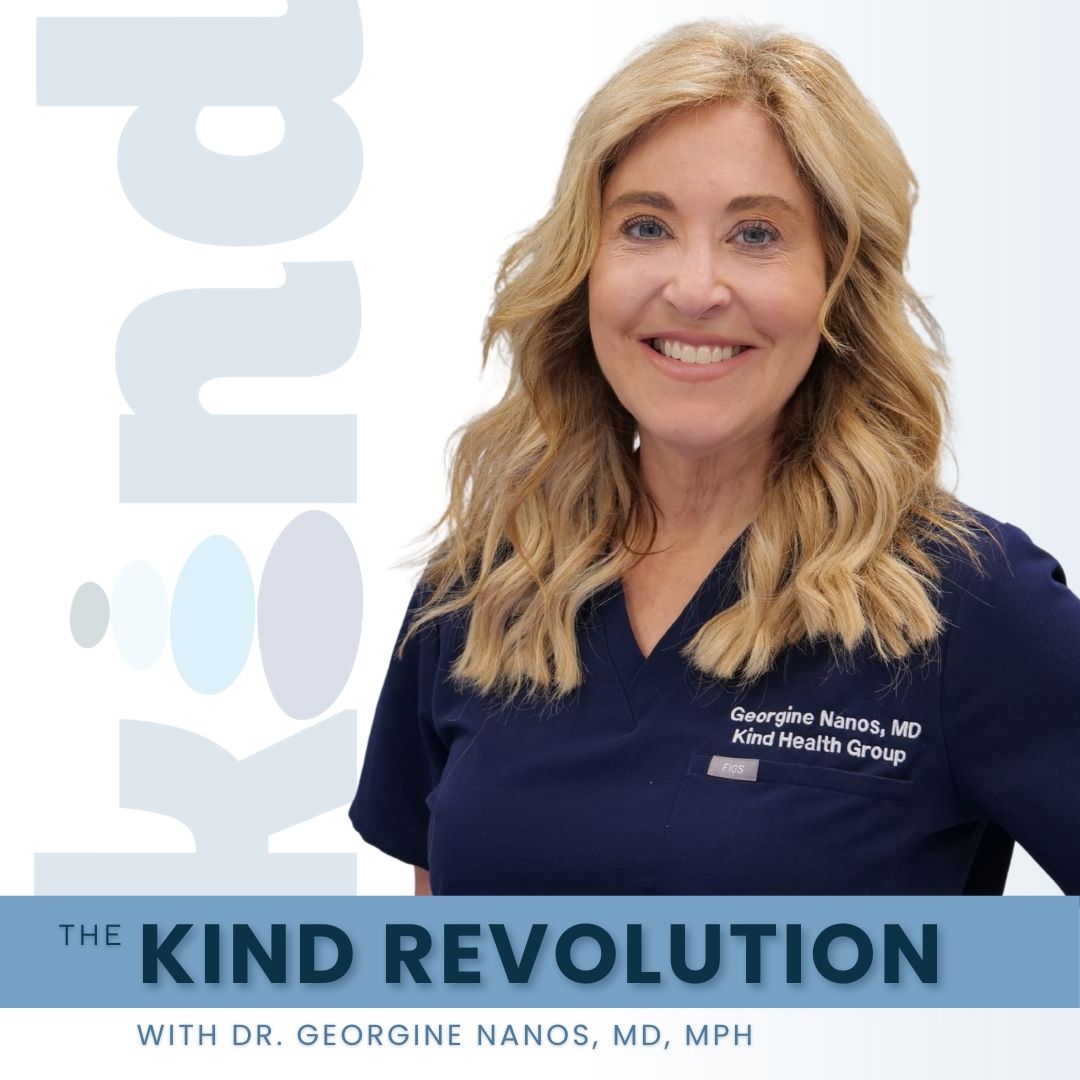
In this episode of The Kind Revolution Podcast, Dr. Georgine Nanos, MD, MPH sits down with Kelly Sales, PA-C, Associate Medical Director at Kind Health Group, to break down what family medicine actually is, why it's the backbone of longevity medicine (before longevity was even trendy), and why every single person needs a primary care physician—especially now. This isn't your typical medical specialty conversation. 


Dr. Nanos and Kelly get real about what happens when you don't have someone coordinating your care: the woman treated for depression when she actually needed hormone therapy, the patient bouncing between specialists with no one connecting the dots, the friend diagnosed with stage 4 cancer with no one to help navigate the terrifying healthcare system. This conversation strips away the confusion about who does what in healthcare and makes the case for why primary care isn't optional—it's foundational. 


 TIMESTAMPS: 

 00:00 - Introduction: Why we're talking about family medicine 

 02:00 - What family medicine actually is (and why you need it) 

 03:49 - Cradle-to-grave care: treating the entire human lifespan 

 04:46 - The privilege of seeing generations of families 

 06:02 - Family doctors as mental health specialists (80-90% of care) 07:33 - The mind-body connection: mental health affects cardiovascular health 

 09:15 - When physical symptoms are actually mental health (and vice versa) 

11:28 - Why you need a central hub coordinating your care 

 12:42 - The woman misdiagnosed with depression (when it was hormones) 

13:18 - Navigating the broken healthcare system during crisis 

 15:07 - Being part of your patient's support system 

 16:47 - Family medicine IS longevity medicine (before it was trendy) 

 17:37 - Game-changing tools: GLP-1s and Galleri tests 

 18:43 - Final thoughts: why everyone needs a family medicine doctor 


ABOUT KELLY SALES, PA-C: Associate Medical Director at Kind Health Group. Board-certified physician assistant specializing in family medicine, preventive care, mental health integration, and comprehensive wellness. Passionate about the continuity of care that allows providers to support patients through life's best and worst moments. 


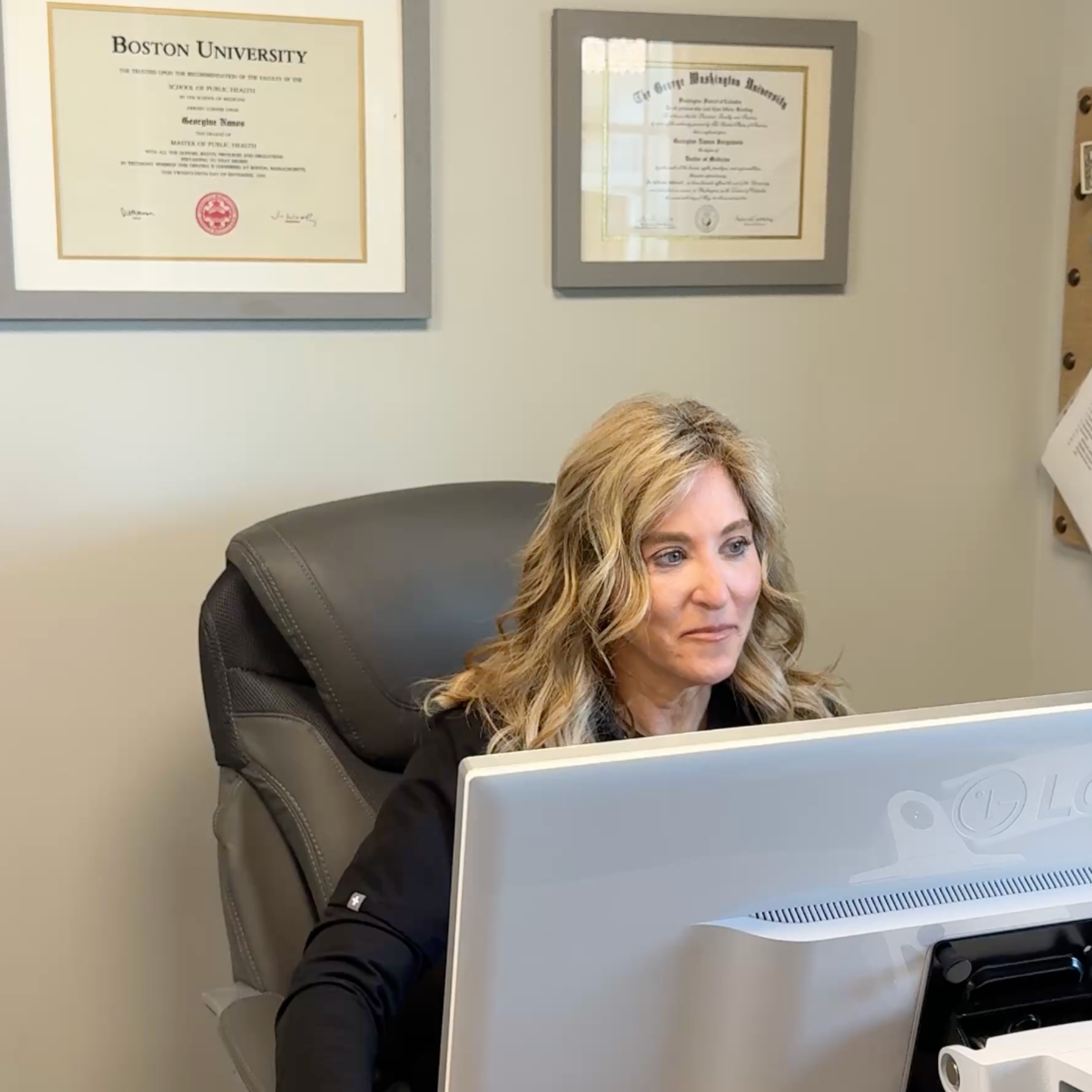
ABOUT DR. GEORGINE NANOS, MD MPH: Board-certified family medicine physician and founder of Kind Health Group. Pioneer in integrative primary care combining traditional family medicine with cutting-edge treatments like TMS therapy, hormone optimization, and longevity medicine. Advocate for comprehensive care that treats the whole person across their entire lifespan. 


SHARE THIS VIDEO: Essential viewing for anyone who's been putting off finding a primary care doctor or doesn't understand why they need one. This content is educational. Consult qualified healthcare providers for personalized medical advice.
Meet the Author

About Dr. Nanos

You might also enjoy:


Podcast-style banner: “Why Your Normal MRI Missed It — The Exam That Finds Verti…” with two women in pink and white coats
September 9, 2026
Dizziness is the symptom medicine gives up on. Normal scans mean the dangerous causes are ruled out, not that nothing is wrong, the diagnostic sign is suppressed up to 66% by room light, so it is only visible in the dark with equipment most clinics do not own. Plus estrogen can be why spontaneous vertigo peaks in women
Gloved hand holding a test tube with red liquid in a laboratory rack
September 7, 2026
Exhausted, foggy, and 'off' but your labs say normal? Dr. Georgine Nanos explains why standard lab ranges miss perimenopause and what to do instead.
By lauren September 2, 2026
For as long as we've talked about fertility, it's been treated as a woman's problem. Her labs. Her hormones. Her clock. Meanwhile half the equation is standing quietly in the background, and nobody is asking about him. Dr. Georgine Nanos sits down with Dr. Kian Asanad, a fellowship-trained reproductive urologist and microsurgeon who directs the USC Fertility and Men's Sexual Health Center and teaches urology at Keck Medicine of USC. He has published more than 40 peer-reviewed papers, including in JAMA, and he spends his days doing the part of fertility medicine most people never hear about. If you or your partner have been told her labs are fine and you're still not pregnant, the missing piece may not be in her chart at all. This is The Kind Revolution — where we bridge science, compassion, and courage. ⏱️ TIMESTAMPS 0:00 — Why fertility has always been framed as her problem 2:23 — Welcome, and who Dr. Asanad is 2:41 — The path in: a heart transplant, a mentor, and a specialty he'd never heard of 3:49 — Building something beyond the exam room 6:22 — The assumption that something is wrong with her 6:32 — How much of infertility is male factor 7:29 — How easy the male workup has become 8:53 — What a male fertility workup actually involves 9:28 — The 10% who have zero sperm 10:36 — MicroTESE, and the 50/50 of it 11:42 — Telling a couple the odds 13:12 — Grief, and the stepping stone 14:10 — Fertility preservation before cancer treatment 16:05 — Why it's now standard of care 16:47 — Oxidative stress, DNA integrity, and the gut-testes axis 23:23 — Life outside medicine 24:35 — Stem cells, and why nothing has changed since 1999 25:53 — Testosterone goes mainstream 26:25 — On pop-up clinics and "my guy" 27:15 — The testosterone trap 28:11 — The secret-shopper study 29:47 — Rapid fire 29:53 — The myth he'd erase forever 30:51 — What he tells every nervous man 32:02 — Closing 🔗 CONNECT 🌐 kindhealthgroup.com 📱 Instagram: @kindhealthgroup 👤 Dr. Kian Asanad — USC Fertility and Men's Sexual Health Center, Keck Medicine of USC asanadmd.com ⚕️ This conversation is for education and is not medical advice. Talk to your own physician about your situation.
Pregnancy test with blue cap held in foreground, blurred couple sitting together on couch in background
September 2, 2026
Male factor is involved in 50% of infertile couples and is the sole cause in 20%. A reproductive urologist on the test that takes a week, and why testosterone is a contraceptive.