

Why Kegels Alone Don't Work
January 21, 2026
This is a subtitle for your new post
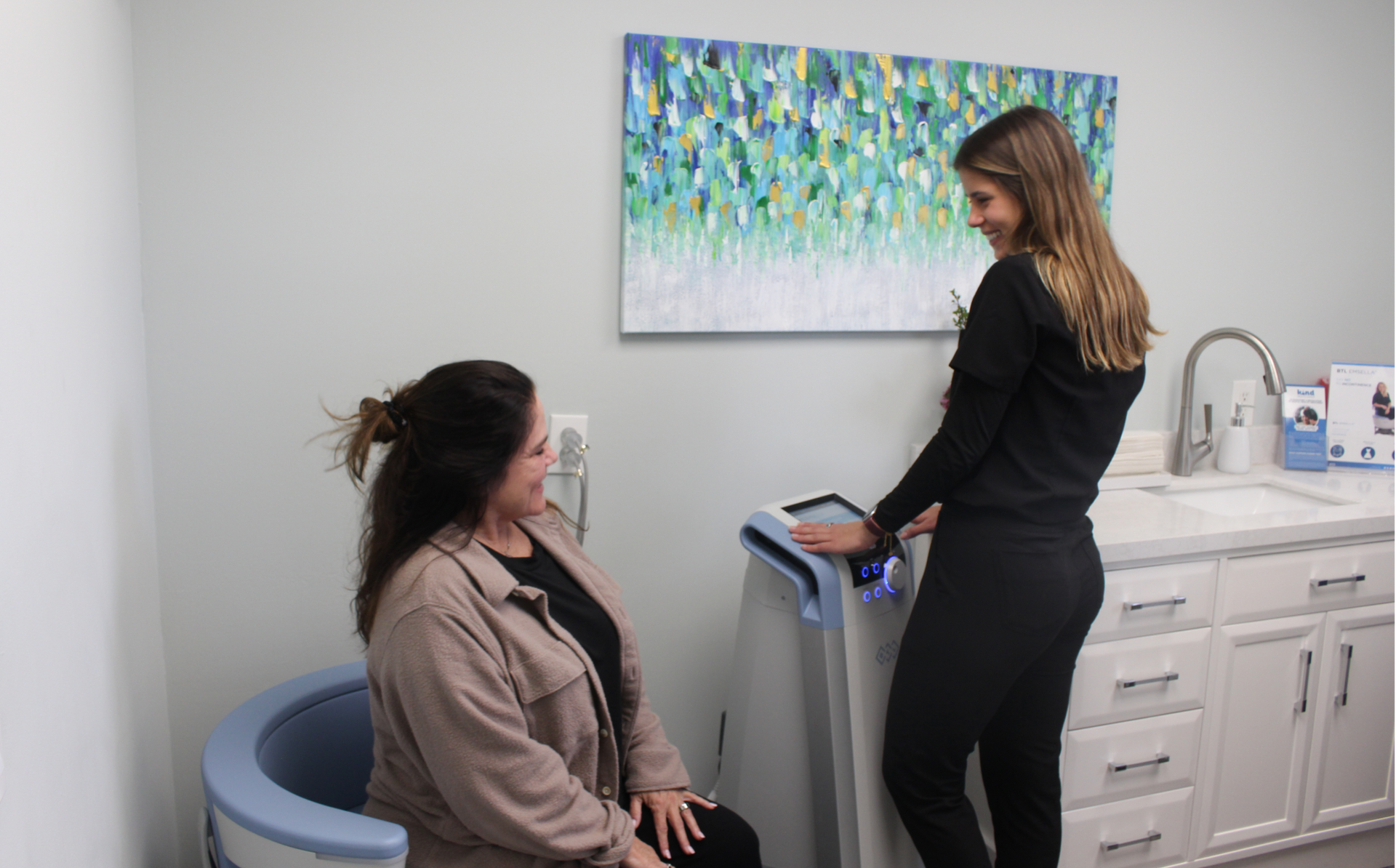
You've been doing Kegels for years. Squeeze at red lights. Hold while brushing your teeth. Release during commercial breaks.
And yet here you are, still dealing with bladder leaks, still crossing your legs when you sneeze, still avoiding the trampoline section at your kid's birthday party.
You're not doing anything wrong. Kegels just aren't enough for most women.
---
The Problem With Kegels
Most women do them incorrectly.
Studies show up to half of women bear down instead of lifting when attempting Kegels—which can actually make pelvic floor problems worse.
They only target part of the system.
Your pelvic floor works with your deep core, diaphragm, and back muscles as an integrated unit. Strengthening one piece while ignoring the others rarely solves the underlying problem.
They can't create enough intensity.
Voluntary muscle contractions are limited by your brain's protective mechanisms. You simply can't contract your pelvic floor muscles intensely enough through willpower alone to create real strength changes for many women.
They don't address tissue quality.
If hormonal changes have affected your vaginal and urethral tissue, no amount of muscle exercise will fix that.
What Actually Works
Effective pelvic floor treatment usually requires addressing multiple factors:
Muscle strength and coordination:
Technologies like Emsella can create thousands of intense pelvic floor contractions in a single session—reaching muscles and intensity levels that Kegels can't match.
Core stability:
If your deep core muscles are weak, your pelvic floor is working overtime to compensate. Strengthening the whole system with treatments like Emsculpt NEO gives your pelvic floor the support it needs.
Tissue health:
For women in perimenopause or menopause, hormonal changes affect tissue quality throughout the pelvic region. Hormone optimization and treatments like MonaLisa Touch address what muscle exercises can't.
The complete picture:
A physician who understands how all these factors connect can create a treatment plan that actually works—instead of having you do endless Kegels while hoping for different results.
Dr. Nanos's Perspective
"I never tell patients to stop doing Kegels. But I do tell them that Kegels alone rarely solve the problem, especially for women over 40.
Most of the women I see have been doing Kegels faithfully for years. They're frustrated and confused about why nothing has improved. Once we address the whole system—the core weakness, the hormonal changes, the muscle coordination issues—they finally see results.
The problem was never their effort. It was that Kegels were only addressing a small piece of a much bigger picture."
Signs You Need More Than Kegels
- You've been doing Kegels consistently for 3+ months without improvement
- You have chronic lower back pain along with pelvic floor issues
- Your symptoms started or worsened during perimenopause
- You experience both stress incontinence (leaking with activity) and urge incontinence (sudden desperate need to go)
- You've had multiple pregnancies or difficult deliveries
- Traditional pelvic floor physical therapy hasn't solved the problem
Next Steps
If Kegels haven't worked for you, it's not a failure—it's information. Your body is telling you that something else is going on.
Schedule a consultation at KIND Health Group
to get the complete picture. We'll evaluate your pelvic floor, core strength, hormonal status, and tissue health to understand what's actually causing your symptoms—and create a treatment plan that addresses all of it.
Meet the Author

You might also enjoy:

Dr. Georgine Nanos sits down with Kyle Hartfield, founder of iTalk TMS, a patient-facing advocacy platform he built because he could not stand a minute of the existing content about it.

Painful sex and dryness after menopause are treatable. Dr. Nanos on Mona Lisa Touch, the non-hormonal laser for vaginal atrophy. KHG, Encinitas CA.

Dr. Georgine Nanos sits down with Dr. James Ross, who practices what he prefers to call holistic brain health.

Colorectal cancer is climbing 3% a year in adults under 50, and younger patients are nearly twice as likely to be diagnosed at stage 4. A UC San Diego surgeon on why, and the two words that fix most of it.