
The Truth About Laser Skin Treatments: What I Wish More Women Knew
January 28, 2026
Closing the gap between how you feel and how you look
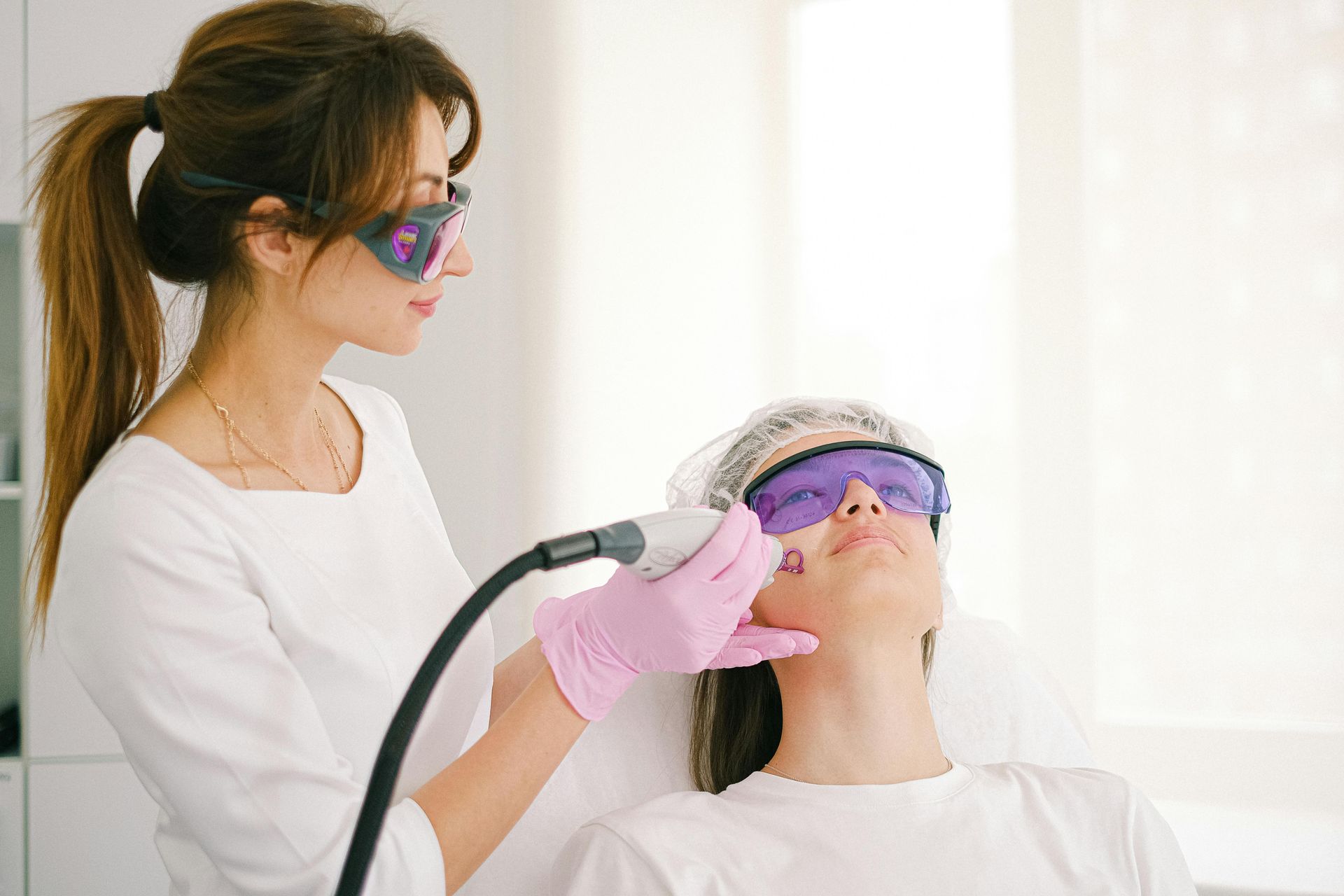
I've had this conversation hundreds of times. A woman sits across from me — usually somewhere between 44 and 55, accomplished, takes care of herself — and she starts apologizing before she even tells me what she wants.
"I know this is vain, but..."
"I'm not usually someone who does this kind of thing, but..."
"My husband thinks I'm crazy, but..."
I always stop them right there.
Wanting your outside to match how you feel inside isn't vanity. It's alignment. And there's nothing to apologize for.
The Confusion Is Real
Here's what I've noticed: the women who come to me about laser treatments have usually already done hours of research. They've Googled. They've read reviews. They've asked friends. And they arrive more confused than when they started.
Ablative. Non-ablative. Fractional. CO2. IPL. Fraxel. The terminology alone is enough to make you close the laptop and decide that fine lines are just "character."
So let me explain this the way I explain it in my office, without the medical jargon that makes everything harder than it needs to be.
What Laser Actually Does (The Simple Version)
Every laser treatment works on the same basic principle: controlled damage that triggers healing.
Your skin is smart. When it senses injury, it rushes to repair itself. It produces fresh collagen. It generates new cells. It rebuilds.
What we're doing with laser is harnessing that intelligence. We create very precise, very controlled micro-injuries, and then we let your body do what it already knows how to do.
The differences between treatments come down to three things: how deep we go, how much surface skin we remove, and how much heat we generate. That's it. Everything else is just variations on those three variables.
Ablative lasers remove the outer layers of skin. Think of it like sanding down a piece of furniture before refinishing. Dramatic results, but you need recovery time because you're essentially growing new surface skin.
Non-ablative lasers work underneath without removing anything. They create micro-damage deep in the tissue to stimulate collagen, but they leave your outer layer intact. You can usually go to dinner that night.
Fractional lasers split the difference. Instead of treating 100% of the surface, they create thousands of tiny treatment columns surrounded by untreated skin. The healthy tissue helps the treated areas heal faster.
Why We Keep Coming Back to CO2
We've worked with a lot of different laser technologies over the years. CO2
remains the gold standard for resurfacing because it simply delivers the most significant results. The problem was always the recovery. Traditional CO2 meant two weeks of hiding.
The DEKA system we use changed that equation. Instead of one aggressive setting, it offers three distinct approaches. We can match the treatment to the patient's goals, lifestyle, and tolerance for downtime.
The Three Paths: How We Help Women Choose
The Full Treatment is for women who are ready to commit. Deep wrinkles, significant sun damage, acne scarring, loose skin — this addresses all of it. The results can genuinely take years off your appearance. But we need to plan for one to three weeks before you're comfortable in public.
We had a patient schedule this for early June before her August anniversary party. By week three, she was back to normal. By the party, people kept asking if she'd lost weight. She hadn't. Her skin just looked healthier.
The Weekend Peel
is exactly what it sounds like. Friday afternoon treatment, Saturday at home, back to work Monday with mineral makeup. It's ideal for fine lines, mild texture issues, and maintaining results from previous treatments.
CoolPeel
is for women who genuinely have no downtime to give. It uses the same CO2 technology but delivers energy in incredibly short pulses, which minimizes heat accumulation. Less heat means less damage to healthy skin, which means dramatically reduced recovery.
Most CoolPeel patients have pink skin like a mild sunburn for a day or two, then they're done. They notice smaller pores and better glow within two weeks. It won't give you the dramatic transformation of a full treatment, but for meaningful improvement without putting your life on hold, it's become increasingly popular for good reason.
How We Help Patients Decide
When a woman is sitting in my office trying to choose, we walk her through several considerations:
What are we actually trying to fix? Mild texture and early fine lines respond beautifully to gentler approaches. Deep wrinkles and significant scarring need more aggressive treatment.
What does your life look like right now? If you're a real estate agent in your busy season, you can't disappear for two weeks. If you have a big event in three months, we have more options.
How do you feel about gradual versus dramatic? Some women want one transformative treatment. Others prefer subtle improvement over time with periodic maintenance. Neither is wrong.
What are we building toward? Starting gentle doesn't close any doors. You can always escalate. You can't un-do a treatment that was more than you needed.
What We Tell Patients About Pain
The sensation during treatment feels like snapping rubber bands combined with heat. It's uncomfortable, but it's brief. Most treatments take 15-30 minutes.
We apply numbing cream beforehand. For more intensive treatments, we offer nitrous oxide or can prescribe medication if you want a driver.
What surprises most patients is the post-treatment sensation. For the first 48-72 hours, especially with more aggressive settings, your skin feels hot. Ice packs and healing ointment help significantly. By day three, most people have forgotten about it.
Who We Won't Treat
Not everyone is a candidate, and we'd rather tell you that upfront than have you disappointed later.
Very dark skin tones carry higher risk of hyperpigmentation with certain lasers. While newer technologies have expanded who we can safely treat, this requires careful evaluation.
Active acne or skin infections need to be resolved first. We can't laser over an active breakout without risking spread and scarring.
History of cold sores means laser can trigger outbreaks. This is manageable with antiviral medication, but you need to tell us.
Certain medications need adjustment before treatment. This is why we take a thorough medical history.
Why Medical Oversight Matters
We hear stories from patients who had laser elsewhere with inconsistent results or longer healing than expected. The difference usually comes down to who's overseeing the treatment.
Laser settings aren't one-size-fits-all. The same device has dozens of configurations. Choosing the right combination requires understanding skin types, medical histories, current medications, previous treatments, and realistic goals.
Having a physician who knows your complete health picture supervising your care makes a meaningful difference. Not because every treatment needs to be performed by a doctor, but because someone needs to be thinking about how this fits into your overall health, and available if something isn't quite right.
The Results Timeline Nobody Talks About
Laser results don't happen overnight, even after you've healed. The improvement you see in the first week is just the beginning. The real transformation happens over months as your body produces new collagen.
- Week 1: Improved texture, a certain glow as fresh skin emerges.
- Weeks 6-8: Continued collagen stimulation. Your skin actually looks better at week six than week two.
- Months 3-6: Full extent of improvement, particularly for deeper concerns.
The changes are permanent in the sense that you won't wake up with your old skin back. But skin continues to age. Most people find maintenance means occasional touch-ups — maybe once a year — along with good sun protection.
What We Actually See Happen
The physical results are obvious. Smoother texture. Faded sun spots. Softer lines.
What we find more interesting is what happens to women's confidence. They stop apologizing for wanting to look good. They stop spending mental energy worrying about their appearance. They walk differently.
One patient's husband told her she looked "more like herself." Not younger exactly. Just more aligned with who she actually is.
That's what this is really about. Not fighting aging. Not pretending to be 25. Just closing the gap between how you feel and how you look.
If You're Thinking About This
Start with a conversation.
Not a sales pitch disguised as a consultation, but an actual discussion about your skin, your concerns, your lifestyle, and your goals.
The right treatment depends entirely on you. There's no single "best" laser. There's only the best treatment for you, right now, at this stage of your life.
And if you've been standing in front of your bathroom mirror wondering whether it's time to "do something" — it probably is. Not because something is wrong with you. But because you deserve to feel as good as you look. Or look as good as you feel.
Whichever way that equation runs for you.
Meet the Author

You might also enjoy:
Dr. Georgine Nanos sits down with Dr. Milind Parikh, board-certified cardiologist, to talk about what coronary imaging can and cannot tell you, and why he thinks cardiology should look

61.8 percent of US women report urinary incontinence. What the laugh test measures, the sign it is already costing you, and what to try first.

Perimenopause starts long before hot flashes. Dr. Nanos on the cycle changes, sleep, mood and bleeding signs that tell you it has begun.

Dr. Georgine Nanos sits down with Kyle Hartfield, founder of iTalk TMS, a patient-facing advocacy platform he built because he could not stand a minute of the existing content about it.