
Why I Push So Hard on Cancer Screening (And Why You Should Too)
February 9, 2026
What Comprehensive Screening Actually Looks Like
I was on KUSI this week discussing new pancreatic cancer research coming out of the National Cancer Institute in Spain. The reporter asked me an important question: "Can I ask my doctor about pancreatic cancer prevention at my next physical?"
My answer was immediate: "Absolutely. Yes."
But here's what I really wanted to say in that three-minute segment: we already have better screening tools than most people realize. We just need to start using them.
The Problem with Waiting for Symptoms
Pancreatic cancer is terrifying because it's nearly impossible to detect early. There are very few signs and symptoms in the early stages. When they do appear—fatigue, mild bloating, vague abdominal discomfort—they're so nonspecific that they get dismissed as normal aging or digestive issues.
Very commonly, there are no symptoms at all until the cancer is advanced.
This is true for several of the deadliest cancers: ovarian, esophageal, pancreatic. By the time patients feel sick enough to seek help, we're often playing catch-up instead of getting ahead of the disease.
The Gap in Traditional Screening
Our standard screening protocols are excellent for certain cancers. Mammograms for breast cancer. Colonoscopies for colon cancer. Pap smears for cervical cancer. These save countless lives every year, and I absolutely recommend them.
But they leave dangerous gaps.
What about ovarian cancer? Pancreatic cancer? Esophageal cancer? For most of these deadly cancers, we simply don't have routine screening tools—or we didn't, until recently.
What Changes the Game
The Galleri multi-cancer
early detection test is the most significant advancement in cancer screening I've seen in my career.
It's a simple blood draw that screens for over fifty types of cancer—many of which we have no other way to detect early. It works by looking for microscopic pieces of cancer DNA that tumors shed into the bloodstream, often before there are any symptoms or abnormalities on imaging.
This doesn't replace traditional screening. You still need your mammograms and colonoscopies. But Galleri fills the gaps that standard protocols miss.
Why Early Detection Matters More Than Treatment Breakthroughs
When I discussed the Spanish pancreatic cancer research on KUSI, I had to be realistic about timelines. Yes, this triple-drug therapy targeting multiple resistance pathways is promising. But these were mouse studies. Human trials are still years away.
This is how medical research works—slowly and methodically, with multiple phases to ensure safety and efficacy before treatments become available to patients.
I wish I could tell you there's a cure around the corner. But I can't predict when—or if—that research will translate into available treatments for humans.
What I can tell you is this: we already have powerful screening technology available right now. Today. Not in five or ten years when those trials might conclude.
And early detection will always be more effective than treating advanced disease, no matter how good our treatments become.
What Comprehensive Screening Actually Looks Like
At Kind Health Group, cancer screening is part of our broader longevity and preventive health approach. For patients over 40, especially those in the 45-55 age range where cancer risk increases significantly, I recommend:
Standard Screening (Essential Baseline)
Annual mammograms
Regular Pap smears and HPV testing
Colonoscopy per guidelines
Skin checks for melanoma
Advanced Screening (Filling the Gaps)
Comprehensive biomarker panels that can reveal inflammation or other early warning signs
Whole-body MRI imaging (like Prenuvo) for structural abnormalities
Cardiac CT angiography for cardiovascular disease detection
This comprehensive approach addresses both the cancers we have established screening for and the ones that traditionally slip through until it's too late.
If you're over 40, this is what you should ask at your next appointment:
"I want to discuss comprehensive cancer screening beyond standard mammograms and Pap smears. What options do I have for detecting cancers that don't have routine screening protocols?"
Some physicians aren't familiar with Galleri testing yet—it's relatively new technology. But you deserve to know it exists and to make an informed decision about whether it's right for your health strategy.
If your current doctor can't help you access comprehensive screening, it might be time to find a physician who prioritizes preventive and longevity medicine.
When patients come to me wanting to live as long as possible for their children and grandchildren, cancer screening is one of the first conversations we have.
Because here's the reality: you can eat perfectly, exercise religiously, take all the right supplements, and optimize your hormones—but none of that matters if an undetected cancer is silently growing.
Longevity isn't just about living longer. It's about staying healthy and vital for as long as possible. That requires catching problems early, before they become crises.
There's real value in knowing you've done everything possible to protect your health. When your comprehensive screening comes back clear, you can move forward with confidence rather than carrying around unspoken worry about what might be developing silently.
And if screening does detect something? You have the incredible advantage of early intervention—when treatment is most effective and outcomes are best.
Medical research is making exciting progress. The pancreatic cancer treatment studies are genuinely promising. But we're years away from those breakthroughs becoming available treatments.
What we have right now—today—is the ability to screen for deadly cancers earlier than ever before.
That's not something to wait on. That's not something to put off until next year's physical.
If you're serious about longevity, if you want to be there for your family, if you're investing in preventive health—comprehensive cancer screening needs to be part of your strategy.
Ask your doctor about Galleri testing. Discuss what comprehensive screening looks like for your specific risk factors and health goals.
Because waiting for symptoms isn't a strategy. It's a gamble none of us should be taking.
Dr. Georgine Nanos is a board-certified family medicine physician and founder of Kind Health Group in San Diego, where she specializes in comprehensive preventive care and longevity medicine.
Meet the Author

You might also enjoy:
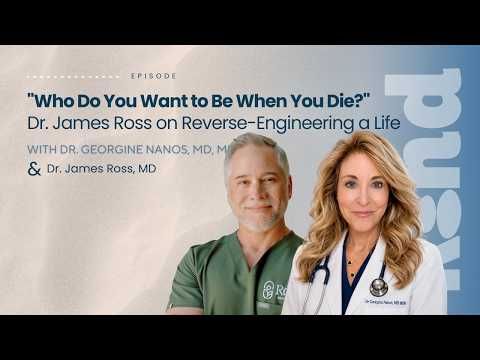
Dr. Georgine Nanos sits down with Dr. James Ross, who practices what he prefers to call holistic brain health.

Colorectal cancer is climbing 3% a year in adults under 50, and younger patients are nearly twice as likely to be diagnosed at stage 4. A UC San Diego surgeon on why, and the two words that fix most of it.
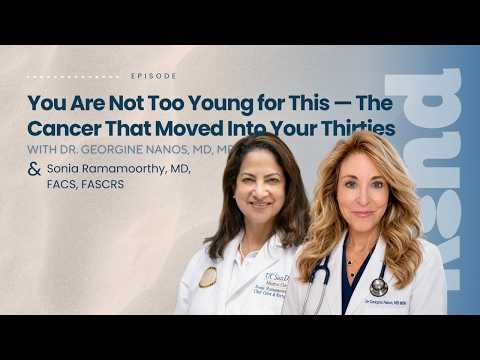
Colorectal cancer used to be an older person's disease. It is not anymore. Dr. Nanos sits down with Sonia Ramamoorthy, they get into why it keeps getting caught late, and the answer is uncomfortable. The early symptoms are rectal bleeding and a change in bowel habits.

She was dizzy for 20 years and broke almost every bone falling. It took three sessions. A vestibular specialist on why normal scans miss vertigo, and the estrogen link nobody mentions.