

What Is Emsella? Your Questions Answered
February 2, 2026
Kegels haven't solved the problem
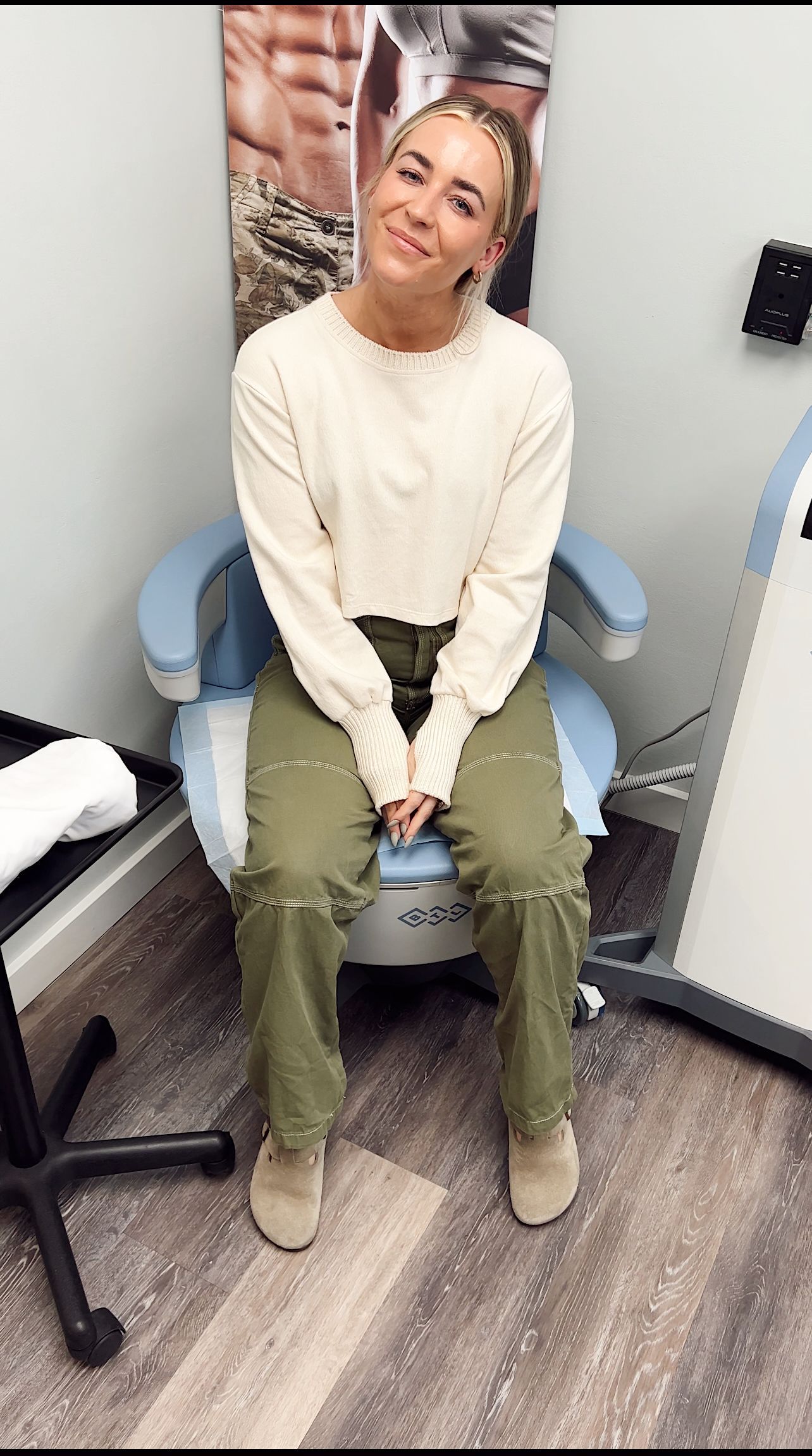
If you've been struggling with bladder leaks during workouts, sneezing, or laughing—and Kegels haven't solved the problem—you're not alone. Many women arrive at KIND Health Group frustrated after months or years of pelvic floor exercises that didn't deliver results.
Emsella
offers a different approach.
How Emsella Works
Emsella uses electromagnetic technology to stimulate your pelvic floor muscles while you sit fully clothed in a specialized chair. During a 28-minute session, the technology creates thousands of muscle contractions—far more than you could ever achieve through Kegels alone.
Think of it as an intense workout for muscles you can't easily target on your own.
The contractions help strengthen weak pelvic floor muscles and retrain the communication between your bladder and the muscles that control it. For many women, this addresses both stress incontinence (leaking during activity) and urge incontinence (that sudden desperate need to find a bathroom).
What to Expect During Treatment
The session itself: You sit in the Emsella chair fully clothed. Most patients describe the sensation as intense muscle contractions—not painful, but definitely noticeable. Many women answer emails or read during their sessions.
Time commitment: Each session is 28 minutes. Most treatment plans include 6 sessions over about 3 weeks.
Downtime: None. You can return to normal activities immediately. Some women schedule sessions during lunch breaks.
Results timeline: Many patients notice improvements within 2-3 sessions. Maximum benefits typically appear 4-6 weeks after completing treatment.
Who Emsella Is Right For
Emsella works well for women experiencing:
- Stress incontinence (leaking when you cough, sneeze, laugh, or exercise)
- Urge incontinence (sudden, intense need to urinate)
- Weakened pelvic floor after childbirth
- Pelvic floor changes during perimenopause or menopause
- Frustration with Kegels that haven't worked
Emsella isn't appropriate for everyone. Women who are pregnant, have a pacemaker, or have metal implants in the pelvic area should discuss alternatives with their physician.
"I rarely recommend Emsella as a standalone treatment. Pelvic floor issues are almost always connected to other factors—core strength, hormonal changes, tissue quality. When we address the whole picture, Emsella becomes much more effective.
That's why at KIND Health Group, we evaluate everything before recommending a treatment plan. Sometimes Emsella alone is enough. Often, combining it with core strengthening or hormone optimization gets better, longer-lasting results."
Frequently Asked Questions
Does Emsella hurt?
No. Patients feel strong muscle contractions, but not pain. The intensity can be adjusted based on your comfort level.
How long do results last?
Results vary by individual. Many patients maintain improvements with occasional maintenance sessions every 6-12 months. Lifestyle factors like weight management and avoiding chronic constipation also help sustain results.
Is Emsella covered by insurance?
Emsella is typically not covered by insurance. We can discuss payment options during your consultation.
Can I do Emsella if I have an IUD?
It depends on the type. Hormonal IUDs without metal components are generally fine. Copper IUDs contain metal that may be affected by the electromagnetic technology. We'll discuss your specific situation during your consultation.
How is Emsella different from Kegels?
Kegels rely on your ability to correctly isolate and contract pelvic floor muscles—and studies show most women do them incorrectly. Emsella stimulates the muscles directly, creating contractions you couldn't achieve voluntarily, and reaching deeper muscles that Kegels often miss.
Next Steps
Curious whether Emsella could help with your specific situation? Schedule a consultation at KIND Health Group. We'll evaluate your symptoms, discuss contributing factors, and recommend a treatment approach tailored to your needs—whether that includes Emsella, other treatments, or a combination.

Meet the Author


You might also enjoy:

Colorectal cancer used to be an older person's disease. It is not anymore. Dr. Nanos sits down with Sonia Ramamoorthy, they get into why it keeps getting caught late, and the answer is uncomfortable. The early symptoms are rectal bleeding and a change in bowel habits.

She was dizzy for 20 years and broke almost every bone falling. It took three sessions. A vestibular specialist on why normal scans miss vertigo, and the estrogen link nobody mentions.

Real longevity isn't biohacking or peptides. Dr. Nanos on what actually preserves function in midlife, what she worries about with peptides, and the ten days that caught a cancer.

Dizziness is the symptom medicine gives up on. Normal scans mean the dangerous causes are ruled out, not that nothing is wrong, the diagnostic sign is suppressed up to 66% by room light, so it is only visible in the dark with equipment most clinics do not own. Plus estrogen can be why spontaneous vertigo peaks in women