
What Your Bathroom Habits Are Trying to Tell You — and the Red Flags to Never Ignore
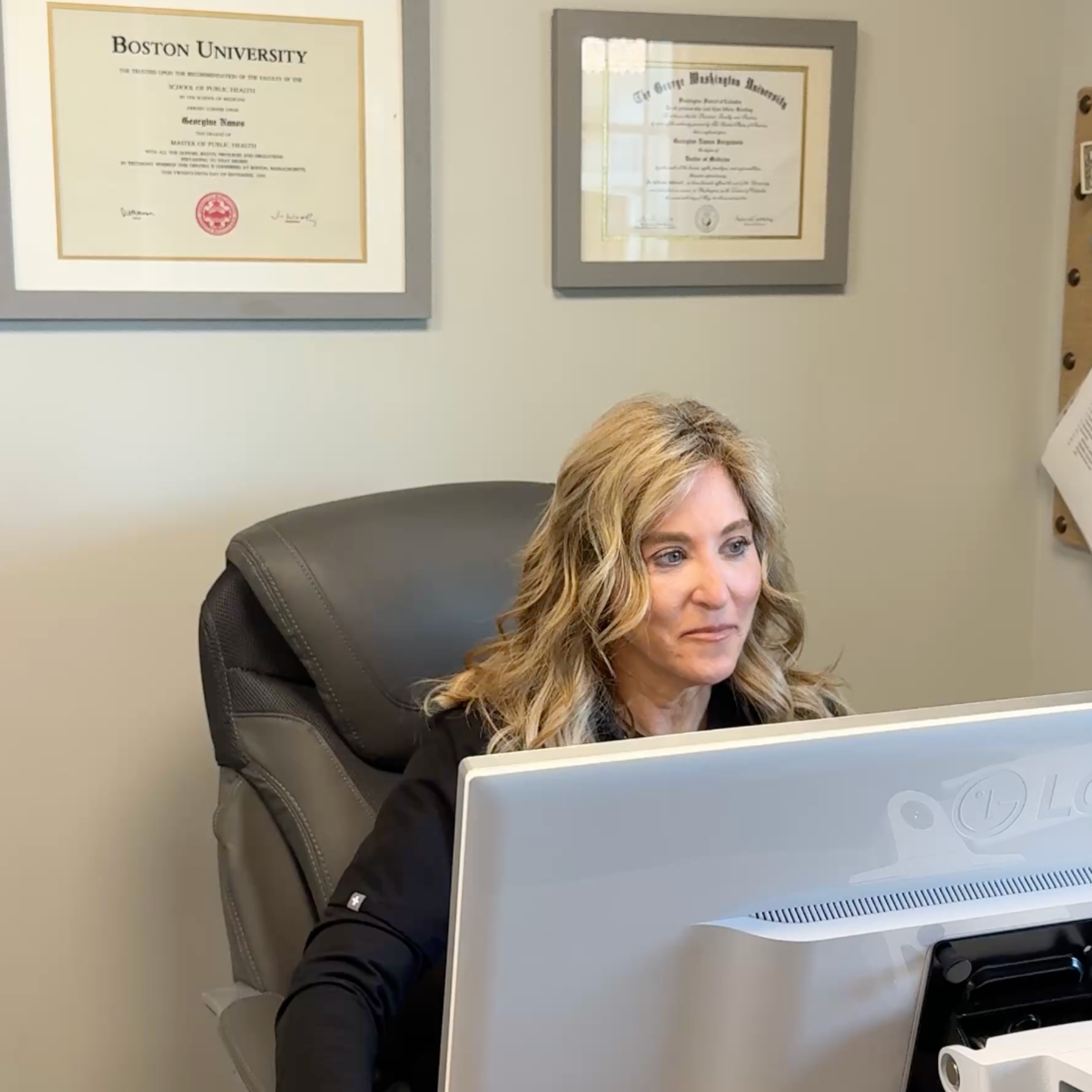
By Dr. Georgine Nanos, MD, MPH | Board-Certified Family Physician, Kind Health Group — Encinitas, CA
A patient once spent forty minutes with me covering her sleep, her stress, and her energy — and then, with her hand on the doorknob, said, "This is probably nothing, but my bathroom habits have been really different lately. I didn't want to be gross."
I asked her to sit back down. Because that "probably nothing" was the single most important thing she told me all day.
Your gut is one of the clearest windows into your overall health. And the symptoms women are most embarrassed to mention are exactly the ones I most need to hear.
The Most Overlooked Window Into Your Health
Here's what happens to a lot of people: they've been mildly constipated, or bloated, or irregular for so long that it just becomes their normal. Years go by. They stop noticing. They certainly never bring it up.
But "what you've gotten used to" and "what's actually healthy" are not the same thing.
How you move your bowels tells me an enormous amount about you, your hydration, your diet, your hormones, your stress, and sometimes something far more serious. It's not a trivial, slightly gross detail. It's data. And when a patient finally says it out loud, it's often the clue that unlocks the whole picture.
So let's demystify it, plainly and without embarrassment, the way I do in my office every single day.
What "Normal" Actually Looks Like
In the exam room we use a simple visual tool called the Bristol Stool Chart. It sorts stool into types, and it takes all the guesswork and awkwardness out of the conversation.
The short version: Hard, separate little lumps? That's constipation, and it's not where you want to be. Lumpy, sausage-shaped and hard? Also constipation. A smooth, soft sausage, like a log or an S-curve? That's the target. Healthy. Mushy blobs or fully liquid? That trends toward diarrhea and can signal something else going on.
You're aiming for that soft, formed middle. Not because it's a vanity metric because it's a sign your whole digestive system is doing its job.
And frequency matters too. Going dramatically less often than usual, or a sudden change in what's normal for you — is worth paying attention to, not waiting out.
The Red Flags You Should Never Normalize
This is the part I want every woman over 45 to hear clearly, because it's the reason I refuse to let anyone be embarrassed about this topic.
Certain changes are not "just getting older." They deserve a prompt conversation with your doctor:
Unintentional weight loss you can't explain. Blood in your stool, ever. A new diagnosis of anemia (low iron). And a genuine, persistent change in your bowel habits, you always went daily, and suddenly you don't, or the consistency looks entirely different.
Here's why this matters so much: a change in bowel habits, particularly starting in the 45-to-50 window, can be one of the earliest signals of colon cancer. That's also why routine colon cancer screening now begins at age 45, not 50. Colon cancer is highly treatable when caught early and increasingly it's showing up in people younger than we used to expect. Catching it early is often the whole game.
None of this is meant to frighten you. It's meant to give you permission to speak up instead of quietly normalizing a symptom that deserves attention.
What Actually Helps Everyday Constipation
Most constipation isn't sinister, it's mechanical, and it responds to the fundamentals. When patients ask what actually works, here's where I start:
Hydration first. Aim for at least 80 ounces of water a day, closer to 100 if you're exercising. This is the single most effective thing most people can do. Front-load it earlier in the day so you're not up all night.
Then fiber. A high-fiber diet full of vegetables, and cutting ultra-processed foods, does more than any supplement. A fiber supplement in a smoothie can help fill the gap.
Then, if needed, the right over-the-counter option and they are not interchangeable. An osmotic laxative (the powder kind, polyethylene glycol) pulls water into the stool to soften it. A stool softener (docusate) simply softens hard stool think "mush, no push." A combination product that adds a stimulant (senna with docusate) both softens and prompts the colon to contract "mush and push." If you're softening but nothing's moving, you often need that second action. When in doubt, ask your physician which fits your situation rather than guessing in the pharmacy aisle.
And know that some medications can slow the gut and worsen constipation, one more reason to keep your doctor in the loop about what you're taking and how you're doing.
What I See in Practice
The pattern I see over and over: a woman has quietly tolerated poor gut health for years because she was taught it's impolite to discuss. By the time she mentions it, we've lost time we didn't need to lose. Sometimes the fix is simple, water, fiber, the right adjustment. Sometimes the conversation catches something that genuinely needed catching. Either way, the win is the same: she finally said it out loud.
At Kind Health Group, we make this conversation ordinary on purpose. We ask specifically, we use the chart, and we treat gut health as the vital sign it is — not an afterthought, and never a source of shame.
What You Can Do Right Now
Start paying attention without judgment. Notice what's normal for you, and take any real, persistent change seriously — especially the red flags: blood, unexplained weight loss, new anemia, or a shift in your habits after 45. Hydrate, prioritize fiber, and don't white-knuckle chronic constipation when simple, effective help exists.
And if you're due for colon cancer screening, 45 is the number, schedule it. It's one of the few screenings that can catch a cancer before it ever becomes one.
If you're in North County San Diego — Encinitas, Del Mar, Carlsbad, Rancho Santa Fe — this is exactly the kind of frank, no-embarrassment conversation we have every day at Kind Health Group. Your gut is trying to tell you something. Let's listen.
Frequently Asked Questions
How often should I have a bowel movement?
There's a healthy range, but the more useful question is what's normal for you and whether that's changed. Regular, soft, formed stools (the middle of the Bristol chart) are the goal. Consistently going much less often than usual, or a clear change in consistency, is worth discussing with your doctor.
When is a change in bowel habits a warning sign?
When it's new, persistent, and unexplained, especially if it's paired with blood in the stool, unintentional weight loss, or a new diagnosis of anemia. A meaningful change in bowel habits starting in the 45-to-50 range can be an early signal of colon cancer, which is exactly why it shouldn't be ignored or waited out.
At what age should I start colon cancer screening?
Current guidance recommends starting routine colorectal cancer screening at age 45 for people at average risk — earlier if you have a family history or other risk factors. Talk to your physician about which screening option is right for you. Colon cancer is highly treatable when caught early.
Hydration and fiber first... at least 80 ounces of water daily and a high-fiber, minimally processed diet. If you need more help, over-the-counter options work differently: some soften stool, others also stimulate the colon to move it along. If you're not sure which you need, ask your doctor rather than guessing.
Is it really okay to talk to my doctor about this?
Completely. Your physician discusses gut health countless times a week there is genuinely no judgment. The symptoms you're most embarrassed to mention are often the most medically important, and saying them out loud is what lets us help you.
This post grew out of a candid "asking for a friend" episode of The Kind Revolution Podcast, where Dr. Nanos and KHG's Lauren Luscombe Holder tackle the health questions women are too embarrassed to say out loud:
The Kind Revolution Podcast — the health questions women are too embarrassed to ask — including a plain-spoken breakdown of what your gut health reveals.
Also available on Apple Podcasts, Spotify, Amazon Music, and YouTube. Search "The Kind Revolution."
This is a subtitle for your new post
Meet the Author


You might also enjoy: