

Why Women Are Misdiagnosed More Often Than Men - The 7-Minute Appointment Crisis

October 8, 2025

55 minutes in the waiting room. 7 minutes with your doctor. This isn't just frustrating - it's dangerous, especially for women. The average medical visit in America lasts under 10 minutes. 


In those 10 minutes, providers are expected to cover complex symptoms, hormonal transitions, mental health, chronic pain, emotional trauma, physical exams, and preventive health. It's impossible. So what happens? Women get reduced to sound bites, told "your labs are normal," prescribed band-aids, and sent home. 


 The devastating consequences: Women are most likely to be misdiagnosed or undiagnosed Less likely to be referred for specialty care More likely to be told symptoms are "just stress" or "just hormones" Less likely to receive lifesaving early interventions Women don't present like textbooks. 


Our symptoms are layered, nuanced, and often subtle. When we're given only minutes, we're not heard - we're filtered through a broken system that wasn't designed for us. In this video, 


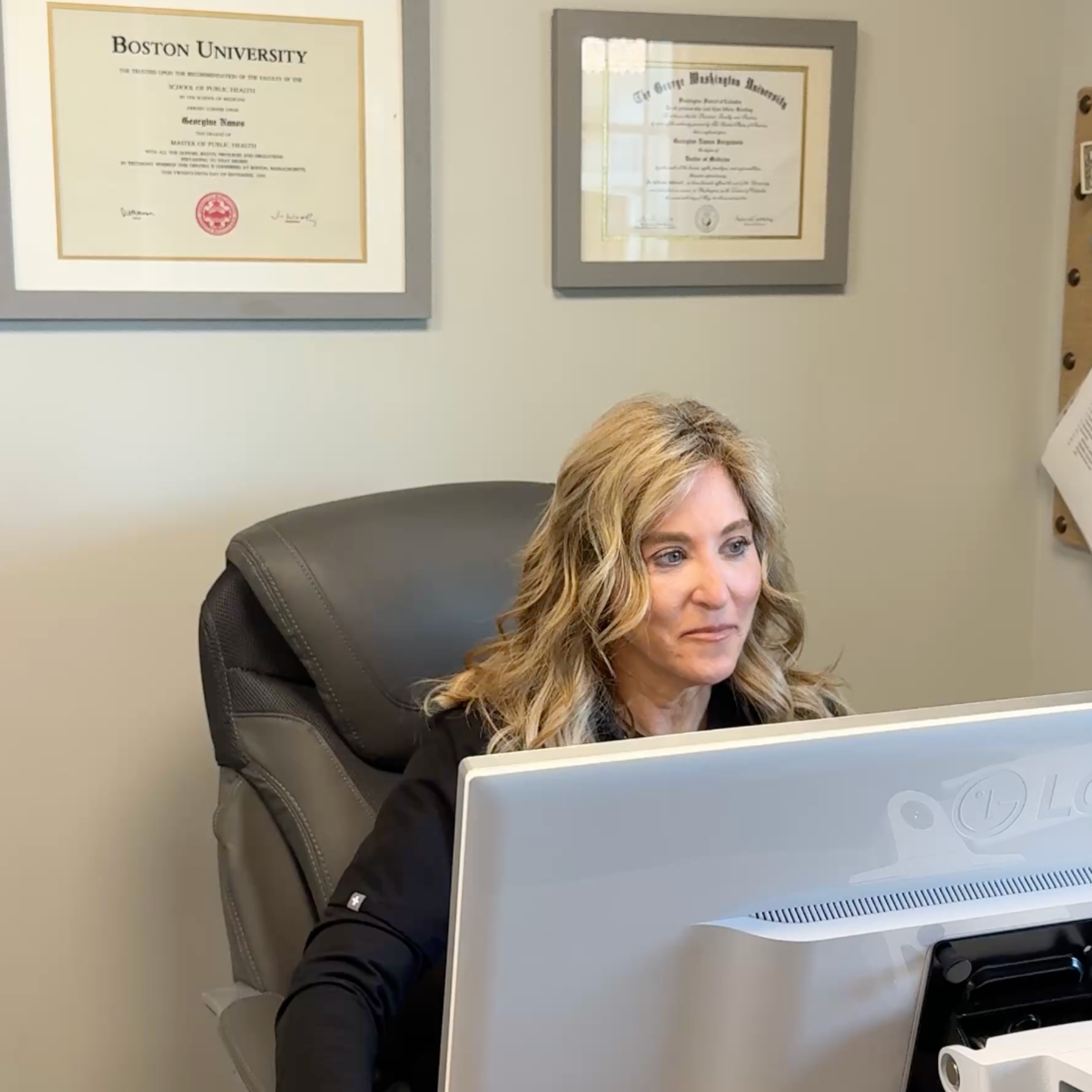
Dr. Nanos shares: 

  • Why the 7-minute appointment model fails women specifically
  • How to prepare for medical visits like a negotiation 
  • Three ways to take back control when the system fails you 
  • Why concierge and integrative care models exist (hint: traditional healthcare is broken) 
  • How to advocate for yourself or find providers who actually listen 


RELATED VIDEOS: 

Heart Disease in Women over 40

Weight Loss Isn't Willpower - It's Biology


DISCLAIMER: This video is for educational purposes only and does not constitute medical advice. Always consult with your healthcare provider before making any medical decisions. If you don't feel heard by your current provider, seek care from someone who will listen.
Meet the Author


About Dr. Nanos

You might also enjoy:


Awareness ribbon with the word “AWARENESS” on a white background
May 20, 2026
Mental Health Awareness Month is here again. But for the women silently cycling through medications that don't work, awareness isn't the problem. Access is. A board-certified physician on what we actually owe people who are suffering.
Podcast cover with two smiling hosts and text: “Your Nervous System Is Still in the Emergency SGB, Ketamine, and the Future of Regenerative Medicine”
May 20, 2026
ER physician turned regenerative medicine pioneer Dr. John How breaks down stellate ganglion block, ketamine therapy, PRP, and why the brain-body connection changes everything about how we treat pain and trauma.
Person in green scrubs with headphones doing a video consultation on a laptop in a bright room
May 11, 2026
You've been to five specialists. Your energy crashed two years ago. Brain fog makes you feel like you're thinking through cotton. Sleep is a mess. Weight won't budge.
By lauren May 5, 2026
Dr. Heather Volpe trained at Cedars-Sinai and UCLA, spent 15 years in traditional allergy and immunology, and kept seeing the same thing: patients who looked fine on paper but weren't getting better. That pattern led her to found Synergy O3 in Encinitas, where she now practices integrative medicine with a focus on ozone dialysis therapy and the upstream role of inflammation in chronic disease. In this episode, she joins Dr. Georgine Nanos to challenge the clean line between traditional and alternative medicine — and make a case for why that line was never as useful as we thought. In this conversation: What ozone dialysis is and why it's safer than standard 10-pass ozone therapy The 80% reduction in inflammatory markers Dr. Volpe consistently sees post-treatment The blood clot patient told his clot would never dissolve — and what happened four months later Why cold plunges may be the wrong tool for perimenopausal women How inflammation connects cholesterol, cardiac risk, autoimmune disease, and cancer Why curiosity is disappearing from medicine — and what's lost when it goes Learn more about Dr. Heather Volpe: 🌐 Synergy O3 — Encinitas, CA Subscribe for new episodes every week. Share this with anyone who's been told their labs look fine — but knows something still isn't right.