The Wellness Wonderland Is A Mess - And It's Time Real Doctors Spoke Up
December 15, 2025
We’re Living in the Era of Instagram Medicine

Let’s get something straight from the beginning:
I love wellness. I believe in longevity, brain optimization, hormone health, quality nutrition, meaningful sleep, stress regulation, metabolic stability, and emotional resilience. I’ve built my practice around helping people feel their best — physically, emotionally, and cognitively.
But I’m also a real doctor.
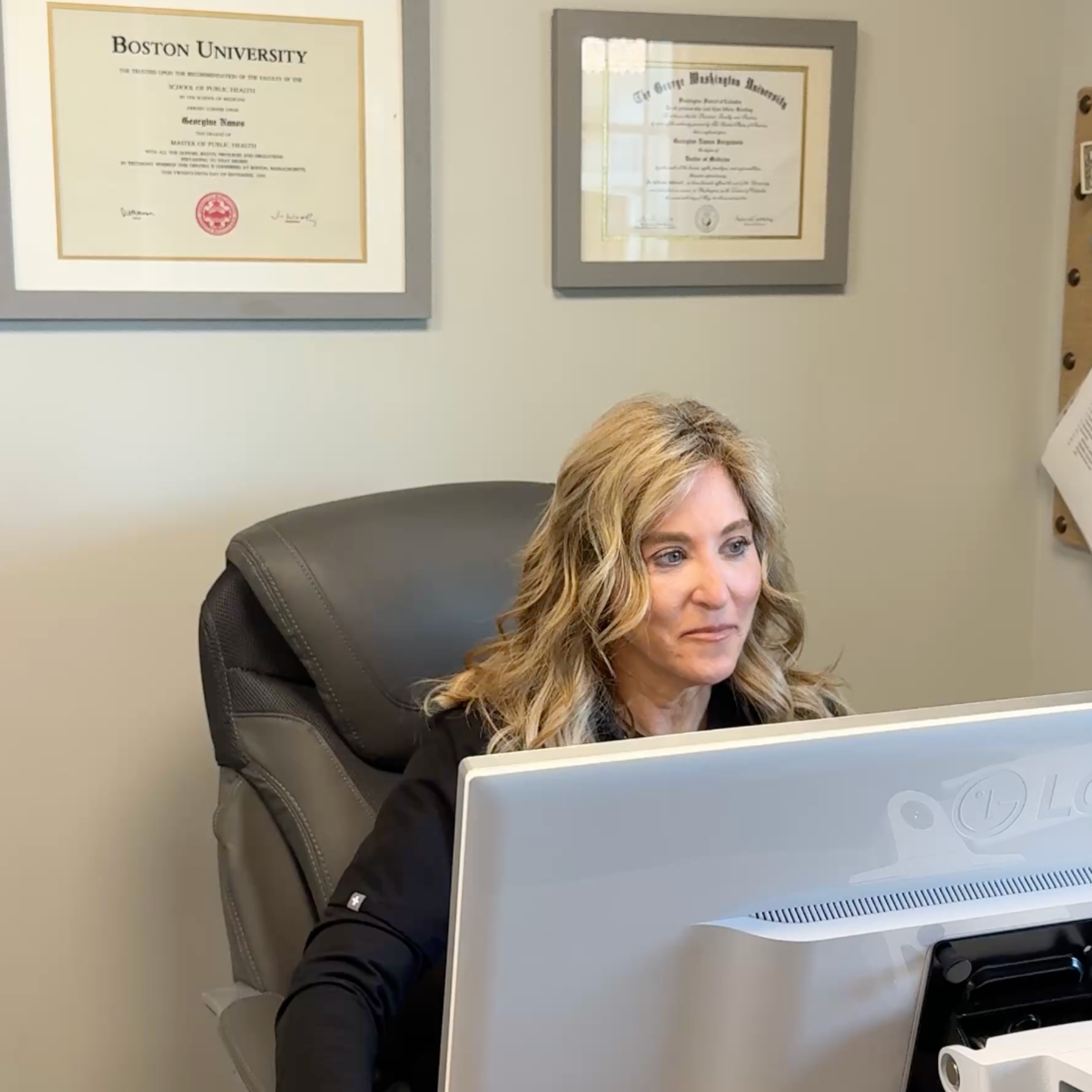
A board-certified family physician with more than twenty years of experience, a Doctor of Medicine degree (MD) from George Washington University School of Medicine, an Masters in Public Health (MPH) from Boston University, Family Medicine Residency at the University of California, San Diego. I’ve probably seen and treated around 100,000 patients in my career and happily still counting.
Which is why I’m going to say the thing that most physicians whisper privately but won’t say out loud:
The wellness space has been hijacked by unqualified influencers, fake online “doctors,” and self-anointed experts who have no business practicing medicine — but do it anyway.
They are diagnosing conditions they don’t understand.
They are selling protocols they are untrained to manage.
They are using the word “doctor” in ways that mislead, confuse, and endanger the public.
It’s time to stop pretending this is harmless.
Wellness has a truth problem — and I’m done being quiet about it.
The Rise of the Fake Doctor Economy
Let’s talk about who’s calling themselves “doctor” these days.
The chiropractor who now claims expertise in autoimmune disease.
The nutritionist diagnosing mold toxicity.
The naturopath who advises people to stop psychiatric medications.
The former realtor who became a “hormone specialist” after a three-month online course.
The influencer selling mushroom tea as a mental health cure.
The breathwork practitioner who claims to “fix neurotransmitters.”
The injector who suddenly becomes a “functional brain coach.”
The biohacker bro diagnosing trauma from his podcast studio.
And the best part?
They introduce themselves online as “Dr. So-and-so” — no clarification, no transparency, no context — letting the public assume they’re physicians.
The truth?
Most of them are not doctors of medicine.
Many are not doctors of anything.
And some don’t even have a single accredited credential behind their name.
But the public doesn’t know the difference.
Because the wellness world has made sure they don’t.
Why People Fall For These Wellness Figures
(And Why It’s Not Their Fault)
People aren’t gullible.
They’re exhausted.
Medicine has — frankly — failed people in many ways:
7-minute appointments.
Providers who don’t listen.
Systemic burnout.
Insurance-driven care.
Rushed answers.
Dismissed symptoms.
So when a perfectly-lit influencer slides onto your feed saying:
“I understand you.”
“It’s not your fault.”
“Doctors don’t get it — but I do.”
“You’re not broken; you’re inflamed / toxic / unbalanced / moldy / stressed / destined for greatness.”
People feel seen.
Doctors gave people information.
Influencers gave people validation.
And validation is intoxicating.
But there’s a difference between feeling understood and being correctly diagnosed.
And there’s a difference between support and medical authority.
Which brings us to the heart of the problem:
Most people have no idea what the word “doctor” actually means — or who is (and is not) trained to treat them.
So let’s fix that right now.
What “Doctor” Really Means — And Why the Initials Matter
If you learn nothing else from this article, learn this:
Not everyone who uses the title “doctor” is a physician.
Not everyone with initials after their name is trained to diagnose or treat medical disease.
Let’s break it down cleanly, clearly, and without apology.
MD vs DO — The ONLY Two Types of Medical Doctors in the U.S.
These are the real physicians.
They can:
Diagnose illness
Treat disease
Prescribe medications
Order and interpret medical labs
Perform procedures
Practice medicine independently
MD — Doctor of Medicine
This is what most people think of when they hear “doctor.”
4 years medical school + 3–7 years residency + boards.
DO — Doctor of Osteopathic Medicine
Same training as MDs with additional musculoskeletal and holistic focus.
Same licensing.
Same rights.
Same responsibilities.
MDs and DOs are the only clinicians trained as full physicians.
PhD — Doctor of Philosophy
A PhD is a doctor academically — not medically.
They can:
Do research
Teach at universities
They cannot:
Diagnose
Prescribe
Treat illness
Practice medicine
Nothing wrong with a PhD.
But it’s not medical training.
PsyD — Doctor of Psychology
A PsyD can:
Provide therapy
Diagnose mental health disorders
Do testing
They cannot:
Prescribe most psychiatric medications
Treat medical illness
They're doctors of psychology — not medicine.
DNP or NP — Doctor of Nursing Practice / Nurse Practitioner
This is where the public gets confused.
Nurse practitioners (NPs) can:
Diagnose
Treat
Prescribe (state-dependent)
BUT:
A DNP (doctoral-level nurse) is not an MD or DO.
Using “doctor” clinically requires clear identification:
“I’m Dr. Smith, a doctor of nursing practice — and I am your nurse practitioner.”
Without that clarity?
It’s misleading.
In some states, illegal.
DC — Doctor of Chiropractic
Chiropractors:
Treat musculoskeletal pain
Perform spinal manipulation
They do not:
Practice medicine
Prescribe medications
Diagnose systemic illness
A chiropractor is not a medical doctor.
ND/NMD — Naturopathic "Doctor"
Naturopaths:
Attend naturopathic schools
Focus on supplements, herbs, alternative healing
Many go far beyond their training.
They cannot:
Prescribe most medications
Diagnose complex illness
Replace physicians
Calling themselves “doctor” without clarification is a major source of confusion.
DPT — Doctor of Physical Therapy
Brilliant at rehab and function.
But they cannot:
Diagnose medical disease
Prescribe medication
Manage systemic illness
A doctor of physical therapy is not a doctor of medicine.
DDS/DMD — Dentist
Dentists are doctors of dental medicine or dental surgery — not systemic medicine.
And Then There Are the Influencers
The ones with:
Weekend certificates
“Functional medicine” diplomas
“Hormone specialist” online courses
“Trauma coach” training
Zero accredited medical education
Yet they call themselves “doctor,” diagnose medical conditions, and tell patients to stop medications.
This is not just unethical.
It is dangerous.
The Business Model of Wellness Misinformation
Let’s call it what it is: A trillion-dollar industry built on fear.
The formula:
Create fear → Offer diagnosis → Sell solution → Repeat.
Products include:
- Detox kits
- Mold protocols
- Parasite cleanses
- “Adrenal fatigue” supplements
- $700/month coffee enemas
- Peptide cocktails from questionable compounding pharmacies
- IV drips with no medical indication
- Lab panels with zero scientific validity
- Affiliate-coded supplements
- Online courses
- Membership communities
- Gadgets promising impossible results
The financial incentive is not for you to get better.
It’s for you to stay scared.
Stay confused.
Stay dependent.
Stay buying.
The Most Popular Myths Wellness Influencers Get Wrong
Myth 1: “Your hormones are out of balance.”
Maybe. Maybe not.
But influencers push hormone “dysregulation” as the root of all suffering because it sells well.
Real hormone care requires medical training. Period.
Myth 2: “You can heal your gut with supplements.”
Your gut is real.
The microbiome matters.
But your $600 at-home stool test is garbage science.
Myth 3: “If you’re tired, it’s adrenal fatigue.”
“Adrenal fatigue” does not exist.
Adrenal insufficiency does — and it’s a medical emergency.
Myth 4: “Mental health can be healed naturally.”
Lifestyle matters.
Nutrition matters.
But depression is a medical condition.
Anxiety is neurobiological.
Trauma is real neuroscience.
You cannot supplement your way out of major depressive disorder.
Myth 5: “Doctors don’t want you to know the truth.”
If we were hiding cures, we wouldn’t be burned out writing notes at 11 PM.
The Psychology Behind Why Influencers Win
Influencers excel at:
- Storytelling
- Certainty
- Emotional resonance
- Connection
- Identity-building
- Simplicity
Medicine, on the other hand, is complex.
Nuanced.
Sometimes boring.
Often uncertain.
Influencers sell hope.
Doctors deliver reality.
Hope sells faster.
When Wellness Becomes Dangerous
This is not harmless.
This is not “just another viewpoint.”
I see the fallout weekly:
- Stopped medications
- Hormone misuse and overdoses
- Malnutrition from restrictive diets
- Liver damage from supplements
- IV infections
- Delayed diagnoses
- Psychiatric decompensation
- Thousands of dollars wasted
- Severe anxiety fueled by misinformation
People are suffering because someone online wanted to sell them something.
Why Doctors Must Reenter the Wellness Arena
Doctors abandoned wellness because it seemed unserious.
But patients didn’t. The future isn’t “traditional medicine” or “alternative medicine.” It’s integrative, evidence-based, data-driven, brain-first medicine combined with true wellness.
This is the model I practice:
- Brain health
- Hormone science
- TMS
- Metabolic medicine
- Longitudinal primary care
- Trauma-informed support
- Real diagnostics
- Real labs
- Real science
- Real outcomes
People want both: the heart of wellness with the rigor of medicine.
How to Protect Yourself from Wellness Misinformation
A simple checklist:
- Check credentials. Not just letters — training.
- Follow the money. Are they selling something?
- Beware certainty. Medicine is never 100% anything.
- Avoid fear-driven content.
- Look for transparency.
- Avoid anyone who says to distrust all doctors.
- If it sounds too good to be true, it is.
What Real Wellness Actually Is
Real wellness is:
Sleep.
Movement.
Connection.
Nutrition.
Regulated stress.
Brain health.
Therapy.
TMS when appropriate.
Evidence-based hormone management.
Treatment that matches diagnosis. Not fear.
Not restriction.
Not $1,200 “detoxes.”
The Future of Medicine and Wellness
The future is hybrid:
- Personalized
- Preventive
- Brain-centered
- Holistic
- Root-cause focused
- Evidence-backed
- Compassion-driven
- Transparent
- Modern
- And led by clinicians who are both scientists and humans.
Final Word: You Deserve Better
If you’ve ever been seduced by a wellness influencer, that doesn’t make you foolish. It makes you human. But your health is too important to hand over to someone who learned medicine from TikTok.
You deserve:
Real answers.
Real science.
Real expertise.
Real hope.
Real healing. You deserve the truth.
And it’s time real physicians deliver it.
Meet the Author

You might also enjoy:
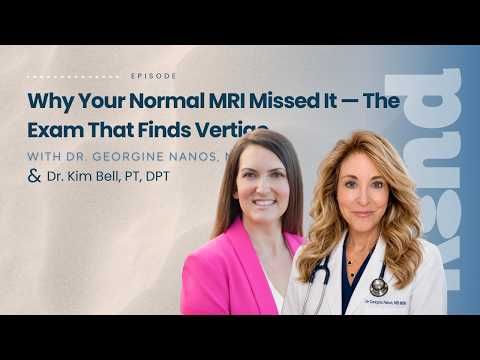
Dizziness is the symptom medicine gives up on. Normal scans mean the dangerous causes are ruled out, not that nothing is wrong, the diagnostic sign is suppressed up to 66% by room light, so it is only visible in the dark with equipment most clinics do not own. Plus estrogen can be why spontaneous vertigo peaks in women
Exhausted, foggy, and 'off' but your labs say normal? Dr. Georgine Nanos explains why standard lab ranges miss perimenopause and what to do instead.
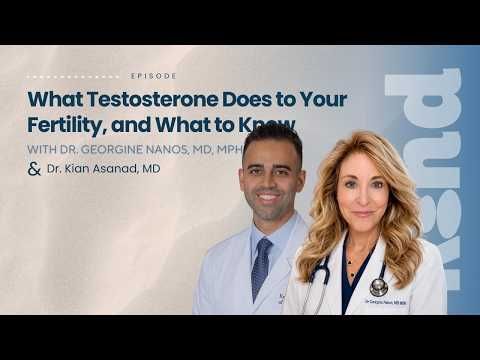
For as long as we've talked about fertility, it's been treated as a woman's problem. Her labs. Her hormones. Her clock. Meanwhile half the equation is standing quietly in the background, and nobody is asking about him. Dr. Georgine Nanos sits down with Dr. Kian Asanad, a fellowship-trained reproductive urologist and microsurgeon who directs the USC Fertility and Men's Sexual Health Center and teaches urology at Keck Medicine of USC. He has published more than 40 peer-reviewed papers, including in JAMA, and he spends his days doing the part of fertility medicine most people never hear about. If you or your partner have been told her labs are fine and you're still not pregnant, the missing piece may not be in her chart at all. This is The Kind Revolution — where we bridge science, compassion, and courage. ⏱️ TIMESTAMPS 0:00 — Why fertility has always been framed as her problem 2:23 — Welcome, and who Dr. Asanad is 2:41 — The path in: a heart transplant, a mentor, and a specialty he'd never heard of 3:49 — Building something beyond the exam room 6:22 — The assumption that something is wrong with her 6:32 — How much of infertility is male factor 7:29 — How easy the male workup has become 8:53 — What a male fertility workup actually involves 9:28 — The 10% who have zero sperm 10:36 — MicroTESE, and the 50/50 of it 11:42 — Telling a couple the odds 13:12 — Grief, and the stepping stone 14:10 — Fertility preservation before cancer treatment 16:05 — Why it's now standard of care 16:47 — Oxidative stress, DNA integrity, and the gut-testes axis 23:23 — Life outside medicine 24:35 — Stem cells, and why nothing has changed since 1999 25:53 — Testosterone goes mainstream 26:25 — On pop-up clinics and "my guy" 27:15 — The testosterone trap 28:11 — The secret-shopper study 29:47 — Rapid fire 29:53 — The myth he'd erase forever 30:51 — What he tells every nervous man 32:02 — Closing 🔗 CONNECT 🌐 kindhealthgroup.com 📱 Instagram: @kindhealthgroup 👤 Dr. Kian Asanad — USC Fertility and Men's Sexual Health Center, Keck Medicine of USC asanadmd.com ⚕️ This conversation is for education and is not medical advice. Talk to your own physician about your situation.
Male factor is involved in 50% of infertile couples and is the sole cause in 20%. A reproductive urologist on the test that takes a week, and why testosterone is a contraceptive.