
Why I Left Traditional Medicine to Build the Practice I Wished I Could Send My Patients To
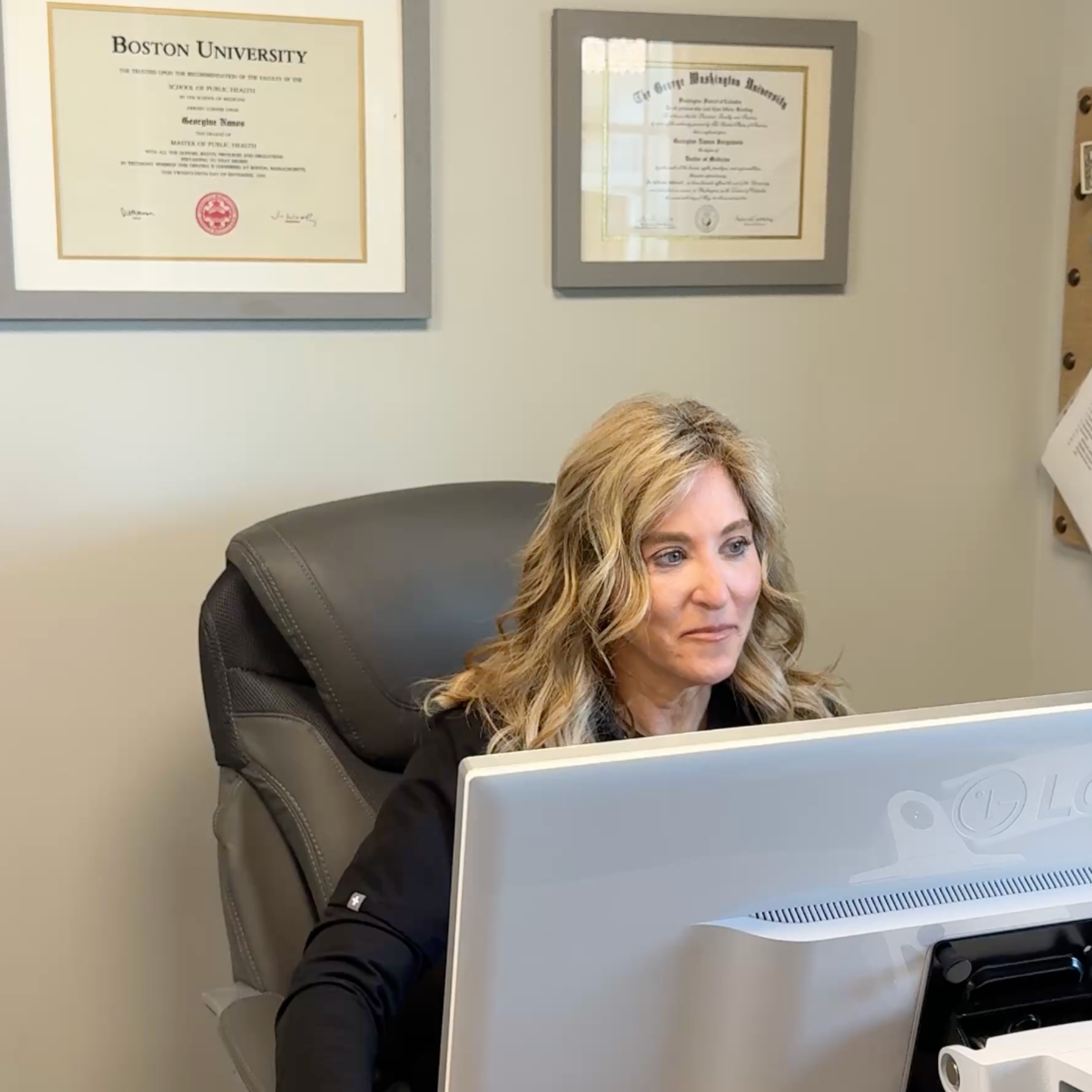
By Dr. Georgine Nanos, MD, MPH | Board-Certified Family Physician, Kind Health Group — Encinitas, CA
The moment I decided to leave traditional medicine, I was sitting in a seven-minute appointment with a woman who had been exhausted for two years, had gained thirty pounds without explanation, and was now crying at things that had never made her cry before. I had twelve minutes on my schedule. I had already used five. She needed at least an hour. The system I was in couldn’t give her that. So I built something that could.
The Seven-Minute Problem
The average primary care appointment in the United States lasts somewhere between seven and fifteen minutes. In that window, a physician is expected to review your chart, address your chief complaints, order any necessary labs, discuss results, provide education, and document everything for the insurance company. The arithmetic is impossible. Medicine was never meant to be practiced this way.
What gets squeezed out in a seven-minute appointment is everything that requires listening. The context behind a symptom. The pattern across three visits. The thing a patient almost says but doesn’t quite say because there’s no room for hesitation in seven minutes. The emotional weight that often carries the clinical information. All of it gets compressed or cut.
I trained at good institutions. I worked with excellent physicians. I was not surrounded by bad people or a malicious system. The system is simply optimized for throughput, not outcomes. When you’re seeing 25 to 30 patients a day to cover overhead, there is no version of that model in which any individual patient gets the attention her health actually requires.
I stayed in traditional medicine longer than I should have, trying to find workarounds. Longer lunch breaks. Earlier starts. Seeing fewer patients per day. None of it worked at scale. The incentive structure of fee-for-service insurance-based medicine consistently rewards volume over depth. You get paid the same whether a patient leaves your office genuinely understood or just efficiently processed.
The moment I understood that the system itself was the barrier — not my effort, not my commitment, not my clinical skill — was the moment I started planning to build something different.
The Pattern I Kept Seeing
Before I left, I started keeping informal notes on a pattern I was seeing over and over. Women in their 40s and early 50s, coming in with constellations of symptoms that didn’t fit any clean diagnosis: exhaustion that sleep didn’t fix, weight gain that diet changes didn’t reverse, mood changes that had arrived gradually and then settled in, brain fog that they were starting to accept as their new normal, libido that had quietly disappeared.
These women had labs. Normal labs. Completely, textbook normal labs. And because the labs were normal, the standard system had nothing to offer them except reassurance that nothing was wrong. Some had been offered antidepressants. Some had been sent to therapists. A few had been told, with genuine kindness but also genuine medical ignorance, that this was just what getting older felt like.
I knew they weren’t fine. I could see they weren’t fine. The clinical picture was consistent across dozens of patients, and it pointed toward hormonal transition — specifically toward the perimenopause and early menopause years, when hormone levels can be declining significantly while still falling within technically normal reference ranges. But I didn’t have the time, the tools, or the practice model to do anything meaningful about it in the system I was in.
I also kept seeing the downstream consequences of the seven-minute model: patients who had been on the same medications for years without reassessment, patients who had risk factors that had gone unaddressed because the appointment had run over on something else, patients whose cardiovascular risk was quietly accumulating while their annual physical confirmed they hadn’t had a heart attack yet. Prevention requires time and attention. Prevention is exactly what the volume model sacrifices first.
What I Built Instead
Kind Health Group opened in Encinitas with a simple premise: what would medicine look like if the physician actually had enough time? New patient appointments are ninety minutes. Follow-up visits are forty-five. There is no timer running. There is no quota to meet. The schedule is built around what patients actually need, not what insurance reimburses.
We are a physician-led practice. That matters because in many concierge and direct care practices, most of the clinical work is delegated to non-physician providers. At KHG, every patient’s care is managed by me, with support from our clinical team. The physician relationship — the one that actually requires the training and the pattern-recognition that a medical degree represents — is not diluted.
We integrate what conventional medicine keeps siloed. Hormone evaluation and optimization. Metabolic health and body composition. Advanced preventive screening. Pelvic health. Aesthetic medicine that serves functional goals. These aren’t separate specialties at KHG. They’re interconnected aspects of the same patient’s health, managed by a physician who sees the whole picture.
We also practice medicine that is evidence-based but not restricted to whatever the insurance reimbursement structure incentivizes. The Galleri cancer detection test isn’t covered by most insurance plans. It’s also one of the most clinically meaningful tools available for early cancer detection. We offer it because it’s good medicine, not because a reimbursement code exists for it.
What Makes Kind Health Group Different
Time. This is genuinely the most differentiating thing we offer, and it underpins everything else. You cannot do comprehensive hormone evaluation, metabolic assessment, and meaningful preventive medicine in seven minutes. We don’t try. Our appointments give us the space to ask the questions that standard medicine skips, to hear the answers that actually matter, and to build care plans that address what’s actually happening rather than what fits on a checklist.
Integration. Most patients have a primary care physician, a gynecologist, maybe a cardiologist, possibly an endocrinologist. Each sees a slice of the patient. None sees the whole picture. At KHG, we evaluate hormones, metabolism, cardiovascular risk, preventive screening, and pelvic health as an integrated whole — because these systems interact with each other in ways that a siloed specialty model cannot capture.
Physician-led care in San Diego. There are many wellness practices, medspa offerings, and direct primary care models in San Diego County. Fewer are led by a board-certified physician with the training to know when a symptom is a wellness opportunity versus a clinical red flag, when an aesthetic treatment serves a medical goal, and when the right answer is a referral. That clinical judgment is what makes a physician-led model different.
A practice that sees women. Not just female patients. Women. With the specific biology, the specific hormonal transitions, the specific ways that medicine has historically underserved them, and the specific treatments that address their actual health needs. Kind Health Group was built around the recognition that midlife women have been failed by standard medicine — not because of bad intentions, but because of a system that wasn’t designed for them.
How to Know If Kind Health Group Is Right for You
KHG is the right fit if you want a physician who has time for you. If you’ve been told your labs are normal while feeling anything but. If you want proactive cancer and cardiovascular screening that goes beyond the annual physical. If you’re navigating perimenopause or menopause and want a physician who understands both the biology and the treatments. If you have pelvic health concerns you’ve never felt comfortable raising. If you want your health managed as a whole rather than by a committee of specialists who never talk to each other.
We are located in Encinitas and serve patients throughout San Diego County. We accept a limited number of patients to maintain the appointment times and clinical depth that define how we practice. If you’re ready for medicine that takes your health as seriously as you do, book a consultation at kindhealthgroup.com.
This is the practice I wished I could have sent every one of those women to. Now I can.
Frequently Asked Questions
Who is Dr. Georgine Nanos?
Dr. Georgine Nanos is a board-certified physician with an MD and Master of Public Health (MPH) who founded Kind Health Group in Encinitas, CA. She previously practiced traditional primary care medicine before leaving to build a model that prioritizes time, integration, and physician-led care. She focuses on midlife women’s health, hormone optimization, metabolic medicine, preventive screening, and pelvic health. She is also the host of the Kind Revolution podcast.
What is Kind Health Group?
Kind Health Group is a physician-led health practice in Encinitas, California that specializes in comprehensive women’s health, hormone optimization, metabolic medicine, advanced preventive screening, and pelvic health. Founded by Dr. Georgine Nanos, KHG was built around the premise that meaningful medicine requires time, integration, and clinical depth that the traditional insurance-based model cannot provide. KHG serves patients throughout San Diego County.
What makes concierge medicine different from regular primary care?
Concierge medicine and direct primary care models limit the number of patients per physician, allowing for significantly longer appointment times, same-day or next-day access, and a relationship-based care model rather than a throughput-based one. At KHG, new patients receive 90-minute appointments and follow-ups are 45 minutes. The physician knows your full history, your goals, and your preferences — not just your chief complaint for the day.
Is Kind Health Group accepting new patients?
Kind Health Group accepts a limited number of new patients to maintain the appointment quality and clinical depth that defines the practice. To inquire about availability and to schedule a new patient consultation, visit kindhealthgroup.com. Dr. Nanos personally reviews each new patient inquiry to ensure that KHG is the right fit for your health needs and goals.
Does Kind Health Group take insurance?
Kind Health Group operates outside the traditional insurance model, which is what allows the practice to offer the appointment times, testing options, and clinical depth that it does. Patients pay for membership or consultation fees directly. Many services and labs can be submitted to insurance by patients for potential reimbursement, and HSA/FSA funds are typically applicable. Details about membership and fees are available at kindhealthgroup.com.
What conditions does Kind Health Group treat?
Kind Health Group specializes in midlife and women’s health with a focus on hormone optimization (perimenopause, menopause, HRT), metabolic health and weight management (including weight management therapy and Emsculpt NEO), advanced preventive medicine and cancer screening (including Galleri and cardiac biomarker panels), pelvic health (Emsella, MonaLisa Touch, Emsculpt NEO), and integrative primary care for San Diego women who want medicine that sees them as a whole person.
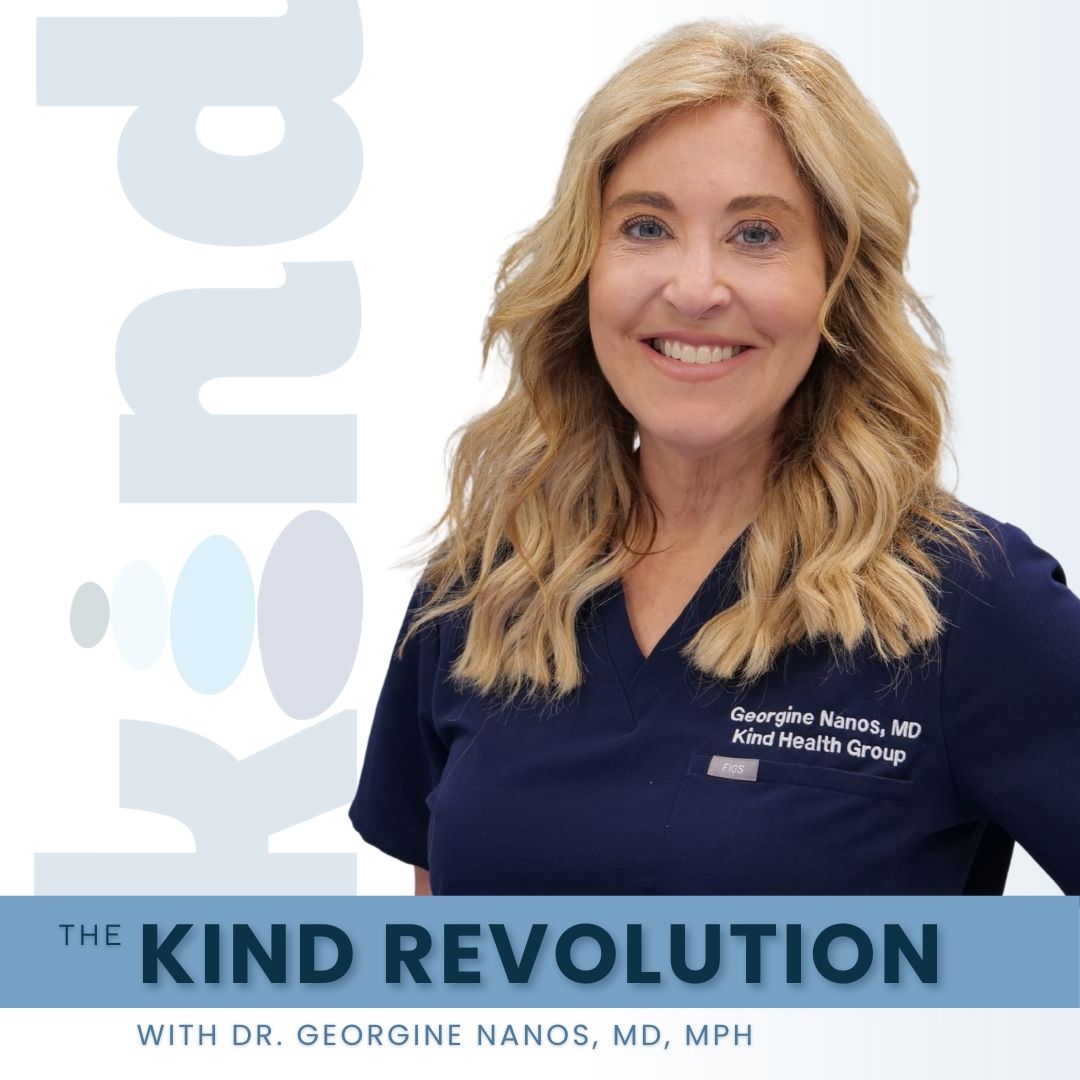
This article was written by Dr. Georgine Nanos, MD, MPH, founder of Kind Health Group in Encinitas, CA. Connect with The Kind Revolution podcast for more.
Meet the Author

You might also enjoy: