
The Lies We Tell to Save Lives — and Why They're Killing Warriors Instead

March 16, 2026

Dr. Shauna "Doc" Springer has spent over two decades embedded with the people most of us would never dare to challenge: elite military warfighters, combat veterans, and first responders. 


A Harvard-trained psychologist, award-winning Military Times podcast host, and three-time bestselling author, she now provides specialized consultation and confidential advising to public safety leaders through her company, Thin Line Advisory. 


In this episode, Doc Springer sits down with Dr. Georgine Nanos to dismantle the deeply held beliefs about suicide prevention and warrior wellness that were built with the best of intentions — and are quietly making things worse. 

 What you'll hear in this conversation: 

Why suicide awareness campaigns can actually increase risk for the very people they're designed to protect 

Why suicidal people don't always know they're at risk — and what that means for how we respond 

The painful truth behind "Zero Suicide" initiatives — and why implying every suicide could have been prevented causes its own harm 

The difference between moral injury and PTSD, and why treating them the same way fails warriors 

What "cultural alignment" really means, and why dropping a single word in a session can permanently destroy trust 

The resilience myth — and why calling someone resilient might be the thing that stops them from getting help 

What genuinely safe mental health infrastructure for warriors actually looks like 

The biological treatments beyond medication and therapy that are changing outcomes 

Why a leader's silence during a crisis isn't neutral — it reads as betrayal 


This is not a conversation about awareness. It's about truth, accountability, and what it really costs to protect the people who protect us. 

Doc Springer's new book: 

Fall Out — available on Amazon 

Learn more about Doc Springer's work: 

https://thinlineadvisory.com 

Instagram: https://www.instagram.com/docshaunaspringer/ 

LinkedIn: www.linkedin.com/in/docshaunaspringer 


The Kind Revolution Podcast features honest conversations about mental health, healing, and what it really takes to care for people who carry the heaviest burdens. Subscribe so you never miss a conversation that matters. Share this episode with a leader, a veteran, a first responder, or anyone who loves one.
Meet the Author
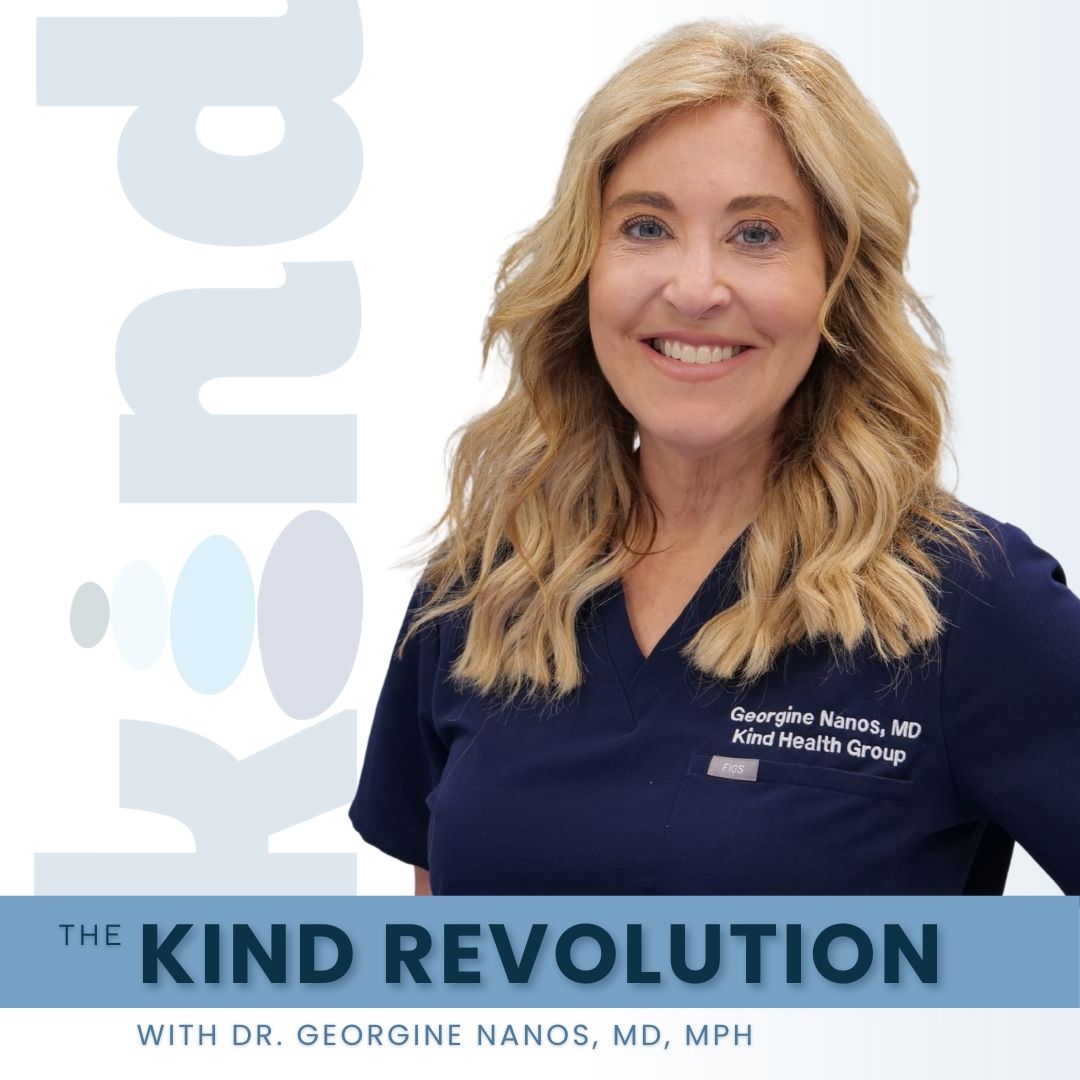

About Dr. Nanos

You might also enjoy:


Podcast-style banner: “Why Your Normal MRI Missed It — The Exam That Finds Verti…” with two women in pink and white coats
September 9, 2026
Dizziness is the symptom medicine gives up on. Normal scans mean the dangerous causes are ruled out, not that nothing is wrong, the diagnostic sign is suppressed up to 66% by room light, so it is only visible in the dark with equipment most clinics do not own. Plus estrogen can be why spontaneous vertigo peaks in women
Gloved hand holding a test tube with red liquid in a laboratory rack
September 7, 2026
Exhausted, foggy, and 'off' but your labs say normal? Dr. Georgine Nanos explains why standard lab ranges miss perimenopause and what to do instead.
By lauren September 2, 2026
For as long as we've talked about fertility, it's been treated as a woman's problem. Her labs. Her hormones. Her clock. Meanwhile half the equation is standing quietly in the background, and nobody is asking about him. Dr. Georgine Nanos sits down with Dr. Kian Asanad, a fellowship-trained reproductive urologist and microsurgeon who directs the USC Fertility and Men's Sexual Health Center and teaches urology at Keck Medicine of USC. He has published more than 40 peer-reviewed papers, including in JAMA, and he spends his days doing the part of fertility medicine most people never hear about. If you or your partner have been told her labs are fine and you're still not pregnant, the missing piece may not be in her chart at all. This is The Kind Revolution — where we bridge science, compassion, and courage. ⏱️ TIMESTAMPS 0:00 — Why fertility has always been framed as her problem 2:23 — Welcome, and who Dr. Asanad is 2:41 — The path in: a heart transplant, a mentor, and a specialty he'd never heard of 3:49 — Building something beyond the exam room 6:22 — The assumption that something is wrong with her 6:32 — How much of infertility is male factor 7:29 — How easy the male workup has become 8:53 — What a male fertility workup actually involves 9:28 — The 10% who have zero sperm 10:36 — MicroTESE, and the 50/50 of it 11:42 — Telling a couple the odds 13:12 — Grief, and the stepping stone 14:10 — Fertility preservation before cancer treatment 16:05 — Why it's now standard of care 16:47 — Oxidative stress, DNA integrity, and the gut-testes axis 23:23 — Life outside medicine 24:35 — Stem cells, and why nothing has changed since 1999 25:53 — Testosterone goes mainstream 26:25 — On pop-up clinics and "my guy" 27:15 — The testosterone trap 28:11 — The secret-shopper study 29:47 — Rapid fire 29:53 — The myth he'd erase forever 30:51 — What he tells every nervous man 32:02 — Closing 🔗 CONNECT 🌐 kindhealthgroup.com 📱 Instagram: @kindhealthgroup 👤 Dr. Kian Asanad — USC Fertility and Men's Sexual Health Center, Keck Medicine of USC asanadmd.com ⚕️ This conversation is for education and is not medical advice. Talk to your own physician about your situation.
Pregnancy test with blue cap held in foreground, blurred couple sitting together on couch in background
September 2, 2026
Male factor is involved in 50% of infertile couples and is the sole cause in 20%. A reproductive urologist on the test that takes a week, and why testosterone is a contraceptive.