
Colorectal cancer is moving into people in their 30s and 40s, and the intervention is not a new test.
By Dr. Georgine Nanos, MD, MPH — Founder & CEO, Kind Health Group, Encinitas, CA
I want to start with a sentence a surgeon said to me that I have not been able to put down.
Twenty-four years ago, almost every colorectal cancer patient she operated on was in their sixties, seventies, or eighties.
Today they are in their thirties and forties.
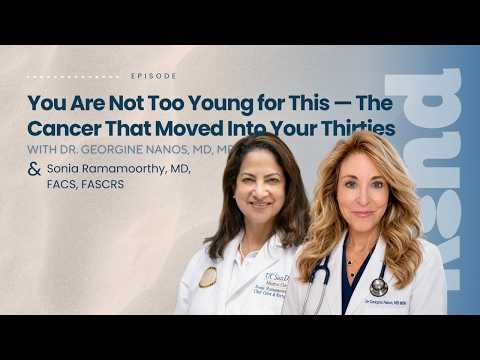
That's Dr. Sonia Ramamoorthy, and she is the person you want saying this out loud. She's the chief of colon and rectal surgery at UC San Diego, she's a professor of surgery, she leads the colorectal cancer team at Moores Cancer Center, and she is currently the president of the American Society of Colon and Rectal Surgeons, which is a 125-year-old organization of about five thousand surgeons. She's the fourth woman ever elected to that, and the first Asian woman. She was also the first surgeon in San Diego to do robotic colorectal surgery.
So she is not somebody reading about a trend. She watched it happen from inside one career, standing over the table.
And the thing that makes me want to grab people by the shoulders is that this is one of the few cancers we can actually prevent, and it is being caught late in exactly the people who have the most life in front of them.
The shift is real, and it has numbers
I check everything before I say it to you, so let me give you what I found.
Colorectal cancer incidence is now climbing about three percent a year in adults aged twenty to forty-nine. Of the roughly 148,000 colorectal cancers diagnosed in this country in 2022, a little over twenty thousand were in people under fifty. That's about fourteen percent.
The incidence rate in younger adults has roughly doubled since the late 1980s.
And there's a projection I sat with for a while before deciding to include it, because projections are not facts and I want to be honest about that. Researchers expect colorectal cancer to become the leading cause of cancer death for people under fifty in the United States by 2030. That's a forecast, not a measurement. It could be wrong. But it's the direction everybody in that field is pointing, and Sonia's twenty-four years of patients is what that forecast looks like from the inside of an operating room.
Here's the part that actually kills people
It isn't the biology. It's the delay.
Younger patients are far more likely to be diagnosed at stage four. Thirty-two percent of them, against seventeen percent of older patients. Almost double.
Not because the cancer is meaner in a thirty-eight-year-old. Because by the time anybody went looking, it had been growing for a year.
And when I read how that year actually passes, it's so ordinary it's almost unbearable. The majority of young patients eventually diagnosed with this waited somewhere between three and twelve months to see a doctor after their symptoms started. And sixty-three percent of them waited for the most reasonable reason in the world: they did not recognize what they were experiencing as a sign of cancer.
Of course they didn't. Why would they.
Because here is the whole problem in one sentence. The early symptoms are rectal bleeding and a change in bowel habits. Which are also the symptoms of hemorrhoids. And of a stomach bug. And of a stressful month. And, the overwhelming majority of the time, of absolutely nothing.
So a thirty-six-year-old woman sees a little blood, thinks well that's probably hemorrhoids, and she is almost certainly right. That's not stupidity. That's correct reasoning. The math is on her side.
It's just that the rare case is the one that takes everything.
Women dismiss themselves first
Sonia said something about women specifically that stopped me, and I've been repeating it since.
She said women dismiss themselves first.
Her description of it was that a woman is in the business of taking care of everybody around her, and her own symptom might be number seven on the list of things that have to get handled today, and she never gets past number three. Not on that day. Not on any day. That's just the shape of the life.
So the symptom sits at number seven for a year.
And then, she said, it's insult upon injury when you finally get yourself into the office and the person across from you downplays it too.
She was generous about why that second part happens, more generous than I might have been. She called it a lack of education, and said the field hasn't done a good enough job of getting the red flags in front of frontline providers, which is why her society and the gastroenterology societies are pushing that information out now. And I think she's right that it's mostly that. It's also seven-minute appointments and a clinician who has seen four hundred cases of hemorrhoids and zero cases of colorectal cancer in a thirty-six-year-old.
But I'd add the thing she was too gracious to say, because I've watched it in my own field for twenty-five years. We are measurably slower to take women's pain and women's symptoms seriously. We figured this out with heart attacks the hard way, after decades of missing them because women didn't present clutching their chests like the textbook picture. Sonia made that comparison herself and it's exact.
So if you have been waved off: you weren't imagining it, and you weren't being dramatic. You were describing something real to somebody who was pattern-matching to the common answer.
The two words that fix most of this
I expected her to talk about awareness campaigns. She didn't. She gave an instruction, and what I loved is that she pointed it in both directions.
Circle back.
To you: if you're young and you have rectal bleeding, it probably is your hemorrhoids. She said that plainly and I want you to hear it, because I'm not trying to frighten you and neither was she. But if it doesn't go away with treatment, circle back with your doctor.
And then to us: doctors, circle back with your patient. Are things better? If things are not better, get a scope.
That's it. That's the whole intervention. Not a new test. Not a scary campaign. Somebody closing the loop.
The more I think about it the more I think it's the most important thing in the episode, because the failure here is almost never a wrong first answer. Hemorrhoids is usually the right first answer. The failure is that nobody ever checked whether the first answer held.
She framed the odds the way I wish more of us would. Most likely it's nothing. Worst case it's a bad polyp or a cancer, and she wants to be sure your symptoms actually resolved.
So: if you were treated for something months ago and it's still there, that's your appointment. Make it this week.
And if you're a clinician reading this, the patient you treated in the spring and never heard from again may not have gotten better. They may have just stopped asking.
Screening starts at forty-five now
This is the piece I find people genuinely don't know, and it's the easiest thing in this whole article to act on.
The screening age moved. The American Cancer Society moved it to forty-five in 2018, and the US Preventive Services Task Force followed in May of 2021 with a grade B recommendation for ages forty-five to forty-nine.
Not fifty. Forty-five. And it moved precisely because of everything above.
So if you are forty-five or older and nobody has brought this up with you, that is the conversation to have. And if you have a first-degree relative who had colorectal cancer or advanced polyps, you start earlier than that, usually ten years before their age at diagnosis, and that's a conversation to have now rather than at forty-five.
The mowing-the-lawn thing
Sonia has a line about this that I'm stealing permanently.
She said isn't it wonderful to have a terrible disease like colorectal cancer be preventable, because you can just mow the lawn. Get in there, take care of the polyps, and reduce the risk right there.
That's not a metaphor doing heavy lifting. That's literally the mechanism. Colorectal cancer mostly develops from adenomatous polyps that grow slowly over years. Find them and take them out, and the cancer that would have grown there does not get to happen.
Think about how rare that is. We cannot do that with pancreatic cancer. We cannot do it with ovarian cancer. For most cancers, screening means finding it early. For this one, screening means preventing it from existing.
And on the colonoscopy itself, which is the actual obstacle for most people, both of us said the same thing without planning to. I've had two. I tell my patients it is the best sleep they will ever have. You lose a few pounds, you get a proper nap in the middle of a workday, you're pleasantly out of it for the afternoon, and then you don't think about it again for up to ten years.
Sonia's version: if you think that's scary, imagine the alternative.
The prep is genuinely better than it used to be. And there are validated stool-based options now that have a real role, particularly for access, though anything abnormal on one of those still routes you to a colonoscopy. Ask which is appropriate for you rather than assuming it's the full prep or nothing.
The lifestyle part, stated honestly
She called colorectal cancer one of the lifestyle cancers, and this is where I want to be careful with you, because this is where health content usually starts overpromising.
Here's what's solid.
Regular physical activity is associated with roughly a twenty-five to thirty percent lower risk of colon cancer, comparing the most active people to the least active. And the World Cancer Research Fund and the American Institute for Cancer Research grade that evidence as convincing, which is their highest category. They do not hand that grade out casually.
One precision note, because it matters and almost nobody makes it: that convincing grade is for colon cancer specifically. The evidence for rectal cancer is weaker. I'd rather tell you that than let you think the whole thing is nailed down.
Then there's the microbiome piece, which is the part Sonia was most animated about. She described two people of the same height and weight, both lean, one who exercises and one who doesn't, and said their gut microbiomes look different. And that's supported. Endurance exercise has been shown to change gut microbiota independent of diet in lean participants, raising fecal butyrate, which is a short-chain fatty acid the cells lining your colon actually use for fuel, by around twenty-three percent.
Here's the part she didn't mention and I think it's the most useful detail in this section. Those changes reverted to baseline after about six weeks without training.
Which means this isn't a thing you achieve. It's a thing you maintain. Slightly annoying, much more honest, and frankly it's how most of the body works.
And now the honest caveat. Exercise changes your microbiome. Exercise lowers your colon cancer risk. Both of those are well established on their own. That the microbiome is the mechanism connecting them is a very reasonable hypothesis and an active area of research. It is not settled. I'm telling you that because you're going to see a lot of confident content claiming that link is proven, and it isn't yet.
None of which changes what you should do. Move your body most days, eat actual plants, and do it continuously rather than in a heroic six-week block. The reason is good even where the mechanism is still being worked out.
What she wants to be true by the time she's done
I asked what she hoped for, and she gave two answers.
The first was earlier detection, and getting the red flags in front of the people who see these patients first. Not the specialists. The ER doctors, the urgent care clinicians, the OB-GYNs, because a young person with rectal bleeding goes there, not to a colorectal surgeon.
The second answer surprised me and then it didn't. She said patients will do better when physicians are doing better. Put the oxygen mask on yourself before the person next to you. She's now the director of physician wellness at UC San Diego Health, and it comes from somewhere real, because she's been the family member in the room too. Her husband was in a bike accident and she was driving him home from the hospital in a wheelchair at eight and a half months pregnant, with the medical supplies that were promised nowhere in sight, and ended up knocking on a neighbor's door so somebody could carry him inside.
She said it taught her what it feels like when the things we promise patients don't show up.
What I actually want you to take from this
Three things, and they take about ten minutes total.
If you're forty-five or older and you haven't been screened, book it. Not fifty. Forty-five. That guideline moved twice while most people weren't looking.
If you have a symptom that got treated and didn't resolve, go back. Rectal bleeding, a change in your bowel habits, something that isn't right and hasn't been right for a while. It's probably nothing. Confirm that it's nothing. Circling back is the entire lesson of this episode.
And stop being number seven on your own list. I know that's easier to say than to do. But you are the person keeping everybody else's appointments. You're allowed to keep one of your own.
To the women who have been told it's stress, or IBS, or hemorrhoids, and who went home and felt slightly embarrassed for having brought it up: you were right to bring it up. The first answer might even have been correct. You are still entitled to find out whether it held.
This is one of the very few cancers where showing up early means it simply never happens to you. That's an extraordinary thing to be able to say and almost nobody says it.
So go mow the lawn.
It's all fixable. And with this one, honestly, most of the time it's preventable, which is even better.
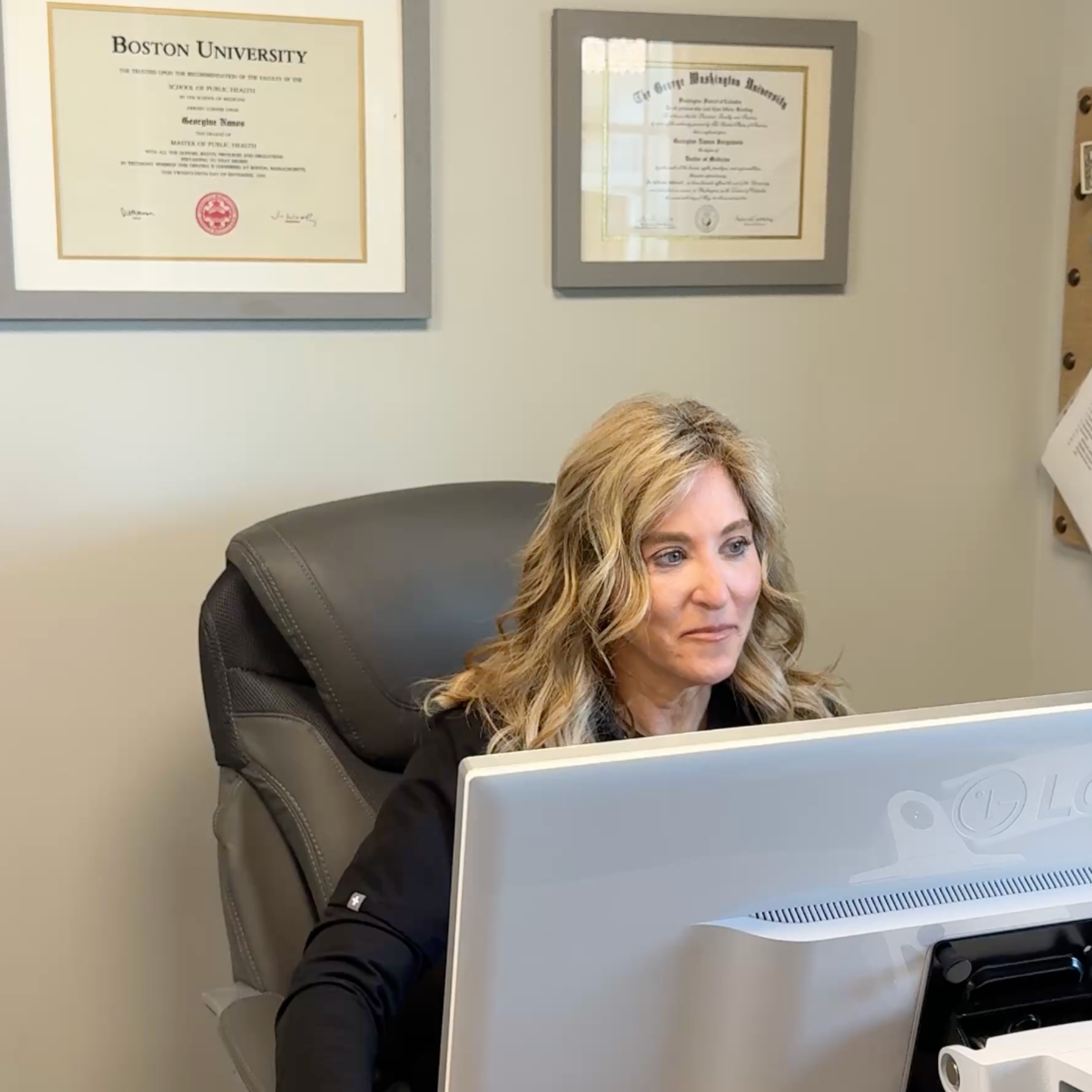
Dr. Georgine Nanos is a board-certified family physician and the founder of Kind Health Group in Encinitas, California, where she practices comprehensive concierge and preventive medicine for women and men who are tired of being told it's nothing.
This conversation is from The Kind Revolution podcast with guest Sonia Ramamoorthy, MD, FACS, FASCRS, Chief of the Division of Colon and Rectal Surgery and Professor of Surgery at UC San Diego, Director of Physician Wellness at UC San Diego Health, and 2024-2025 President of the American Society of Colon and Rectal Surgeons. Also available on Apple Podcasts, Spotify, Amazon Music, and YouTube. Search "The Kind Revolution."
This article is for education and is not medical advice. Talk to your own physician about your situation.
Frequently Asked Questions
At what age should colorectal cancer screening start?
Screening now begins at 45 for adults at average risk. The American Cancer Society moved its recommendation from 50 to 45 in 2018, and the US Preventive Services Task Force issued a grade B recommendation covering ages 45 to 49 in May 2021. Both changes were made in response to rising colorectal cancer rates in younger adults. People with a first-degree relative who had colorectal cancer or advanced polyps generally begin earlier, often ten years before that relative's age at diagnosis, and should discuss timing with their physician rather than waiting until 45.
Is colorectal cancer really increasing in young people?
Yes. Incidence is rising roughly 3% per year in adults aged 20 to 49. Of approximately 148,000 colorectal cancers diagnosed in the United States in 2022, about 20,400 were in people under 50, close to 14% of all cases. The incidence rate in younger adults has roughly doubled since the late 1980s, with increases concentrated in the sigmoid colon and rectum. Researchers project colorectal cancer will become the leading cause of cancer death among adults under 50 in the United States by 2030, though that figure is a projection rather than a measurement.
Can rectal bleeding be something other than hemorrhoids?
Yes, and this is the central diagnostic problem in young-onset colorectal cancer. Rectal bleeding and changes in bowel habits are the most common early symptoms of colorectal cancer, and they are also the most common symptoms of hemorrhoids, gastroenteritis, and irritable bowel syndrome. In the large majority of cases the benign explanation is correct. The decisive factor is whether symptoms resolve with treatment. Bleeding or bowel changes that persist after treatment warrant returning to a physician and discussing colonoscopy, regardless of age.
Why is colorectal cancer diagnosed later in younger patients?
Because of delay on both sides of the appointment. The majority of younger patients later diagnosed with colorectal cancer waited three to twelve months after symptoms began before seeing a physician, and 63% delayed because they did not recognize the symptoms as potentially serious. Clinicians may also attribute symptoms to far more common benign conditions in this age group. The result is that younger patients are considerably more likely to present with stage 4 disease, approximately 32% compared with 17% of older patients.
Is colorectal cancer preventable?
To an unusual degree, yes. Most colorectal cancers develop from adenomatous polyps that grow slowly over a period of years. Removing those polyps during colonoscopy prevents them from progressing to cancer, which means screening does not only detect this disease earlier, it can prevent it from developing at all. That distinguishes colorectal cancer from cancers such as pancreatic and ovarian, where screening focuses on earlier detection rather than prevention.
Does exercise lower colorectal cancer risk?
Regular physical activity is associated with roughly a 25% to 30% lower risk when comparing the most active individuals with the least active. The World Cancer Research Fund and American Institute for Cancer Research grade this evidence as "convincing," their highest category, specifically for colon cancer; the evidence for rectal cancer is weaker. Exercise has also been shown to alter the gut microbiome independently of diet in lean individuals, including an increase in fecal butyrate of approximately 23%, though those changes reverse within about six weeks without continued training. Whether microbiome change is the mechanism linking exercise to reduced cancer risk remains an active research question rather than an established fact.
What should I do if my doctor dismissed my symptoms?
Return, and be specific about the timeline. State when symptoms began, what treatment was tried, and that they have not resolved. Persistence after treatment is the detail that changes clinical decision-making, and it is frequently the piece that never gets communicated because patients do not go back. Requesting evaluation for colonoscopy is reasonable when symptoms persist. Seeking a second opinion is also reasonable, particularly if symptoms are progressing.
What are the main symptoms of colorectal cancer to watch for?
Rectal bleeding, a persistent change in bowel habits such as new constipation or diarrhea, abdominal pain or cramping that does not resolve, unexplained iron deficiency or anemia, unintended weight loss, and a persistent feeling of incomplete emptying after a bowel movement. Individually, each of these is far more often caused by something benign. What matters is persistence, progression, and whether symptoms resolve with appropriate treatment for the presumed benign cause.
Meet the Author


You might also enjoy: